
Buying your first ATV is supposed to be fun. And it is — right up until you realize you bought a machine your truck can’t safely tow, or that the model year you paid new prices for has known issues that cost $800 to fix, or that the “entry-level” price didn’t include the helmet, safety gear, trailer, insurance, and first service appointment that add another $3,000 to the real cost of getting on the trail.
- Step One: Know What You’re Actually Buying For
- Step Two: Understand the Engine Size Decision
- Step Three: New vs. Used — The First ATV Decision
- Step Five: Budget for the Real Cost of ATV Ownership
- Step Six: The Brands Worth Knowing as a First-Timer
- Step Seven: Where to Actually Buy
- The One Thing Every First-Timer Should Do Before Riding
- The Honest Bottom Line
None of that is your fault. Nobody handed you the playbook.
This is the playbook.
Whether you’re buying for weekend trail riding, property work, or both — this guide covers the real decisions, the real numbers, and the real pitfalls that first-time ATV buyers encounter. Read it before you walk onto a lot, and you’ll walk out with the right machine at the right price instead of a regret on four wheels.
Step One: Know What You’re Actually Buying For
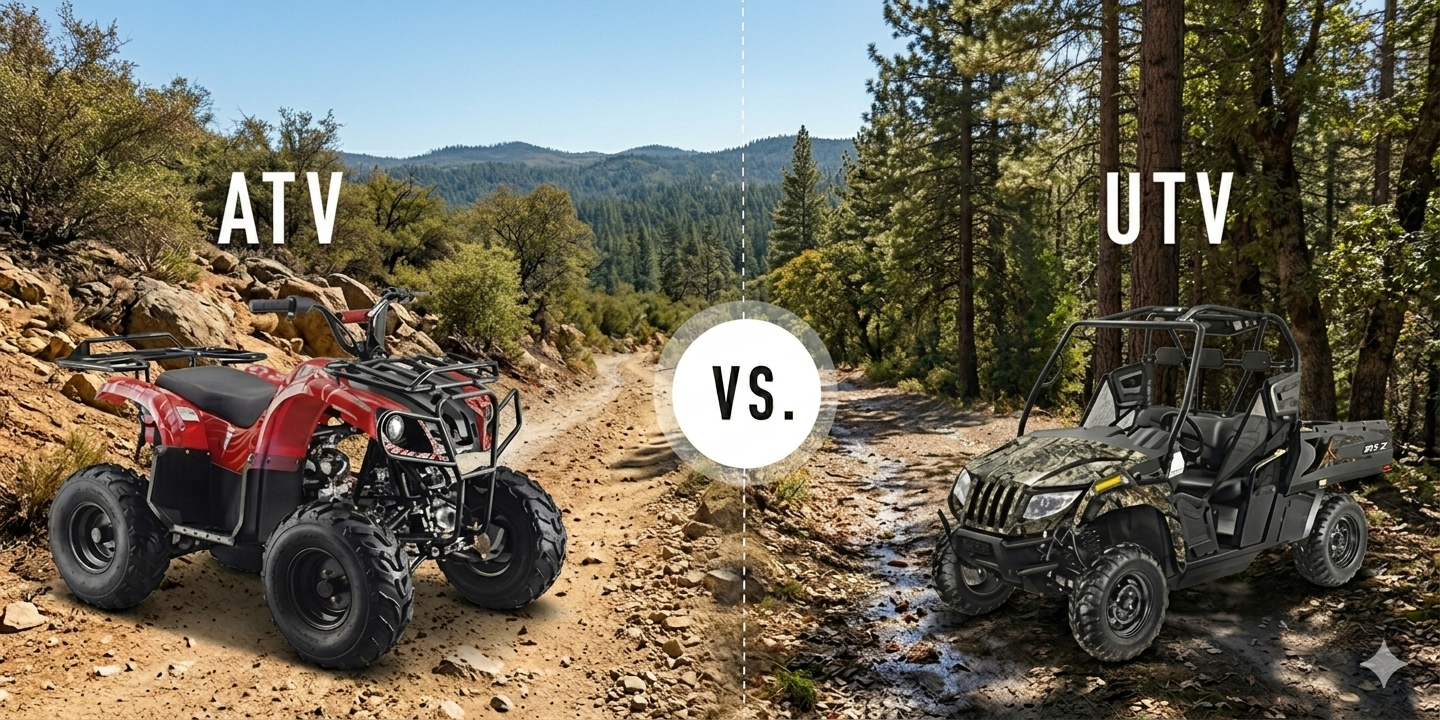
ATVs come in two fundamental categories — sport and utility — and buying the wrong one for your primary use is the first and most common mistake.
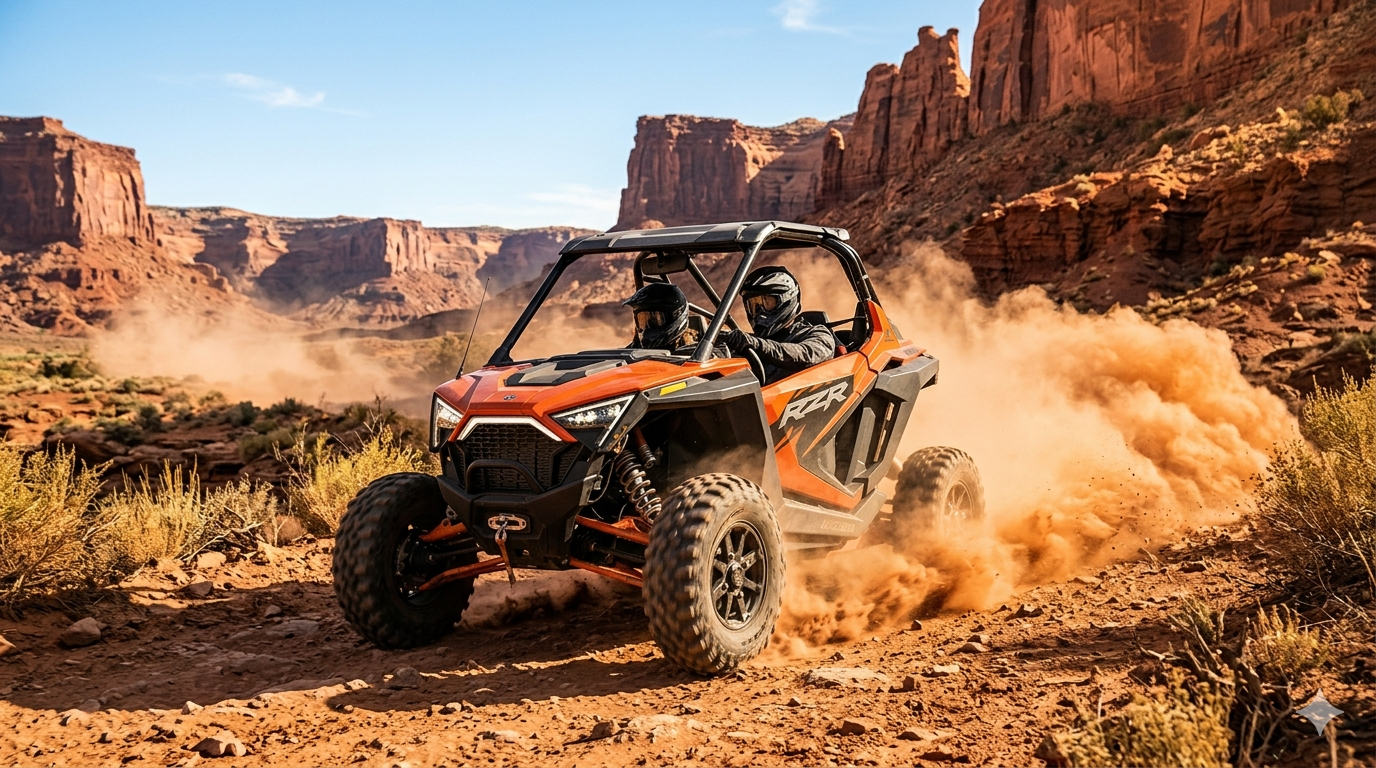
Sport ATVs are designed for performance — lighter weight, more aggressive handling, higher power outputs, and a chassis tuned for fast trail riding, motocross tracks, and adrenaline. They’re exciting to ride and uncomfortable to work on. They don’t have racks. They’re not designed to tow. If your fantasy is wide-open throttle on a dedicated ATV trail, sport is the right direction.
Utility ATVs are designed for versatility — a comfortable ergonomic position for long days of riding, front and rear cargo racks, towing capacity up to 1,500 lbs, selectable 4WD, and an engine tuned for broad, accessible torque rather than peak horsepower. They do property work on weekdays and trail ride on weekends. For most first-time buyers, this is the right category.
The honest recommendation for first-timers: Start with a utility ATV unless you’re certain your primary use is performance trail riding or motocross. You can always ride a utility ATV aggressively. You cannot easily haul feed bags on a sport quad.
Step Two: Understand the Engine Size Decision
ATV engine displacement is measured in cubic centimeters (cc) and roughly corresponds to power output and physical size of the machine. For first-timers, bigger is not automatically better.
Under 400cc: Best for lighter riders, younger adults, or buyers who primarily do light property work and casual trail riding. Less intimidating to learn on. Limited towing and load capacity.
400–600cc: The sweet spot for most first-time buyers. Enough power for genuine utility work and capable trail riding without being overwhelming. Honda’s 420cc Rancher and Yamaha’s 450cc Kodiak live here — two of the most trusted first ATV recommendations in the community.
700–1000cc: More power than most first-timers need and more machine than most first-timers are ready to manage confidently. Fine for experienced buyers — premature for those just starting.
The general principle: start at the size that covers your use case and nothing more. You can always upgrade. A machine that intimidates you costs confidence and enjoyment.
Step Three: New vs. Used — The First ATV Decision
For first-time ATV buyers specifically, the used market is worth a serious look — for a reason that goes beyond just price.
First ATV owners learn. There will be moments of tip-over, off-camber sliding, and minor collisions with things that weren’t visible until they were very close. This is normal. It’s part of the process. Doing this learning on a machine that you paid $4,000 rather than $9,000 for is psychologically and financially easier.
A clean, well-maintained 3–5 year old Honda Rancher 420 or Yamaha Kodiak 450 from a reputable seller with documented service history is an excellent first ATV. It’s mechanically proven, parts are widely available, dealer support is easy to access, and if it picks up a cosmetic battle scar during the learning process, the financial consequence is manageable.
If buying used, always:
- Start the machine cold and listen for unusual sounds
- Check for oil leaks around the engine and frame
- Inspect the frame for welded repairs (indicating a significant crash)
- Test all four-wheel drive modes
- Check tire condition and look for dry rot or unusual wear
- Ask for service records
Step Four: What Your Truck Can Actually Handle
This is where first-time buyers get into trouble more often than any other single decision — buying an ATV that their existing truck or SUV can’t safely transport.
ATVs don’t come with their own transportation. They need a trailer, and that trailer — loaded with the ATV — needs to be within your vehicle’s tow rating AND payload capacity.
A mid-size utility ATV weighs 500–700 lbs. Add a basic trailer at 500–700 lbs, and you’re transporting 1,000–1,400 lbs. Most half-ton trucks and many mid-size SUVs can handle this comfortably. Where buyers get in trouble is with larger ATVs, heavier trailers, or vehicles whose payload capacity is already consumed by passengers and gear.
Before buying any ATV, know:
- Your tow vehicle’s maximum tow rating
- Your tow vehicle’s payload capacity (in the owner’s manual or door jamb sticker)
- The ATV’s dry weight
- The trailer’s weight
The combination of ATV + trailer (+ any additional gear) needs to fit within both the tow rating and the payload capacity with a meaningful safety margin.
Step Five: Budget for the Real Cost of ATV Ownership
The sticker price of the ATV is the beginning of the budget, not the end of it. First-time buyers who budget only for the machine consistently experience sticker shock in months two through six.
The real first-year ATV budget:
- ATV purchase: $5,000–$10,000 (new utility, 450–700cc range)
- Trailer: $800–$2,000 (basic enclosed or open trailer)
- Safety gear: $300–$600 (helmet, gloves, boots, goggles) — non-negotiable
- Insurance: $200–$600/year depending on state, coverage level, and ATV value
- First service (break-in period): $100–$200 typically
- Annual maintenance: $200–$400 (oil, filters, belt inspection, tire check)
- Trail passes/land access: $25–$150/year depending on where you ride
Total realistic first-year cost beyond the ATV purchase: $2,000–$4,500
Build this into your budget before you negotiate the purchase price, not after.
Step Six: The Brands Worth Knowing as a First-Timer
The ATV brand question generates passionate opinions in enthusiast communities. For first-timers, the honest guidance simplifies considerably.
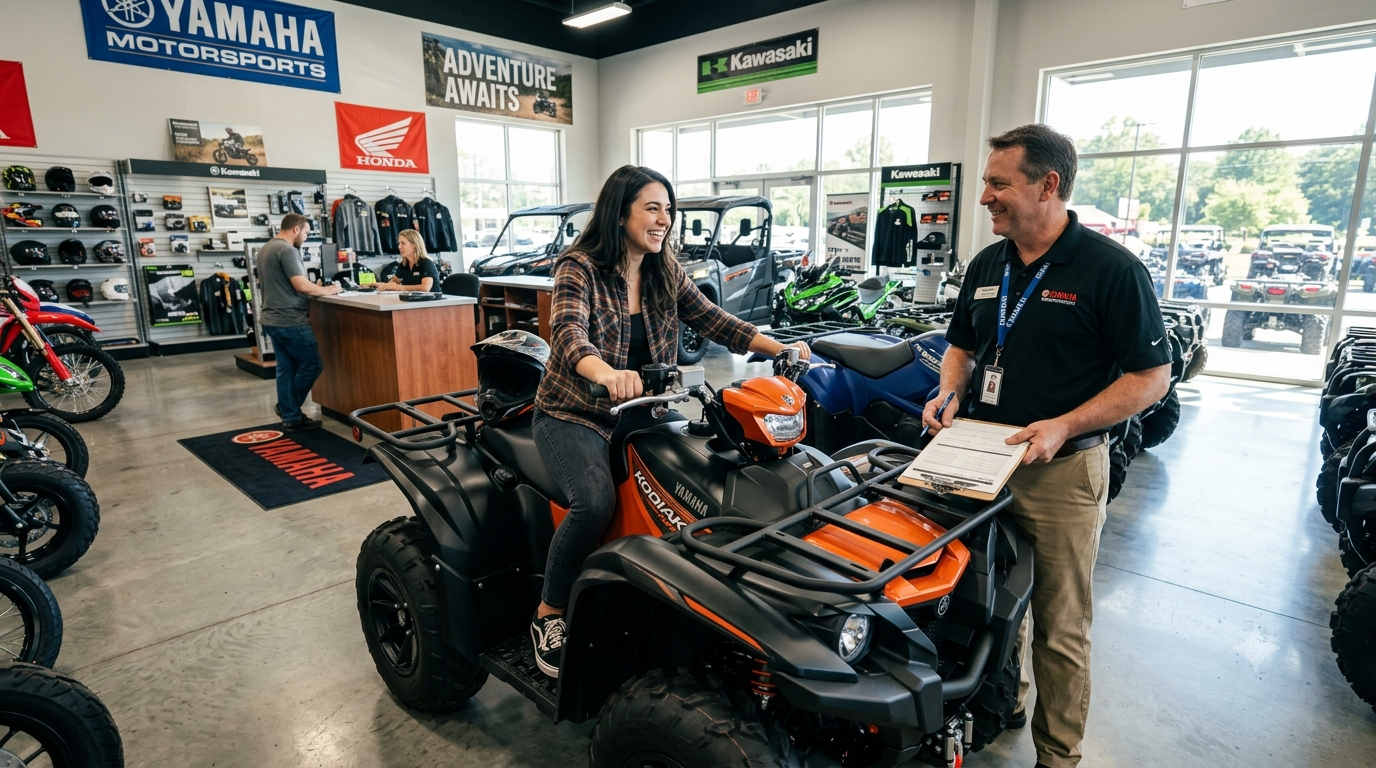
Honda is the recommendation for buyers who prioritize reliability above everything else. The FourTrax Rancher 420 is one of the most proven, most serviced, most trouble-free utility ATVs ever built. It’s not the most exciting machine in any category — it’s the one that starts every time, runs for years with basic maintenance, and has a dealer on almost every exit ramp in America.
Yamaha is the recommendation for buyers who want a step up in trail performance without sacrificing the reliability that makes real-world ownership pleasant. The Kodiak 450 and 700 EPS are standouts — the Ultramatic CVT transmission is the best in the segment, and Yamaha’s owner satisfaction scores are consistently excellent.
Polaris and Can-Am offer more performance and more features at comparable price points — but slightly more complexity in the ownership experience. Excellent machines for riders who maintain them properly. A small step down in forgiveness for those who don’t.
The first-timer’s tier recommendation: Start with Honda or Yamaha. They’re not as flashy as the alternative options. They’ll still be running in 15 years when some of the alternatives need significant work.
Step Seven: Where to Actually Buy
Authorized dealers are the safest purchase source — new and certified pre-owned inventory, service departments, parts access, and warranty support. The price premium over private sales is real; the support infrastructure that comes with it is also real.
Private sellers offer the best prices but require you to do all your own due diligence. If you’re buying used from a private seller, consider paying for an independent inspection from an ATV mechanic — typically $75–$150 — before completing a purchase above $4,000.
Online marketplaces (Facebook Marketplace, Craigslist, Cycle Trader) surface a broad inventory but require careful vetting. Never wire transfer money without seeing the machine in person. Never buy from someone who can’t meet at the machine’s location.
The One Thing Every First-Timer Should Do Before Riding
Take a safety course.
The ATV Safety Institute offers hands-on safety training courses across the United States. They’re inexpensive, take a few hours, and dramatically accelerate the learning curve on fundamental skills — throttle control, body positioning on hills, handling loose terrain, and safe stopping techniques.
More importantly, they teach the habits that prevent the injuries that happen most frequently to new riders: rollovers on hills, tip-overs in corners, and overcorrection on loose surfaces.
You wouldn’t buy a motorcycle and skip the MSF course. The same logic applies here.
The Honest Bottom Line
“Adventure is worthwhile in itself.” — Amelia Earhart
Your first ATV should be exciting to ride and straightforward to own. The way to get there is to match the machine to your actual use case, buy the right size for your experience level, understand the full cost before you commit, and prioritize brands that make ownership simple rather than complicated.
Done right, a first ATV purchase opens up a category of outdoor recreation that delivers years of genuine enjoyment. Done wrong, it’s an expensive lesson in what you should have bought the first time.
You’re reading this guide. You’re already ahead.