
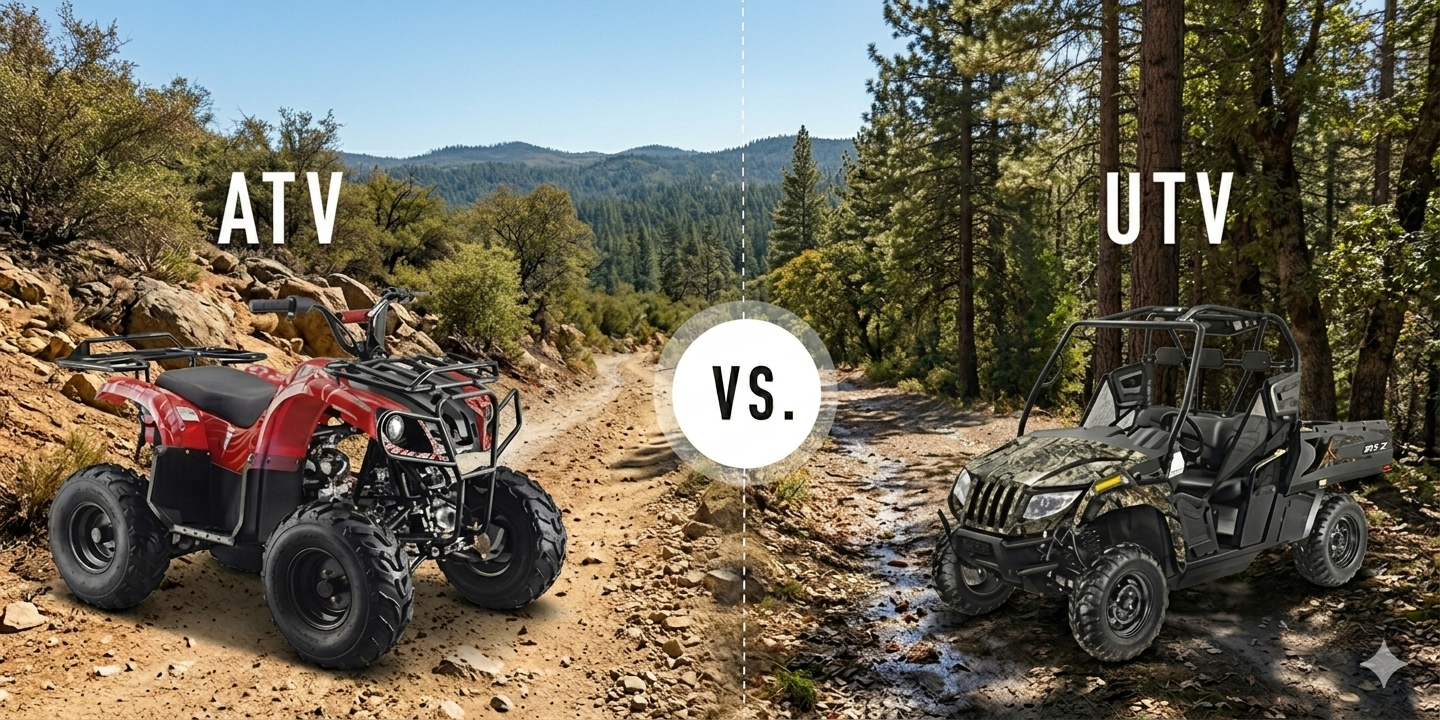

Off-road vehicles have never been more capable, more refined, or more fun than they are in 2026. Whether you’re hunting in the backcountry, working a rural property, racing dunes with friends, or just looking for a weekend escape from the pavement, there’s a machine built specifically for what you want to do.
But before you start comparing models and spec sheets, there’s a more fundamental question to answer: ATV or UTV?
The love of the outdoors is something that must be nurtured and developed.
Ernest Hemingway
It sounds simple. It’s not. The choice between an all-terrain vehicle and a utility task vehicle — also known as a side-by-side — touches everything from how the machine rides and handles, to how many people can come along, to what kind of terrain you can actually access, to how much you’ll spend over the life of ownership. Get it right and you’ll have a machine that feels purpose-built for your life. Get it wrong and you’ll be eyeing your neighbor’s setup from across the fence.
Here’s everything you need to know to make the right call.
What’s the Difference? Understanding the Basics
At first glance, ATVs and UTVs use the same off-road terrain — but they are designed for completely different needs, different riding styles, and different use cases.
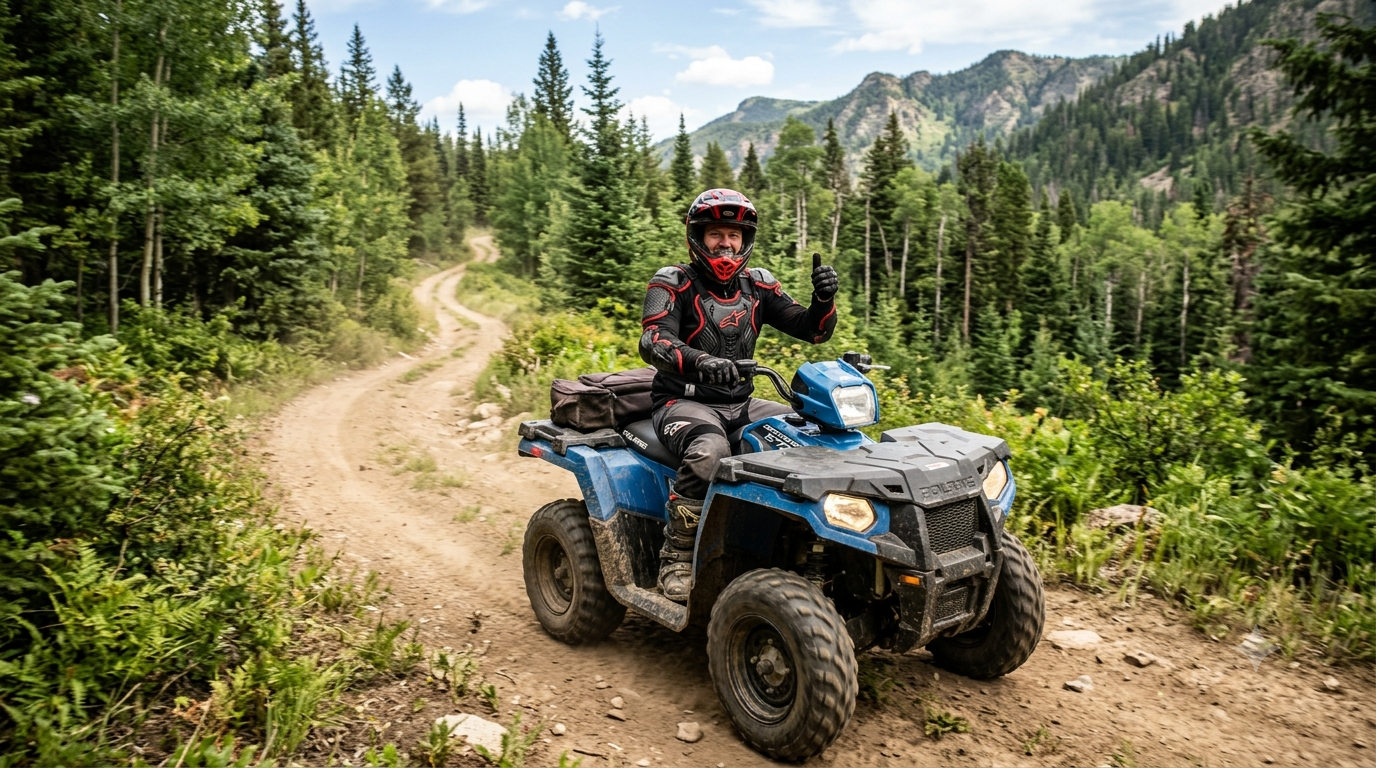
ATVs (All-Terrain Vehicles) — also called quads or four-wheelers — are designed for a single rider, though some models accommodate one passenger. The rider sits over the machine like a motorcycle, steers with handlebars, and actively shifts their body weight through turns and over uneven terrain. That physical engagement is part of the appeal. ATVs are compact, nimble, and built to go places larger vehicles simply can’t follow — narrow forest trails, tight switchbacks, technical rocky routes that reward agility over brute force.
UTVs (Utility Task Vehicles) — also called side-by-sides or SxS — are a different animal entirely. The driver and passengers sit inside a cab, like a car, with a steering wheel, pedals, individual or bench seating for two to six passengers, and safety features including seat belts and roll cages. UTVs are larger, heavier, and significantly more capable when it comes to hauling, towing, and transporting passengers. They are often described as the point where off-road recreation meets genuine utility — rivaling serious four-wheel-drive vehicles in what they can accomplish.
The seat position tells the whole story. On an ATV, you sit on top and become part of the machine’s movement. In a UTV, you sit inside and the machine absorbs the terrain for you.
Head-to-Head: The Key Differences
Maneuverability & Trail Access
ATVs win this category convincingly. With a narrow width of typically 48–50 inches and a light, agile chassis, an ATV can thread through forest trails, navigate between trees, and access backcountry routes that are completely off-limits to a wider side-by-side. For hunters accessing remote public land, or trail riders who love technical single-track routes, the ATV’s compact footprint is a genuine competitive advantage that no UTV can replicate regardless of price.
UTVs are wider — typically 60 to 72 inches or more — and that width determines what trails and terrain you can access. Many National Forest roads, designated ATV trails, and backcountry routes have width restrictions that effectively exclude UTVs. If trail variety and remote access are priorities, the ATV has a meaningful edge.
Winner: ATV — for tight trails, backcountry access, and technical terrain.
Passenger Capacity & Group Riding
This is where UTVs are the only option. Most UTVs seat two to four passengers comfortably; larger crew models seat five or six. If you want to ride with family, bring kids along, or head out as a group without splitting into separate vehicles, a side-by-side is the only machine that makes it possible.
An ATV, by design, is a solo vehicle. Some models have rear passenger seating, but it’s limited in comfort and range — and most experienced ATV riders regard two-up riding as a compromise, not a feature. If your vision of off-road fun involves the whole family or a group of friends riding together, a UTV isn’t just preferable — it’s the only practical choice.
Winner: UTV — no contest for group and family riding.
Utility & Work Capability
UTVs are the workhorses of the off-road world — and it’s not close. A capable side-by-side can tow up to 2,500 lbs, carry over 1,000 lbs in a heavy-duty cargo bed, pull implements, haul equipment, and handle the kind of property work that would otherwise require a small tractor. For farmers, ranchers, property owners, and anyone with serious acreage to manage, a UTV’s utility capability can eliminate the need for multiple specialized vehicles.
ATVs handle light utility tasks well — towing a small trailer, carrying gear in a front or rear rack, spraying fields, or running fence line. But their load capacity is significantly lower and their stability under heavy loads is more limited. For recreational riders with occasional light work needs, an ATV is perfectly capable. For anyone whose primary need is genuine work performance, a UTV is the right tool.
Winner: UTV — purpose-built for serious utility and property work.
Safety & Comfort
UTVs offer a fundamentally safer and more comfortable riding environment. Seat belts, ROPS (roll over protection structure) cages, doors, and an enclosed cab design provide meaningful protection that open ATVs simply don’t have. For families with children, or anyone concerned about rollover risk on steep or technical terrain, the UTV’s safety architecture is a significant consideration.
ATVs require active rider input — constant body weight shifts, physical engagement, and genuine skill to ride safely on challenging terrain. Frequent body movements can quickly tire the rider, and ATVs are more prone to tipping on steep slopes or in tight turns if the rider misjudges the terrain. They’re not unsafe by nature — millions of Americans ride them safely every year — but they reward experience and punish inattention more than a UTV does.
Comfort on longer rides also favors the UTV significantly. A side-by-side with proper seating, a windshield, and long-travel suspension can cover hours of rough terrain without exhausting its occupants. An ATV’s physical demands catch up with most riders after extended sessions.
Winner: UTV — for safety features, passenger protection, and long-ride comfort.
Performance & Pure Fun Factor
This one depends on what kind of fun you’re looking for. ATVs are lighter, more responsive, and deliver a more visceral, connected riding experience. Quick acceleration, instant direction changes, and the physical feedback loop between rider and machine make a sport ATV genuinely thrilling in a way that a heavier UTV can’t fully replicate. For pure adrenaline on tight trails or motocross-style terrain, the ATV experience is hard to beat.
UTVs deliver their own brand of excitement — particularly sport side-by-sides like the Polaris RZR or Can-Am Maverick R, which feature long-travel suspension, serious horsepower, and the ability to hit jumps and berms with a passenger in the next seat. Dune running, desert racing, and high-speed trail riding in a sport SxS is genuinely exhilarating — just in a different way than ATV riding.
Winner: Tie — ATVs for raw, physical excitement; UTVs for high-speed group thrills.
Cost & Budget
ATVs are the more accessible entry point across the board. A quality utility ATV starts in the $5,000–$8,000 range, mid-range sport models run $8,000–$12,000, and even premium performance ATVs rarely exceed $15,000. Insurance, storage, and maintenance costs are also lower.
UTVs carry a significantly higher price tag at every level of the market. Entry-level utility side-by-sides start around $12,000–$15,000, mid-range crossover models run $18,000–$30,000, and premium sport UTVs like the Polaris RZR Pro R start at $34,999 — with the flagship Polaris RZR Pro R Factory reaching $139,999. The price difference between ATV and comparable UTV can be as much as 50%, which is a significant factor for many buyers.
Winner: ATV — lower purchase price, insurance, and total cost of ownership.
Transport & Storage
ATVs are dramatically easier to transport and store. Weighing 365–420 kg on average, most ATVs fit in the bed of a standard pickup truck or onto a small trailer. Storage at home is manageable even in a standard single-car garage.
UTVs weigh up to 1,040 kg and measure six feet or more in width. Transporting one requires a purpose-built trailer — which adds significant cost and planning to every off-road trip. Storage requires a larger dedicated space. If you live in an area where transport logistics or storage space are constraints, the ATV’s smaller footprint is a genuine practical advantage.
Winner: ATV — far easier and cheaper to transport and store.
At a Glance: ATV vs UTV
| ATV (Quad) | UTV (Side-by-Side) | |
| Seating | 1 rider (some 2) | 2–6 passengers |
| Controls | Handlebars, body weight | Steering wheel, pedals |
| Width | 48–50 inches | 60–72+ inches |
| Weight | 365–420 kg | Up to 1,040 kg |
| Towing capacity | 1,000–1,500 lbs | Up to 2,500 lbs |
| Trail access | Excellent | Moderate (width restricted) |
| Safety features | Minimal | ROPS cage, seat belts, doors |
| Starting price | $5,000+ | $12,000+ |
| Best for | Solo riders, technical trails, budget buyers | Families, utility work, group riding |
What They Have in Common
Despite their differences, ATVs and UTVs share more common ground than the category debate might suggest. Both handle genuine off-road terrain that would stop a standard vehicle cold. Both are available in utility and sport configurations across a wide range of price points. Both support a rich ecosystem of aftermarket accessories — from lift kits and winches to sound systems and storage solutions. And both are built by the same trusted brands — Polaris, Can-Am, Honda, Yamaha, and Kawasaki — with proven dealer networks and strong parts availability across the United States.
Both also deliver something that four walls and a schedule simply can’t: the freedom to go where the pavement ends and the real adventure begins.
Top Brands to Know in 2026
ATV — Top Brands
- Honda — The gold standard for reliability; ATVs that run for decades with minimal drama; best for utility buyers and first-timers
- Yamaha — Best for all-day rideability; the Kodiak and Grizzly lines dominate the utility segment with smooth, confidence-inspiring performance
- Polaris — Most choice in the market; the Sportsman line is a staple for property owners; best range from entry utility to high-output sport
- Can-Am — Largest model variety; most aggressive performance at every price point; the Outlander lineup leads the high-performance utility segment
UTV — Top Brands
- Polaris — Dominates the UTV market with the RZR (sport), Ranger (utility), and General (crossover) — three of the most recognized names in side-by-sides
- Can-Am — The performance leader; the Maverick R is the top sport UTV of 2026; the Defender leads in heavy-duty utility with up to 2,500 lbs towing
- Honda — Most reliable UTV brand; the Pioneer lineup is praised for mechanical simplicity, durability, and long-term ownership satisfaction
- Yamaha — The Wolverine RMAX 1000 is a serious competitor in trail riding; known for smooth performance and an excellent factory accessory ecosystem
Before You Buy — Questions to Ask Yourself
“To travel is to live.” — Hans Christian Andersen
Run through these before you head to the dealership:
- Will you ever ride with passengers? If yes — family, friends, kids — a UTV is the only practical choice. ATVs are solo machines at heart.
- What trails or terrain will you access most? Narrow forest trails and technical backcountry routes favor ATVs. Open desert, private land, and wider roads suit UTVs well.
- Is this primarily for work or recreation? Heavy hauling, towing, and property management demand a UTV’s capability. Recreational trail riding is where ATVs shine.
- What’s your total budget — including trailer and storage? A UTV’s sticker price is just the beginning. Add a trailer, larger storage space, and higher insurance to the real cost calculation.
- How experienced are you? ATVs reward skill and punish inattention more than UTVs. First-time riders and families with children are often more comfortable starting in a UTV.
- How will you transport it? If you drive a standard pickup and don’t own a trailer, an ATV is a dramatically simpler logistical equation.
So, Which One Should You Buy?
Here’s the honest bottom line: both are excellent machines — the right one depends entirely on how you plan to use it.
If you’re a solo rider who loves technical trails, wants to go fast and light, values raw riding engagement, and is working within a budget — the ATV is your machine. It’s nimble, accessible, and capable of accessing terrain a UTV simply can’t follow.
If you want to ride with family or friends, need genuine utility for work or hauling, prioritize safety and comfort on longer rides, or simply want a more versatile machine that can do more things for more people — the UTV is worth every dollar of the premium.
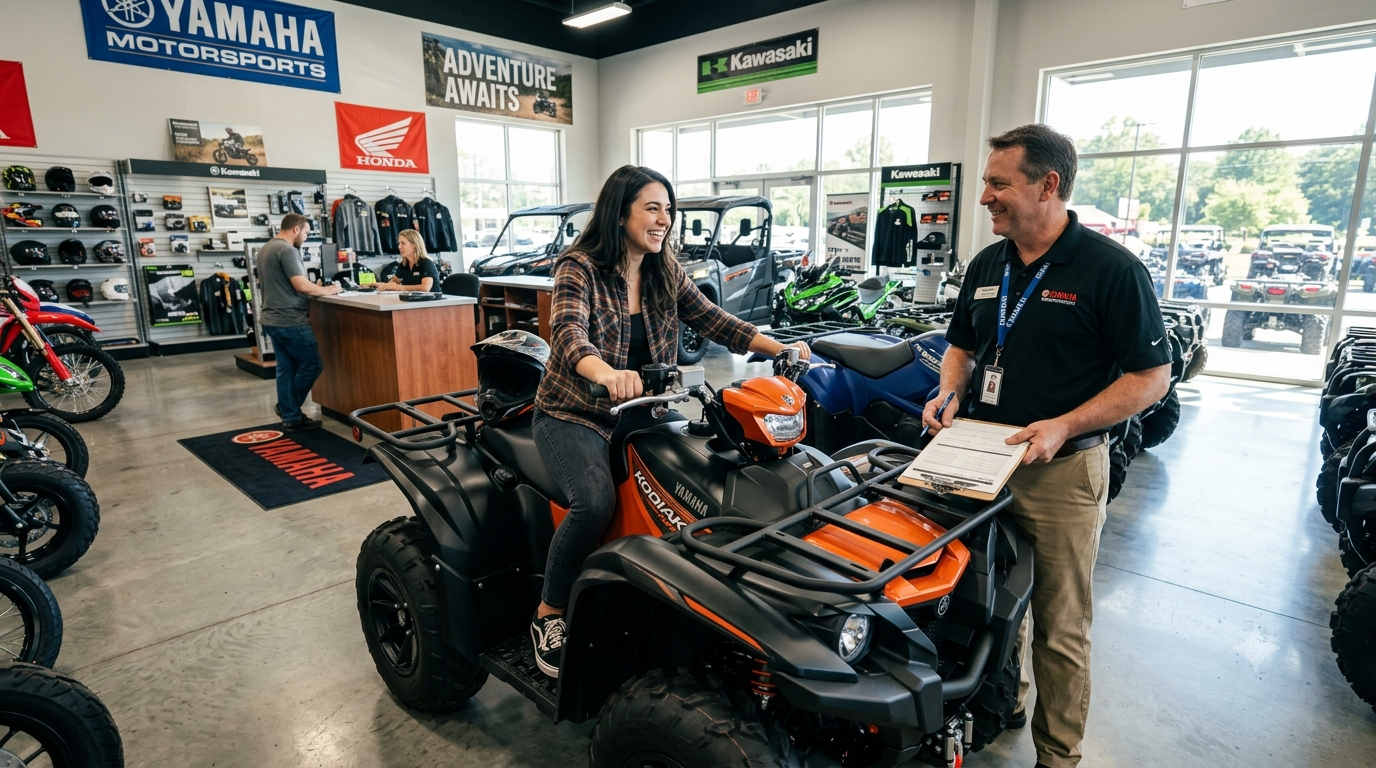
Still on the fence? Come walk the floor. Sit in both. Take a demo ride if the dealership offers one. The machine that feels right when you’re behind the wheel — or on the handlebars — usually is.
Ready to find your perfect off-road machine? Visit us to explore our full lineup of ATVs and UTVs from Polaris, Can-Am, Honda, Yamaha, and more — our team is here to match you with the right machine for your terrain, your crew, and your next great adventure.