

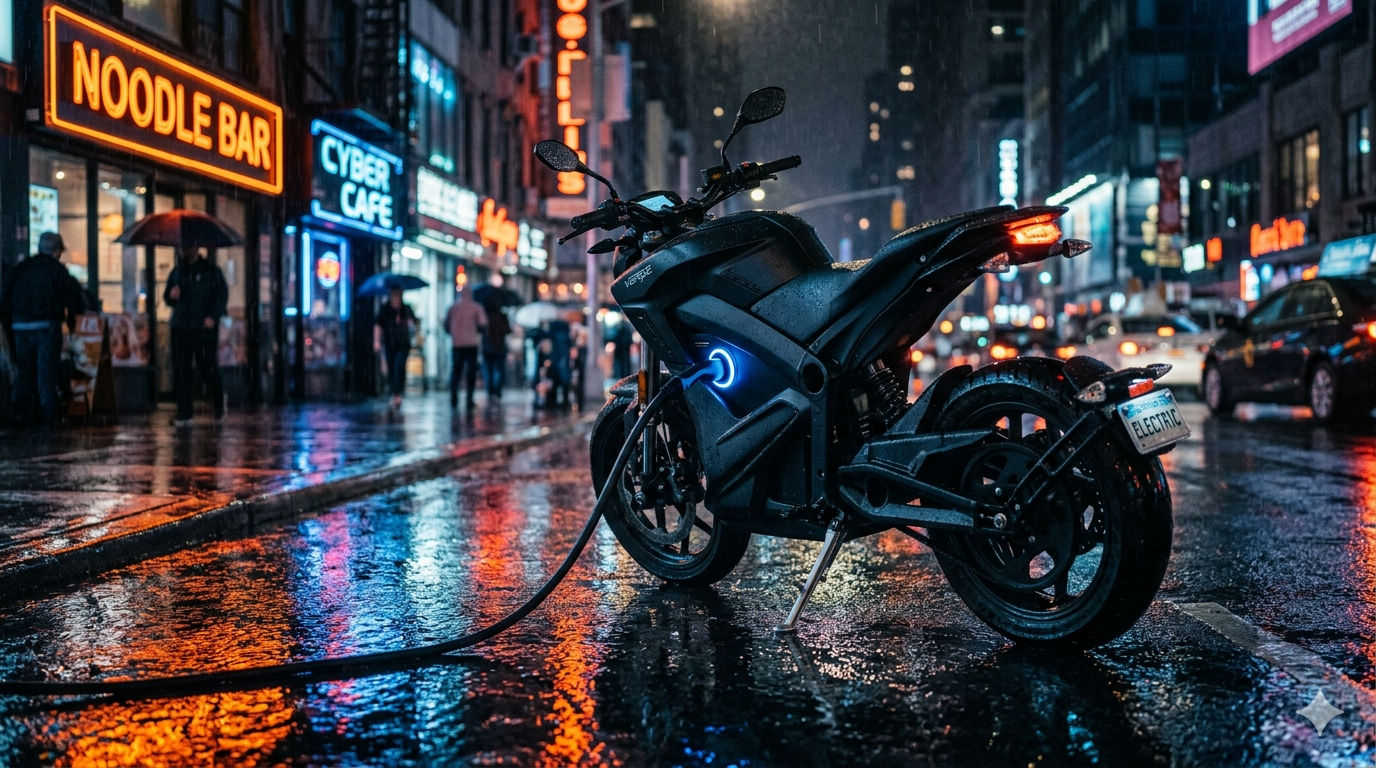

There is a moment every rider who test rides an electric motorcycle remembers. The throttle opens. There is no sound. There is no gear to hunt. There is only instant, seamless, face-bending torque — delivered from zero RPM with a smoothness that makes every gas engine in the world feel slightly antiquated by comparison.
- What’s Actually Changed in 2026?
- The Case For: Why Electric Motorcycles Win
- The Case Against: Where Electric Still Falls Short
- Head-to-Head: Electric vs Gas
- The Best Electric Motorcycles of 2026
- Top Electric Motorcycle Brands to Know in 2026
- Before You Buy — Questions Every Electric Motorcycle Buyer Should Ask
- So, Are Electric Motorcycles Worth It?
That moment is the electric motorcycle’s strongest argument. It doesn’t need to be explained. It needs to be experienced.
But a test ride is not an ownership experience. And the question of whether electric motorcycles are worth it in 2026 is more nuanced than that first intoxicating twist of the throttle suggests. Range anxiety, charging infrastructure, upfront cost, cold weather performance, battery lifespan — these are real considerations that deserve honest answers, not marketing spin.
Electric motorcycles are no longer experimental curiosities or short-range commuter novelties. In 2026, the category has matured into a serious performance segment — offering instant torque, advanced rider tech, and increasingly practical real-world range. But that doesn’t mean they’re the right choice for every rider. This guide gives you the complete picture — the genuine advantages, the real limitations, the best models available right now, and the honest answer to whether one belongs in your garage.
The electric light did not come from the continuous improvement of candles.
Oren Harari
What’s Actually Changed in 2026?
Before diving into the pros and cons, it’s worth stepping back and understanding how dramatically the electric motorcycle landscape has shifted — because the conversation in 2026 is fundamentally different from even two or three years ago.
High-voltage systems up to 98V, early-stage solid-state battery deployments, and dramatically improved thermal management have pushed real-world usable range into territory that meaningfully changes how you plan a riding day. The top electric models in 2026 offer between 100 and 160 miles of combined real-world range — and on select flagship models, solid-state battery technology is pushing that figure even further.
The CCS (Combined Charging System) connector has consolidated as the dominant fast-charging standard across both North America and Europe, and most 2026 electric motorcycles support it natively or via a simple adapter. The practical result is that the same charging stations serving electric cars can serve your motorcycle — and there are many more of them than there were in 2022 or 2023.
The electric motorcycle market matured faster than most people expected — and in 2026, it has moved well beyond the early-adopter phase. Rising fuel costs, stricter emissions regulations, and crowded urban environments are all accelerating mainstream adoption. The question is no longer whether electric motorcycles are viable. It’s whether they’re right for you.
The Case For: Why Electric Motorcycles Win
Instant Torque and a Riding Experience Like Nothing Else
Instant torque from 0 RPM is a qualitatively different riding experience. Riders who’ve switched consistently describe city riding as more relaxed, not less exciting. No clutch, no gear hunting in traffic. That simplicity — combined with acceleration that beats most gas bikes off the line — creates a riding dynamic that genuinely converts skeptics on first contact.
Many 2026 EV motorcycles reach 0–100 km/h in under 4 seconds. For context, that’s supercar-level acceleration in a machine you can lane-split through city traffic. The power delivery is seamless, progressive, and endlessly controllable — exactly what modern rider aids are trying to simulate in gas bikes, except here it comes standard from the physics of the motor itself.
Dramatically Lower Running Costs
Electric motorcycles are significantly cheaper to maintain than gas bikes. Because electric motors have very few moving parts, they eliminate the need for engine oil, spark plugs, clutches, and exhaust filters. You primarily only need to maintain tires, brake pads, and drive belts.
The fuel cost gap is equally significant. Electric motorcycles cost $0.03 to $0.05 per mile to run — compared to $0.10 to $0.15 per mile for gas motorcycles depending on fuel prices. Over a full riding season, those numbers compound into real savings. Total cost of ownership over five years often narrows the purchase price gap considerably, particularly for high-mileage commuters.
Home Charging Is More Convenient Than a Gas Station
This is the insight that surprises most people who haven’t owned an electric vehicle. The vast majority of electric motorcycle owners do most of their charging at home, overnight. Installing a Level 2 charger (240V, similar to a dryer outlet) at home is the single biggest quality-of-life upgrade you can make. Level 2 charging typically delivers 15 to 30 miles of range per hour, meaning most bikes can be fully charged overnight from nearly empty.
For daily commuters and weekend riders whose regular routes fall within range, never stopping at a gas station again is a genuine lifestyle upgrade — not a compromise.
Zero Tailpipe Emissions
Electric motorcycles produce zero tailpipe emissions, making them a more environmentally friendly option. They contribute significantly less to air pollution and greenhouse gas emissions compared to gas motorcycles, which emit carbon dioxide, hydrocarbons, and nitrogen oxides. For riders who care about their environmental footprint — or who live in cities with increasingly aggressive emissions regulations — an electric motorcycle removes the concern entirely.
Stealth and Simplicity
The absence of engine noise is either a feature or a deal-breaker depending on who you ask. For urban riders, trail riders, and those who share neighborhoods with people who don’t appreciate 6am exhaust notes, the silence is a genuine advantage. Fewer moving parts means fewer things to break — which particularly matters for newer riders who don’t yet have the mechanical confidence to diagnose and manage gas engine complexity.
The Case Against: Where Electric Still Falls Short
Range and Charging Speed vs. Gas
A typical gas motorcycle can travel 200–300 miles on a single tank, and refueling takes only a few minutes at any gas station. Even the best electric motorcycles in 2026 max out around 160 miles of real-world range under mixed conditions — and fast charging, while significantly better than it was three years ago, still takes 30–60 minutes to meaningfully replenish a battery.
The practical rule of thumb: plan around 70–80% of the advertised range figure, accounting for headwinds, cold weather, highway speeds, and rider weight. For most daily riding, that’s entirely workable. For 300-mile adventure days in areas with sparse infrastructure, it demands route planning that gas riders never think about.
Higher Upfront Cost
A capable 600cc gas sportbike costs $8,000–$12,000. The equivalent electric performance costs $15,000–$22,000. Total cost of ownership over 5 years often narrows the gap — but the purchase price is real. For budget-conscious buyers or those who simply don’t want to spend that much on a motorcycle, the upfront premium is a genuine barrier.
Cold Weather Performance
Lithium batteries lose range in cold weather — typically 20–30% at freezing temperatures. For year-round riders in northern states, that seasonal range reduction is a meaningful planning factor. Heated garages and pre-conditioning the battery before riding mitigate this, but it’s a real-world limitation that doesn’t affect gas bikes.
Battery Replacement Costs
Battery degradation is the long-term ownership question that deserves honest attention. Most manufacturers quote 6–8 years before noticeable capacity degradation, but when replacement is eventually needed, the cost is significant. Confirm battery warranty terms, replacement cost estimates, and manufacturer support commitments before committing to any electric motorcycle purchase.
Head-to-Head: Electric vs Gas
| Electric Motorcycle | Gas Motorcycle | |
| Upfront cost | $8,000–$25,000+ | $5,000–$20,000+ |
| Running cost per mile | $0.03–$0.05 | $0.10–$0.15 |
| Maintenance | Minimal (tires, brakes, belt) | Regular (oil, filters, chain, plugs) |
| Real-world range | 100–160 miles | 200–300 miles |
| Refuel/recharge time | 30–60 min (fast charge | 5 minutes |
| 0–60 acceleration | 2.5–4 seconds (most models) | 3–6 seconds (varies widely) |
| Cold weather range | Down 20–30% | Unaffected |
| Noise | Near silent | Engine character and sound |
| Emissions | Zero tailpipe | CO₂, hydrocarbons, NOx |
| Best for | Commuters, urban riders, tech adopters | Long-distance tourers, rural riders |
The Best Electric Motorcycles of 2026
Best Urban Commuter — LiveWire S2 Del Mar
Starting Price: ~$15,500 | Power: ~80 hp | Range: ~100–120 miles
The S2 Del Mar represents the most compelling electric street bike for real-world riders. Built on LiveWire’s Arrow platform, it’s lighter and more agile than the original LiveWire and puts the riding experience — not the spec sheet — first. For urban and suburban commuters who want a genuinely premium daily rider from an American brand with serious engineering behind it, the Del Mar is the benchmark.
Best All-Round — Zero SR/F
Starting Price: ~$20,000+ | Range: ~110–120 miles
The Zero SR/F remains the most balanced electric motorcycle you can buy in 2026. Strong real-world range, a well-sorted chassis, broad model support from a brand that has been building electric motorcycles longer than anyone else in the US, and a dealer and service network that gives real ownership confidence. For buyers making their first switch to electric, Zero’s experience and infrastructure are reassuring.
Best Touring — Energica Experia
Starting Price: ~$25,000 | Range: ~150–170 miles
For the rider who refuses to sacrifice long-distance touring capability on the altar of electrification, the Energica Experia is the answer. The longest real-world range in the mainstream electric touring segment, fast DC charging that adds significant range in a highway charging stop, and a premium Italian-built chassis that earns serious respect on long days. If range is your primary concern, start here.
Best Premium — Verge TS Pro
Starting Price: ~$29,900 | Range: ~350+ km
The all-solid-state battery is making its first significant impact in 2026, powering premium models like the Verge TS Pro. A 33.3 kWh solid-state pack can reach up to 370 miles (~600 km) per charge, with rapid charging adding roughly 186 miles (~300 km) in just 10 minutes. For buyers who want the absolute frontier of what electric motorcycle technology can currently achieve, the Verge TS Pro is in a category of its own.
Best Value Entry Point — Zero S
Starting Price: ~$11,000+ | Range: ~90–100 miles
For riders who want to experience electric motorcycle ownership without the $20,000+ commitment, the Zero S offers the brand’s proven platform at a more accessible entry price. Real-world range is honest and workable for most daily riding, and Zero’s reliability track record is the strongest of any dedicated electric motorcycle manufacturer.
Top Electric Motorcycle Brands to Know in 2026
- Zero Motorcycles — The most established dedicated electric motorcycle brand in America; widest model range; strongest dealer and service network; best choice for first-time EV buyers
- LiveWire (Harley-Davidson) — Premium American electric engineering; the S2 Del Mar is a landmark urban motorcycle; brand credibility and dealer access backed by Harley’s network
- Energica — Italian premium touring specialist; best-in-class range for long-distance riders; the choice for serious adventure tourers unwilling to compromise on distance
- Verge — The technology frontier; solid-state battery pioneer; for buyers who want the most advanced electric motorcycle engineering available in 2026
- Stark Future — The electric off-road specialist; the Stark Varg MX is regarded as the best electric motocross bike ever built
Before You Buy — Questions Every Electric Motorcycle Buyer Should Ask
Not all those who wander are lost. — J.R.R. Tolkien
J.R.R. Tolkien
The biggest factor is not power. It’s charging access and your riding pattern. If your lifestyle fits an electric one, you’ll love it. If it doesn’t — you’ll miss gas freedom. Work through these before you decide:
- Do you have access to home charging? Home overnight charging is the foundation of a great electric ownership experience. Without it, the convenience equation reverses entirely.
- What does your typical riding day look like? Daily commutes under 60 miles round-trip are the electric motorcycle’s strongest use case. Multi-day touring in remote areas still favors gas.
- Are you in a cold-weather climate? Winter riding will reduce your usable range by 20–30%. Factor this into your real-world range expectations before buying.
- What’s the service and dealer network like in your area? Zero and LiveWire have the strongest US service footprints. More exotic brands may leave you waiting.
- Have you checked available tax incentives? Federal and state EV incentives can meaningfully reduce the upfront cost premium. Confirm current eligibility before finalizing your budget.
- Have you test ridden one? An electric motorcycle feels nothing like a gas bike. The experience is transformative for most riders — and some genuinely miss the engine character of gas. A test ride is non-negotiable.
So, Are Electric Motorcycles Worth It?
Electric motorcycles in 2026 are genuinely excellent for city riders and short-distance performance fans. But they still demand planning and realistic expectations.
Here’s the honest verdict:
Yes, an electric motorcycle is worth it if you commute regularly within range, have home charging access, prioritize low running costs and minimal maintenance, and are ready to embrace a fundamentally different — and in many ways better — riding experience.
Not yet, if you regularly do 200+ mile days in areas without reliable charging infrastructure, ride primarily in cold climates year-round, or simply aren’t ready to pay the upfront premium over a comparable gas machine.
The technology has crossed a threshold in 2026. The bikes are real. The range is real. The performance is real. The savings are real. The best electric motorcycle isn’t the one with the loudest spec sheet — it’s the one that fits your real riding and still feels worth owning six months from now.
For the right rider in the right situation, the answer in 2026 is a clear and confident yes.
Ready to experience electric riding for yourself? Visit our showroom to explore our full lineup of electric motorcycles — our team will help you find the right model, walk you through charging options, and make sure the switch makes sense for your riding life.


The massive financial headache with these 2026 electric touring bikes is the total lack of roadside support. If you run out of juice on a remote pass or experience a thermal software lock, standard flatbeds will refuse to tow you due to lithium fire liabilities. You are essentially stranded until you pay a premium for a specialized hazmat-certified recovery vehicle, which completely wipes out any savings you made on fuel.