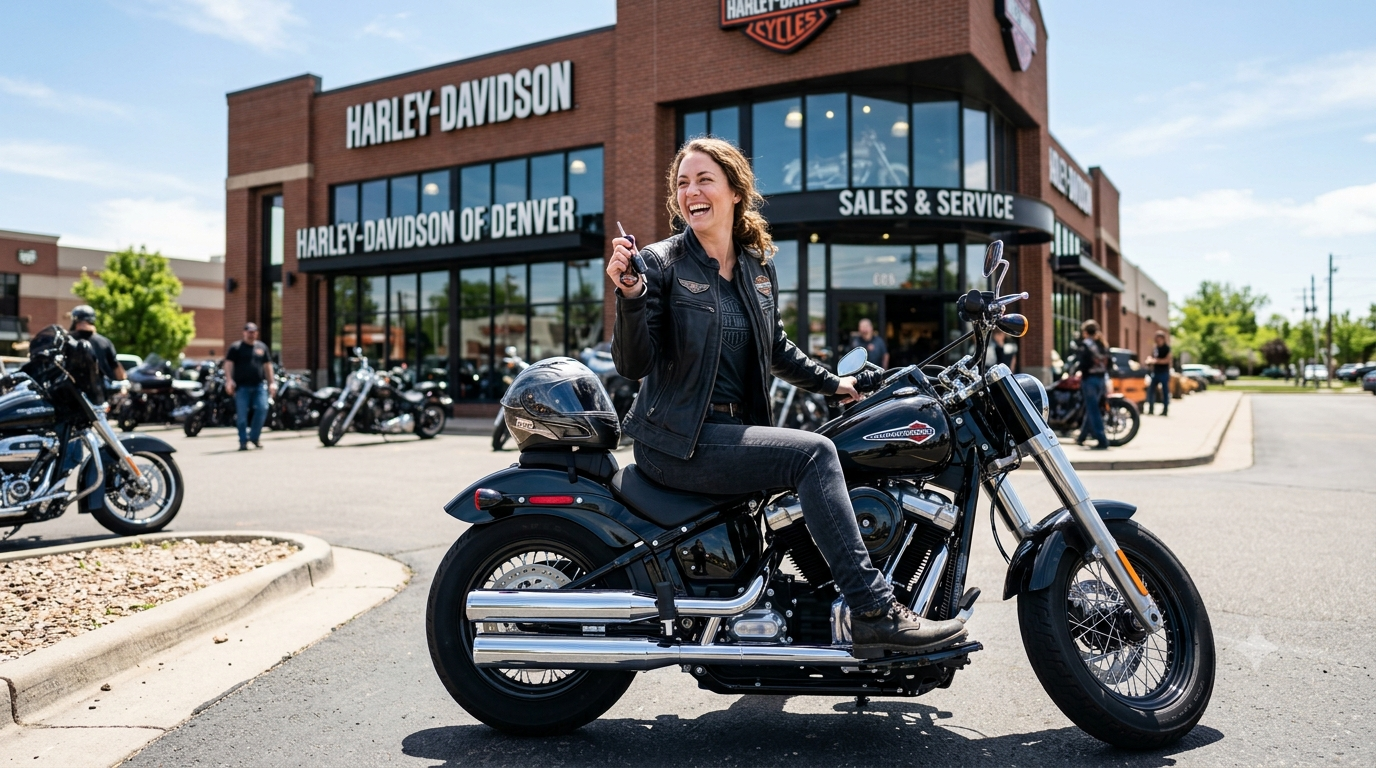

Nobody forgets their first Harley.
- Before the Bike: The Course That Changes Everything
- The First-Time Buyer’s Harley Hierarchy
- What Seat Height Actually Means — And Why People Overestimate Its Importance
- New vs. Used: The First Harley Decision
- Gear: What You Actually Need Before Your First Ride
- The First 1,000 Miles: How to Build Skills Deliberately
- The Honest Bottom Line
Not the day they picked it up at the dealership. Not the sound of that engine on the first real ride. Not the moment they realized that two wheels and an American V-Twin had somehow rearranged their priorities in a way they didn’t fully anticipate.
But first Harleys also have a history of being the wrong Harley. Too big. Too heavy. Too much bike for where the rider actually was when they bought it. The dealer floor is full of beautiful machines at every size and spec level, and it takes experience — or honest guidance from someone who’s been through it — to know which one is right for someone just starting out.
This guide is that honest guidance. From someone who has watched new riders thrive on the right first Harley and struggle on the wrong one.
Before the Bike: The Course That Changes Everything
If you haven’t already taken the Motorcycle Safety Foundation (MSF) Basic Rider Course — stop here and register for one before you read another word.
The MSF course is two evenings of classroom instruction plus a day of range riding on small training motorcycles. It teaches the foundational skills that most new Harley owners lack — clutch control, emergency braking, cornering technique, and low-speed maneuvering — in a safe, supervised environment on bikes that don’t weigh 700 pounds.
Completing the course before buying your first Harley means you arrive at the dealership with actual riding skills rather than just enthusiasm. You’ll choose a bike more intelligently because you understand what low-speed control demands feel like. And in most states, completing the MSF course waives the skills portion of the motorcycle licensing test.
Register at msf-usa.org. Then come back and read the rest of this guide.
The First-Time Buyer’s Harley Hierarchy
The most important thing to understand as a new Harley buyer is that the right entry bike is not the most impressive one on the floor. It’s the one that lets you build skills without the machine exceeding your current ability.
Here’s the honest hierarchy:
Tier 1 — The Best First Harleys
Harley-Davidson Nightster (~$12,999) The Nightster has rapidly become the top recommendation for new Harley riders — and it deserves the reputation. The Revolution Max 975T engine produces real performance without overwhelming new riders. The 467 lb wet weight is manageable at low speeds. The 27.3-inch seat height is accessible across a wide range of rider heights. And it looks unmistakably like a Harley-Davidson while being genuinely approachable.
The Nightster doesn’t punish new riders for imperfect technique the way larger Harleys do. It lets you develop confidence, build low-speed control, and grow into the machine — rather than spending your first season managing something that’s bigger than your skills.
Harley-Davidson Street Bob 114 (~$15,999) The Street Bob is a stripped-down, no-frills Softail that appeals to new riders who want the full traditional Harley experience — Milwaukee-Eight engine, Fat Boy-derived frame, and the kind of classic silhouette that made the brand legendary. At 670 lbs, it’s heavier than the Nightster, but manageable for riders who commit to the MSF course and build low-speed confidence deliberately.
Tier 2 — Capable But Demanding
Harley-Davidson Low Rider S (~$18,499) A brilliant bike — aggressive, performance-focused, and genuinely rewarding for an intermediate rider. It’s not the right first bike for most people because the performance level demands rider skills that take time to develop. Come back to the Low Rider S after a season on a Tier 1 machine.
Harley-Davidson Softail Standard (~$13,999) Accessible price, lighter than most Softails, and genuinely manageable for new riders. The mid-weight Milwaukee-Eight engine has enough power for the street without being overwhelming. A legitimate first Harley option for taller riders who find the Nightster’s ergonomics cramped.
Not for First-Timers
Road Glide, Street Glide, Electra Glide: 800–900+ lbs. Beautiful machines for experienced riders. Wrong for new ones. The weight demands riding habits that take at least a full season to develop properly.
Fat Boy, Road King: Similar reasoning. Excellent bikes. Not first bikes.
Pan America 1250 Special: 570 lbs, adventure ergonomics, 150 HP. For riders who have toured on other motorcycles and are specifically coming to the ADV segment.
What Seat Height Actually Means — And Why People Overestimate Its Importance
New Harley buyers consistently overweight seat height in their purchasing decision — and then discover that what actually matters more is overall weight and low-speed balance.
A 27″ seat height on a 700-pound touring bike is harder to manage than a 30″ seat on a 450-pound midweight, because the laws of physics care more about how much weight you’re trying to balance at a standstill than how far your feet are from the ground.
The practical guidance: aim for seat height that lets you get at least one foot flat on the ground, but don’t discount a slightly taller bike if the overall weight and balance characteristics are more manageable. Practice low-speed maneuvering and parking lot skills relentlessly — these are the situations where height and weight combine to create the challenges most new riders encounter.
New vs. Used: The First Harley Decision
The case for buying used: A 3–5 year old Sportster or Nightster in good condition can be acquired for $8,000–$11,000 — $4,000–$5,000 less than new. That saving creates a financial cushion for the reality that first bikes sometimes get tipped over at low speed, pick up minor cosmetic damage, and teach lessons in ways that cost money.
Learning on a used bike means the small incidents of the learning process are less financially consequential. The bike that gets tipped over in a gravel parking lot is $3,000 less emotionally devastating when you paid $9,000 rather than $13,000.
The case for buying new: A new Harley comes with a full warranty — 24 months on powertrain. For a new rider still learning to read mechanical symptoms and unfamiliar with the bike’s normal sounds and behaviors, having warranty coverage on anything unexpected has real value.
New also means the full choice of available colors, configurations, and accessories from the factory — something the used market can’t guarantee.
The honest recommendation: For your first Harley, used from a reputable dealer in the 3–5 year range is usually the smarter financial decision. Buy with warranty if the cost premium is manageable; used without warranty if the savings are significant and you have a trusted independent Harley mechanic you can use.
Gear: What You Actually Need Before Your First Ride
There is no such thing as “just a quick ride” for new riders. Every ride involves learning — and gear matters every single time.
Helmet — DOT or ECE certified, full-face or 3/4 coverage minimum. This is the one item where there is no compromise. Head injuries are catastrophic and permanent. A quality helmet is not optional.
Jacket with CE-rated armor. Impact protection at the shoulders, elbows, and back. Leather is the traditional choice and remains excellent for abrasion resistance. CE-rated textile jackets are a practical alternative for warm climates.
Gloves. Your hands go down first in an incident. Motorcycle-specific gloves protect the palms, fingers, and knuckles from the abrasion and impact that unprotected skin can’t handle.
Over-the-ankle boots. Not sneakers. Boots that protect the ankle joint, which is vulnerable in any low-speed tip-over.
Pants with hip and knee protection. Riding jeans with CE-rated armor inserts or proper textile overpants. Your knees and hips are vulnerable in any impact.
Budget: $500–$1,200 for a quality first set of gear. Consider it part of the cost of the bike, not optional equipment.
The First 1,000 Miles: How to Build Skills Deliberately
Don’t rush. The first season on your Harley is skill-building season, not cross-country touring season. Prioritize familiar roads, manageable traffic conditions, and practice sessions in empty parking lots over putting the most miles possible on the odometer.
Practice low-speed skills intentionally. Set up cones in an empty parking lot and practice figure-eights, tight U-turns, and slow-speed stops. These are the skills that matter in parking lots, at intersections, and in campgrounds — and they’re the ones most new riders neglect because they’re not glamorous.
Ride with experienced riders when possible. There is no substitute for riding behind someone who does naturally what you’re still thinking about consciously. Group rides with patient, experienced riders accelerate skill development in ways that solo riding doesn’t.
Take the MSF Rider Coach course after 3–6 months. The MSF offers advanced courses beyond the Basic Rider Course. After a few months of real-world riding, returning for the advanced course with actual on-bike experience is tremendously valuable.
The Honest Bottom Line
“The road is there, it will always be there. You just have to decide when to take it.” — Jackson Browne
Your first Harley should be one that makes you a better, more confident rider — not one that impresses people at the dealership and intimidates you every time you need to park.
The Nightster, bought with a full gear setup, after completing the MSF course, with a commitment to practicing the skills that matter — that’s a recipe for a first season that builds genuine riding confidence and leads to decades of enjoyment on two wheels.
Take the course. Buy the right bike. Wear the gear. The rest takes care of itself, one ride at a time.