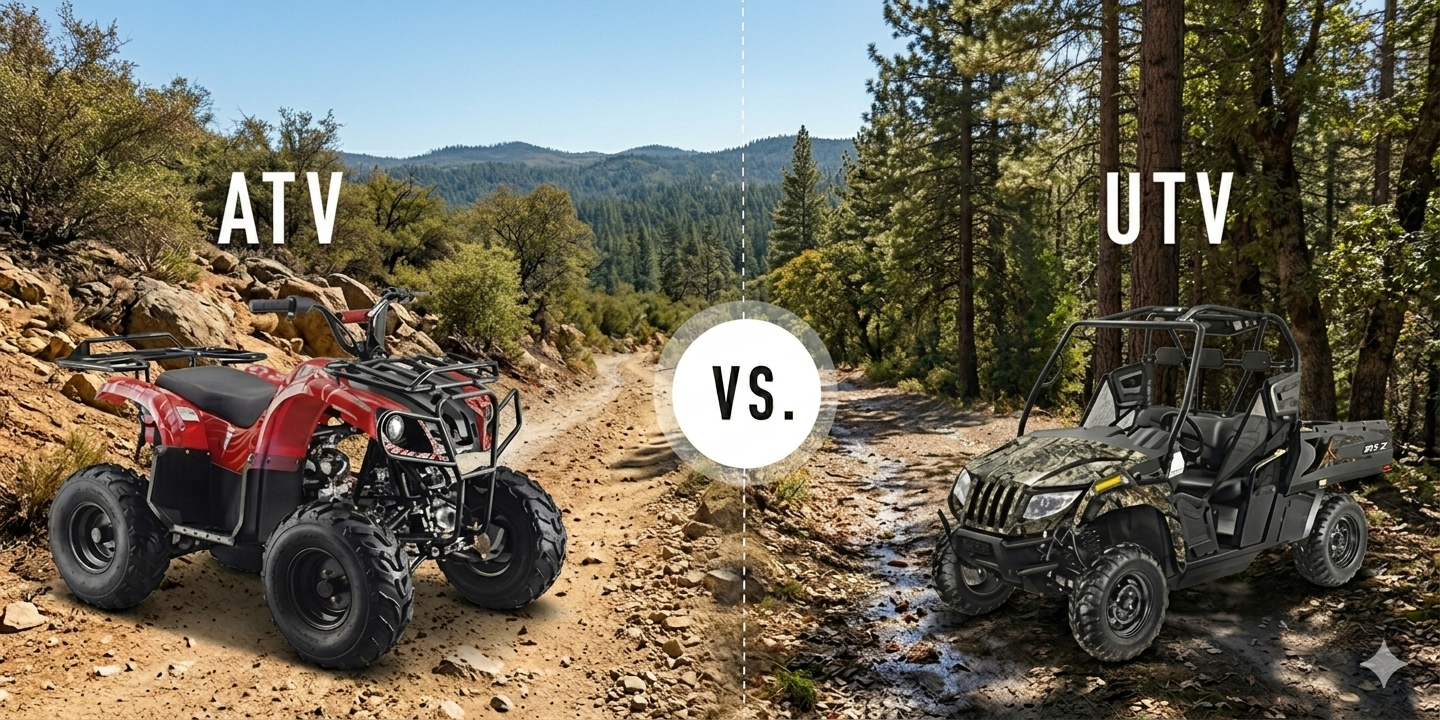
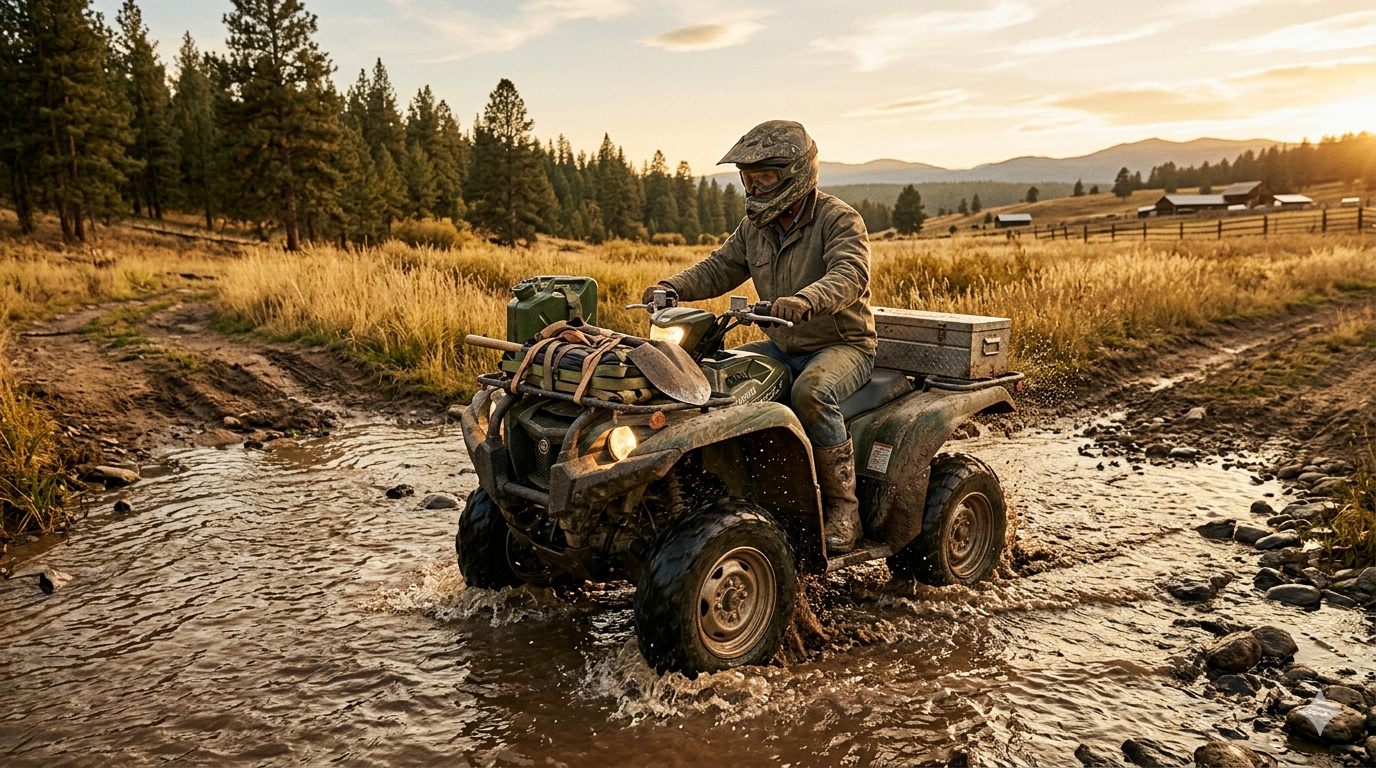

There is a reason the utility ATV is the best-selling powersports category in North America — and has been for decades. It exists at the intersection of two things most owners refuse to give up: the machine that gets real work done during the week, and the machine that disappears down a trail on Saturday morning with a grin on its face.
- What Makes a Utility ATV Different?
- What to Look For When Buying a Utility ATV
- Top Utility ATVs of 2026
- Head-to-Head: Top Utility ATVs of 2026
- Work vs. Recreation: Which ATV Wins Each Use Case?
- 2026 Features Every Utility ATV Buyer Should Prioritize
- Top Utility ATV Brands of 2026
- Before You Buy — Questions to Ask
- The Bottom Line
Unlike sport ATVs built purely for performance, or pure utility machines optimized only for hauling and towing, the best utility ATVs of 2026 do both convincingly. They pull trailers across a ranch without breaking a sweat. They navigate rocky switchbacks with a confidence that surprises first-time riders. They start in January, run through mud season, and still look like they want more.
Choose a job you love, and you will never have to work a day in your life.
Confucius
In 2026, the utility ATV segment has never been more competitive — or better for the buyer. More horsepower, smarter traction systems, better suspension geometry, and increasingly refined ergonomics are standard across the category at price points that make this segment genuinely accessible. This guide covers the best utility ATVs of 2026 across every budget and use case — with honest assessments of what each one does best and where it trades off.
What Makes a Utility ATV Different?
Understanding the utility ATV category starts with understanding what separates it from the rest of the ATV world.
Utility and recreational ATVs are the “do it all” machines — racks, towing capacity, and comfortable ergonomics balanced with genuine off-road capability. Sport ATVs are lighter, more aggressive, and less interested in hauling your gear than in performance numbers. A utility ATV sits between these poles, and the best models in 2026 lean meaningfully toward both ends without fundamentally compromising either.
The hallmarks of a well-designed utility ATV in 2026:
Engine displacement of 400–1000cc delivering usable low-end torque for work tasks rather than peak horsepower for speed runs. A strong mid-range pull matters far more than a high redline when you’re hauling a loaded trailer up a grade.
Four-wheel drive with selectable modes — most modern utility ATVs offer 2WD for trail cruising, 4WD for traction-demanding terrain and work tasks, and differential lock for maximum low-speed grip in mud, snow, or steep slopes.
Independent rear suspension (IRS) on most mid-range and premium models delivers a fundamentally more comfortable and capable ride than solid rear axle designs — both for passenger comfort and terrain adaptability.
Front and rear cargo racks rated for real loads — typically 90–150 lbs front and 180–300 lbs rear. The rack system is where utility ATVs earn their working credential.
Towing capacity between 1,000 and 1,500 lbs covers the majority of real-world utility ATV towing needs — trailers, log arches, implements, and yard equipment.
Ergonomics designed for all-day riding — upright seating position, handlebar reach, and footpeg placement that don’t punish the rider over extended sessions. A sport ATV’s aggressive crouch feels exhilarating for an hour and exhausting for a day.
What to Look For When Buying a Utility ATV
Before diving into specific models, the most useful thing any buyer can do is define their primary use case — because the utility ATV market in 2026 covers a wide spectrum, and the best machine for a cattle rancher running fence line is different from the best machine for a trail rider who also needs to haul firewood.
Primary use: utility and property work. Prioritize towing capacity, rack payload ratings, 4WD lock capability, and a proven, low-maintenance drivetrain. Honda and Yamaha dominate this segment for good reason — their machines run for years with minimal drama.
Primary use: recreation and trail riding. Prioritize suspension travel, power delivery feel, handling agility, and how the machine rides over extended trail sessions. Can-Am and Polaris typically lead here.
Equal work and recreation. This is where most buyers actually sit — and it’s the sweet spot of the utility ATV segment. The machines in this guide that best serve dual-use buyers are flagged clearly.
Engine size guidance: Most utility ATVs are now available in multiple engine displacements. As a general rule, the 450–500cc range handles light utility work and recreational riding for lighter users. The 700cc range is the sweet spot for most buyers — enough power for genuine work without the weight and complexity of a 1000cc machine. The 850–1000cc tier delivers premium performance for demanding utility work and serious off-road riding.
Top Utility ATVs of 2026
Best Overall — Yamaha Kodiak 700 EPS
Engine: 686cc | Power: ~47 HP | Transmission: Ultramatic CVT | Starting Price: ~$9,999
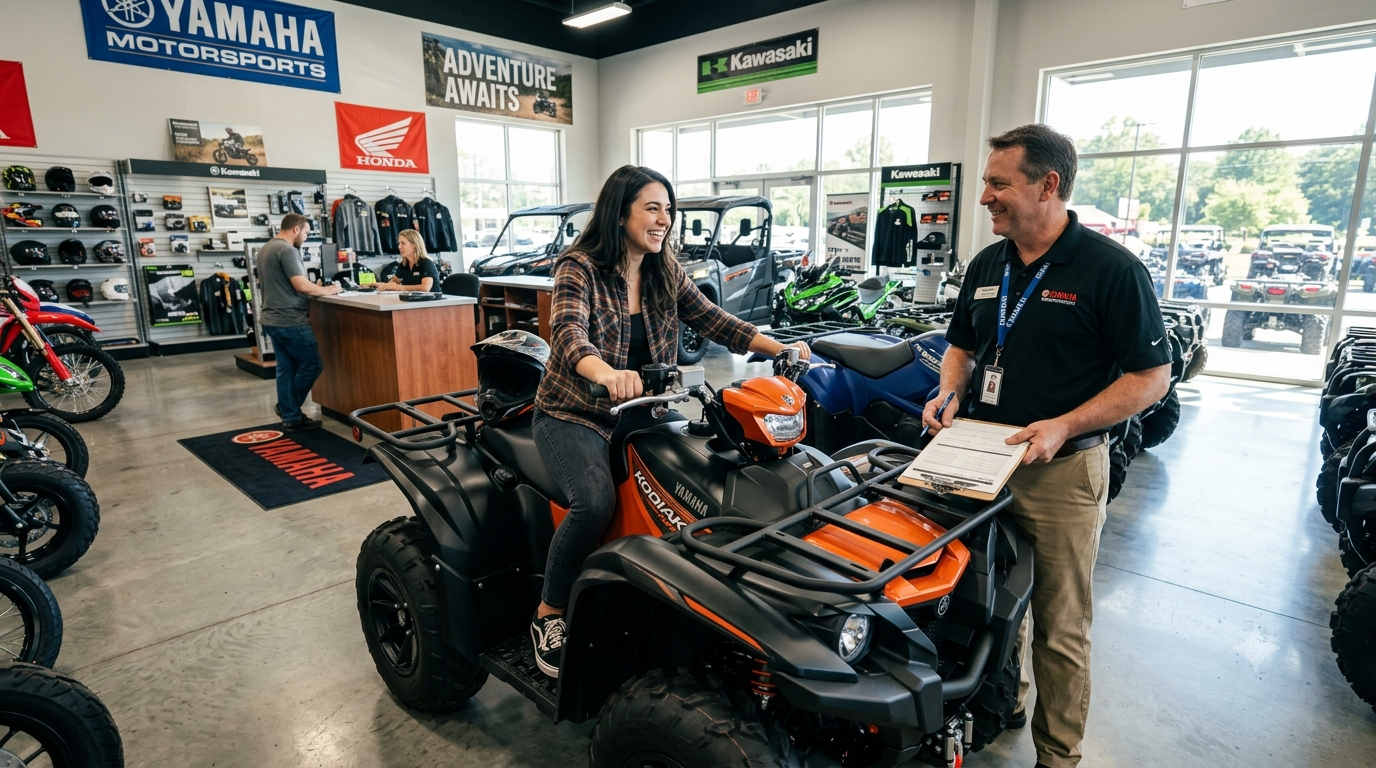
The Yamaha Kodiak 700 continues to dominate the utility ATV space in 2026. Known for its reliability and smooth Ultramatic transmission, it’s built for long days in the field. That reputation has been earned over years of real-world use — not just test rides — and the Kodiak 700 EPS delivers on it consistently.
Yamaha’s Ultramatic CVT transmission is the best in the segment — a hybrid system with constant engagement CVT and a wet clutch that is almost never prone to belt slippage. Belts almost never burn up on these machines, which is a genuinely important distinction from competitors whose CVT systems require more careful management under heavy load.
The Kodiak 700 is set up with more grunt down low and less top end than the Grizzly — which is a deliberate tuning decision that makes it more utility-oriented and suited to property work. EPS (Electric Power Steering) is standard on the EPS trim and makes a meaningful difference on long days of trail riding or fence line work — reducing fatigue in the arms and shoulders significantly.
For reliability-first buyers who also want a machine that handles trails with confidence, the Yamaha Kodiak 700 EPS is the benchmark utility ATV of 2026.
Key specs:
- Engine: 686cc SOHC 4-stroke
- Transmission: Ultramatic CVT w/ wet clutch
- Suspension: Independent double-wishbone front; Monocross rear
- Towing: 1,322 lbs
- Rack capacity: 88 lbs front / 176 lbs rear
- Ground clearance: 11.2 inches
Best for: Property owners, ranchers, hunters, and trail riders who want the most reliable, lowest-drama utility ATV available.
Best Performance Utility — Can-Am Outlander 700
Engine: 693cc | Power: ~65 HP | Transmission: CVT | Starting Price: ~$10,499
Now heading into its fourth year on the market, the Can-Am Outlander 700 has had plenty of time to prove itself — and it has. The switch to a large single-cylinder engine was a bold move, and riders haven’t looked back. Whether you opt for the solo-seat model or the MAX two-seater configuration, the independent four-wheel suspension delivers a noticeably smooth ride.
The Outlander 700 also earns points for its robust body panels, which do a commendable job shielding the rider from mud and engine heat. The XU utility variants round out the lineup nicely for those with work in mind — all things considered, this machine punches above its weight class.
Can-Am’s broad accessory ecosystem is a meaningful advantage for utility buyers — the ability to add a plow, sprayer, front-mounted implement, or winch from the factory accessory catalog without fabrication gives buyers genuine versatility from day one.
Key specs:
- Engine: 693cc single-cylinder
- Suspension: TTI rear independent suspension
- Towing: 1,500 lbs
- 4WD: Visco-Lok QE auto-locking front differential
- Available in MAX two-up configuration
Best for: Dual-use riders who want the best balance of utility capability and trail performance in the 700cc segment.
Best for Pure Reliability — Honda FourTrax Rancher 420
Engine: 420cc | Transmission: Automatic DCT or Manual | Starting Price: ~$6,149
When someone says they’re not trying to win races — they’re trying to never be stranded — this is the ATV. Honda’s FourTrax Rancher has been the benchmark reliability utility ATV for decades, and the 2026 model continues that tradition without apology.
The Rancher’s 420cc engine is modest by modern standards but delivers the smooth, predictable torque delivery that utility work demands. Honda’s DCT (Dual Clutch Transmission) option eliminates the CVT belt entirely — removing the most common maintenance item in the utility ATV segment. The result is an ATV that runs for years with nothing but oil changes, tire checks, and basic service — a track record backed by Honda’s global reputation.
Honda ATVs have a long-standing reputation for doing the job, starting every time, and refusing to become drama queens. The Rancher is a classic for people who want a dependable machine with a big dealer network and a track record that’s hard to ignore.
For buyers whose primary concern is long-term mechanical dependability — farming, ranching, hunting, light trail work — the Rancher 420 is the intelligent, unflashy choice.
Key specs:
- Engine: 420cc longitudinally mounted
- Transmission: Automatic DCT / Manual option
- Towing: 1,322 lbs
- Rack: 66 lbs front / 132 lbs rear
- 4WD: Selectable 2WD/4WD/4WD lock
Best for: Farmers, ranchers, property owners, and reliability-first buyers who want a machine they can pass on to their grandkids.
Best High-Performance Utility — Polaris Sportsman 850
Engine: 850cc | Power: 78 HP | Transmission: PVT | Starting Price: ~$10,299
Few ATVs feel as cohesive to ride as the Polaris Sportsman 850. Every component seems dialed in to work with the others — making it one of the most harmonious machines in the segment. The 850cc parallel-twin engine puts out 78 horsepower, channeled through a transmission that’s been calibrated with real precision.
The suspension earns its reputation — it absorbs the trail without sacrificing the handling responsiveness that experienced riders demand. Polaris also offers multiple trim levels, allowing buyers to match the vehicle to their budget and preferences. The 2026 Sportsman 850 Trail continues the tradition of do-it-all capability and toughness, with power that packs a punch and suspension that tames even the wildest terrain.
For pure acceleration performance in the utility segment, the Polaris took the top spot in head-to-head testing — jumping off the line quicker than comparable machines and posting higher top speed numbers. That performance advantage translates directly to trail riding enjoyment without meaningfully compromising the Sportsman’s genuine utility credentials.
Key specs:
- Engine: 850cc ProStar parallel-twin
- Power: 78 HP
- Suspension: 22.9 cm front travel / 26 cm rear
- Towing: 1,500 lbs
- Rack: 90 lbs front / 180 lbs rear
- Available in Trail, Premium, and XP trims
Best for: Riders who want the highest-performing utility ATV in the segment and use their machine as much for trail riding as property work.
Best Mid-Size — Yamaha Grizzly 700 EPS
Engine: 686cc | Power: ~50 HP | Starting Price: ~$10,499
Where the Kodiak 700 leans toward utility work, the Grizzly 700 takes the same proven 686cc engine and tunes it for a sportier, more trail-focused character — more top-end pull, more aggressive suspension tuning, and a chassis that feels energetic on technical terrain.
The Grizzly 700 EPS is ideal for rough terrain and more demanding off-road riding. It delivers all of Yamaha’s reliability advantages — the Ultramatic CVT, sealed components, proven drivetrain — in a package that appeals to riders who want a machine that can genuinely hustle on a challenging trail while still hauling a trailer home.
The 2026 Grizzly continues Yamaha’s commitment to consistent innovation. Yamaha’s consistent innovation and commitment to quality have helped it maintain one of the best ATV resale values in the industry — a real-world indicator of long-term ownership satisfaction.
Best for: Trail riders who also need utility capability; buyers who found the Kodiak slightly too work-focused and want more trail performance from the same proven platform.
Best Value — CFMOTO CForce 800 XC
Engine: 799cc | Power: ~60 HP | Starting Price: ~$8,999
CFMOTO did its homework with the major refresh of the CForce 800 and 1000 — the result is a lineup that keeps what worked and fixes what didn’t. At $8,999 for genuine 800cc performance, the CForce 800 XC represents extraordinary value per dollar — delivering power, suspension quality, and features that compete with Japanese and American machines costing $2,000–$3,000 more.
The honest caveats apply: warranty handling and parts lead times vary by region, and CFMOTO’s dealer network is thinner than the major brands in rural areas. For buyers in regions with established CFMOTO dealer support, the CForce 800 XC is the smartest value buy in the segment. For buyers in remote areas distant from CFMOTO service, the extra money for Honda or Yamaha buys peace of mind that is genuinely valuable.
Best for: Budget-conscious buyers with confirmed local CFMOTO service access who want the most performance per dollar in the utility ATV segment.
Best Two-Up — Can-Am Outlander MAX 700
Engine: 693cc | Seating: 2 passengers | Starting Price: ~$11,799
For riders who want to bring a passenger — a partner, a teenager, a hunting companion — the Can-Am Outlander MAX is the standout two-up utility ATV of 2026. Extended wheelbase, a properly designed passenger seat with ergonomic handles, and the same proven Outlander drivetrain combine into a genuinely comfortable two-person experience.
Two-up riding on a standard-length ATV is a compromise at best. The Outlander MAX eliminates that compromise with a purpose-built longer chassis that accommodates two riders without putting the passenger in a precarious position or the driver in a cramped one.
Best for: Couples, hunting partners, and parents who regularly ride two-up and want a purpose-built solution rather than a compromise.
Head-to-Head: Top Utility ATVs of 2026
| Yamaha Kodiak 700 | Can-Am Outlander 700 | Honda Rancher 420 | Polaris Sportsman 850 | CFMOTO CForce 800 | |
| Price | $9,999 | $10,499 | $6,149 | $10,299 | $8,999 |
| Engine | 686cc | 693cc | 420cc | 850cc | 799cc |
| Power | 47 HP | 65 HP | 27 HP | 78 HP | 60 HP |
| Towing | 1,322 lbs | 1,500 lbs | 1,322 lbs | 1,500 lbs | 1,300 lbs |
| Transmission | Ultramatic CVT | CVT | DCT/Manual | PVT CVT | CVT |
| EPS standard | Yes (EPS trim) | Yes | Optional | Optional | Yes |
| Reliability rank | ⭐⭐⭐⭐⭐ | ⭐⭐⭐⭐ | ⭐⭐⭐⭐⭐ | ⭐⭐⭐⭐ | ⭐⭐⭐ |
| Best for | Reliability + trail | Performance + utility | Pure reliability | Performance | Best value |
Work vs. Recreation: Which ATV Wins Each Use Case?
Not every utility ATV excels equally at both halves of its job description. Here’s an honest breakdown of which machines lead for each use case:
Best for Property Work & Farming: Honda FourTrax Rancher → Yamaha Kodiak 700 → Kawasaki Brute Force 750
Best for Trail Riding: Polaris Sportsman 850 → Can-Am Outlander 700 → Yamaha Grizzly 700
Best True Dual-Use (Work + Recreation equally): Yamaha Kodiak 700 → Can-Am Outlander 700 → Polaris Sportsman 570
Best for Hunting: Yamaha Kodiak 700 → Honda FourTrax Foreman → Can-Am Outlander 700
Best Budget Utility: Honda FourTrax Rancher 420 → CFMOTO CForce 800 → Yamaha Kodiak 450
2026 Features Every Utility ATV Buyer Should Prioritize
Electric Power Steering (EPS). The single most impactful comfort upgrade on any utility ATV. EPS eliminates handlebar kick and arm fatigue on long work days or trail sessions. If you’re choosing between two otherwise similar machines, always choose the EPS-equipped model.
Selectable 4WD with differential lock. Standard on most modern utility ATVs — confirm the specific locking mechanism on any machine you’re considering. True differential lock for mud, snow, and extreme traction situations is meaningfully more capable than limited-slip systems.
On-demand engine braking. Critical for steep terrain — engine braking holds the machine back on descents without requiring constant brake pressure. Yamaha’s Ultramatic system handles this particularly well.
Sealed and waterproof electrical components. Utility ATVs work in wet conditions. Sealed connectors, waterproof switchgear, and a well-routed wiring harness distinguish machines built for real-world use from those designed for showroom floors.
Winch-ready front mounting. Even if you don’t buy a winch at purchase, confirm your chosen model has a factory-compatible winch mounting system — adding one later is far easier on winch-ready machines.
Top Utility ATV Brands of 2026
- Yamaha — Most reliable utility ATV brand overall; Kodiak and Grizzly lines dominate the segment; Ultramatic CVT is the best in the industry
- Honda — Most dependable long-term; DCT transmission eliminates belt replacement; best choice for buyers who prioritize decade-long reliability
- Can-Am — Best performance in the utility segment; strongest accessory ecosystem; Outlander lineup fully redesigned and more competitive than ever
- Polaris — Best trail performance; most feature-rich at each price tier; Sportsman line is America’s best-selling utility ATV
- Kawasaki — Best value Japanese option; Brute Force lineup is proven, dependable, and competitively priced
- CFMOTO — Best value overall; growing quality and dealer network; confirm local service before purchasing
Before You Buy — Questions to Ask
“Not all those who wander are lost.” — J.R.R. Tolkien
Work through these before heading to the dealership:
- What will I use it for most — work, recreation, or both equally? This single question drives the engine size, transmission type, and brand recommendation more than any other.
- What is my realistic towing need? Most property owners rarely exceed 1,000 lbs. Don’t pay for 1,500 lb towing capability if your actual loads are lighter.
- Do I need EPS? If you ride more than an occasional weekend, yes. The fatigue difference over a full day is significant.
- How far am I from a dealer? For remote property owners, Honda and Yamaha’s service network density and parts availability matter more than any spec on the sheet.
- Is two-up riding part of my plan? If so, the Can-Am Outlander MAX is the only purpose-built solution on this list — standard ATVs are a compromise for two-up use.
- New or used? A clean used Yamaha Kodiak or Honda Rancher with documented maintenance history represents exceptional long-term value — often better than new at the same budget.
The Bottom Line
“The world is a book, and those who do not travel read only one page.” — Saint Augustine
The best utility ATV of 2026 is the one that matches your actual use — not the one with the most impressive spec sheet or the lowest sticker price.
For most buyers who split time between property work and trail riding, the Yamaha Kodiak 700 EPS is the benchmark — reliable, capable, comfortable, and proven across years of real-world use in exactly the conditions utility ATV buyers face.
For buyers who lean more toward trail performance with utility capability on the side, the Can-Am Outlander 700 or Polaris Sportsman 850 deliver a more energetic riding experience without sacrificing the utility credentials that define the category.
For buyers whose primary concern is the lowest-drama, longest-lasting ownership experience available — the Honda FourTrax Rancher remains what it has always been: the machine you buy, maintain properly, and pass on to the next generation still running strong.
Whatever you choose, the trails and the property are waiting.