

There’s a phenomenon that people outside the Harley-Davidson community genuinely struggle to understand. You can explain it logically and still not quite capture it. It’s the reason a mechanical engineer who could analyze and compare every motorcycle on the market — torque curves, weight distribution, suspension geometry — ends up on a Milwaukee-Eight V-Twin and never looks back.
It’s the reason someone who starts with “I just want a reliable bike to commute on” is wearing the vest three years later.
It’s the reason the Harley community has been one of the most durable and self-sustaining brand ecosystems in American consumer culture for over a century.
The bikes are part of it. But the bikes are not all of it. What Harley-Davidson riders are actually part of is something that most brands spend billions trying to manufacture and almost none of them ever get close to.
This is what that thing actually is.
The Sound Is Not Incidental
Start with the obvious one, because it matters more than people who haven’t experienced it realize.
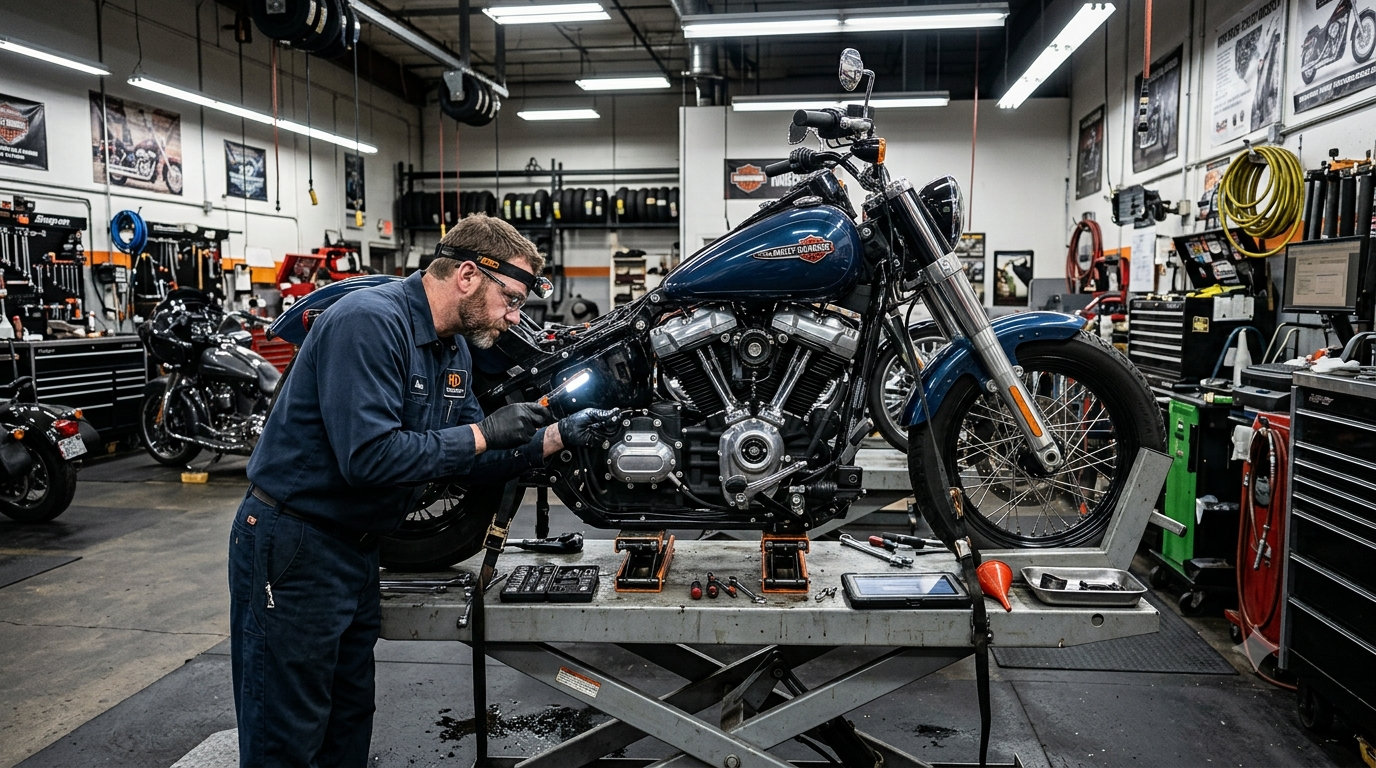
The Harley-Davidson V-Twin — in its traditional air-cooled form or the modern Revolution Max liquid-cooled configuration — makes a sound that is genuinely unlike any other motorcycle engine on earth. The firing order, the exhaust design, and the V-angle combine to produce a low, potato-potato-potato idle that is immediately recognizable to anyone who has spent time around motorcycles and is deeply satisfying to anyone on the bike producing it.
This matters because sound is not just aesthetic. Sound is feedback. The Harley engine communicates through the bark of an aggressive throttle application, the deep pull of mid-range torque, and the specific note that tells experienced riders the engine is happy and working as it should. Riders who spend time on a Harley develop a relationship with that sound — they learn to read it, trust it, and miss it when they’re on something else.
Harley has engineered variations of this sound across 120 years, and every iteration carries the genetic code of the original. That continuity is not accidental. It’s one of the most powerful pieces of brand identity in American manufacturing.
The Community Is the Product
This is the part that surprises new Harley owners most — and keeps them longest.
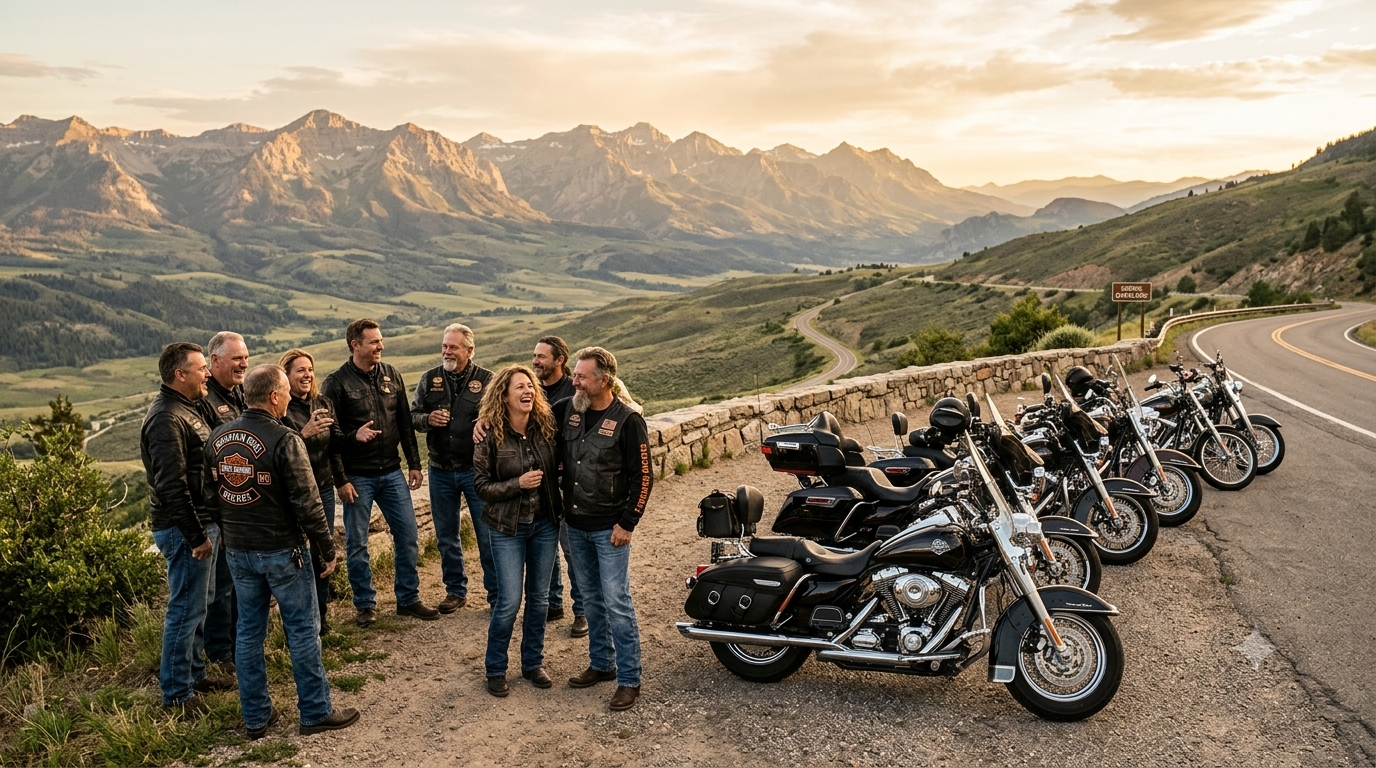
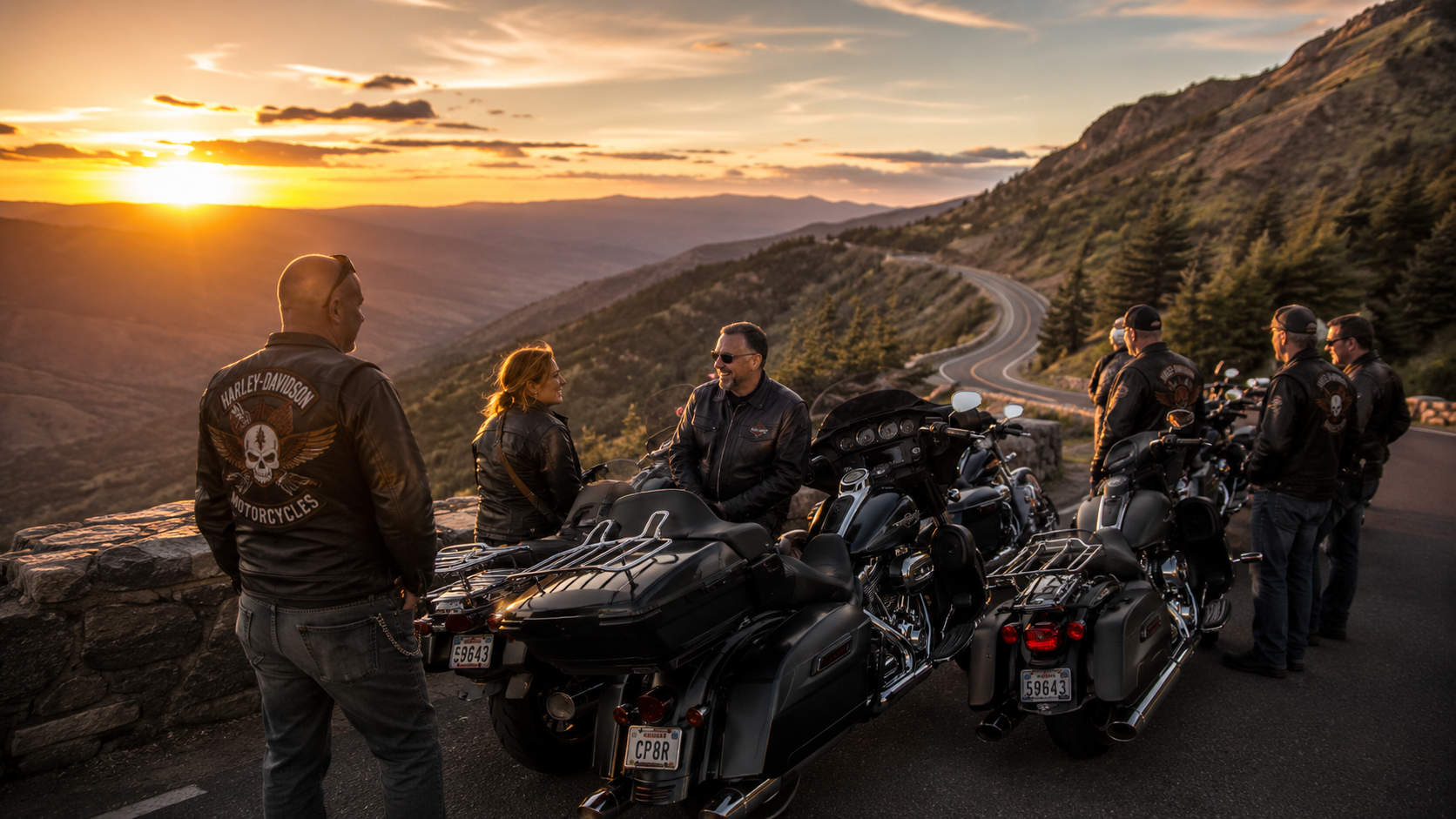
Walk into any HOG (Harley Owners Group) chapter meeting, any Sturgis campground, any local Harley dealership on a Saturday morning ride — and you’re walking into a community that functions more like a genuine social institution than a brand loyalty program.
These are people who will stop when you’re broken down on the side of the road. People who will ride across a state for a friend’s memorial. People who will debate the merits of handlebar height or exhaust tone with the kind of passionate specificity that most hobbies never generate. People who will include a complete stranger in their group ride without a second thought because the bar and shield on the tank is introduction enough.
This isn’t marketing-manufactured community. It emerged organically from the nature of the Harley riding experience — the long days on two wheels that create a particular kind of conversation and connection, the shared reference points of rally culture and road culture and the geography of the American highway system, the generational transmission of knowledge from rider to rider.
The HOG chapter system, founded in 1983, now has over a million members worldwide. But the community exists independent of the organizational structure — it exists because the riding experience creates the kind of shared experience that people naturally want to build community around.
The American Identity
Harley-Davidson is not just an American company. It is an American symbol — one of a small number of manufactured objects that carries genuine cultural weight beyond its function.
Founded in a Milwaukee shed in 1903. Supplied the American military through two World Wars. Survived (barely) foreign competition in the 1970s and 1980s through a combination of product improvement and the fierce loyalty of a customer base that made buying a Harley feel like a patriotic act. Emerged in the 1990s and 2000s as one of the most recognized brand symbols on earth.
For American riders, particularly those who connect their riding to a specific sense of national identity and freedom mythology, Harley-Davidson occupies a cultural position that no European or Japanese brand can access. It’s not nationalism in a narrow sense — it’s participation in a specific American narrative about the open road, individual freedom, and the particular kind of democratic egalitarianism that puts a retired schoolteacher on the same road, in the same campground, in the same conversation as a celebrity or a Fortune 500 executive.
On a Harley, the hierarchy that organizes most of American social life flattens out. What you ride matters more than what you earn. The miles you’ve put in matter more than the title on your business card. That leveling is part of what the culture promises — and in rally and riding contexts, it largely delivers.
The Customization Tradition
Harley-Davidson riders customize their bikes at a rate and depth that no other motorcycle culture matches. This is not a new phenomenon — it traces directly to the late 1940s and 1950s customizing culture that produced the chopper, the bobber, and eventually defined an entire aesthetic vocabulary for American motorcycle culture.
Modern Harley owners inherit this tradition. The Screamin’ Eagle performance parts catalog, the Factory Custom program, and the enormous ecosystem of aftermarket manufacturers mean that two identical stock bikes rarely stay identical for long. Pipes, bars, seats, wheels, paint, lighting, accessories — the opportunity to make a Harley uniquely yours is part of the appeal that other motorcycle brands simply don’t offer to the same degree.
This customization culture does something important for the owner-bike relationship. When you’ve spent time choosing parts, installing upgrades, and building a machine that reflects your specific vision of what a Harley should be — you have a relationship with that machine that goes beyond transportation. You’ve invested not just money but intention.
That investment creates loyalty. You don’t trade in a bike you built. You ride it.
The Rallies: Where the Culture Lives Out Loud
No understanding of Harley-Davidson culture is complete without acknowledging the rally culture that provides its most visible public expression.
Sturgis Motorcycle Rally — the Black Hills of South Dakota, every August. An event that began as a small racing event in 1938 and has grown into one of the largest gatherings of any kind in the United States. Hundreds of thousands of riders converging on a small South Dakota town for a week that is part festival, part pilgrimage, part declaration of identity.
Daytona Bike Week — Florida’s Atlantic coast, every March. The original major American motorcycle rally, drawing riders from across the East Coast and beyond for ten days of riding, racing, music, and community.
Laconia Motorcycle Week — New Hampshire, every June. The oldest American motorcycle rally — and the embodiment of the Northeast riding culture.
These events are not just parties. They’re expressions of the culture’s values — the primacy of the ride, the shared identity of the community, and the particular pleasure of being somewhere that everyone around you understands exactly what you love and why.
First-time rally attendees consistently describe a disorienting combination of scale and warmth — the sheer number of people, the noise and color and spectacle, combined with an unexpected accessibility and friendliness that makes even solo riders feel immediately included.
Why They Never Go Back
The question in the title isn’t rhetorical — there is a genuine answer.
People who ride Harleys and stay riding Harleys aren’t staying because of spec comparisons. The world has excellent motorcycles at every price point and performance level. Riders who have been on BMWs and Ducatis and Yamahas know what else exists.
They stay because the community, the culture, the sound, the American identity, the customization tradition, and the particular feeling of a V-Twin on a highway mile — taken together, they constitute a riding experience that no spec sheet fully captures and no other brand has managed to fully replicate.
That’s not marketing copy. It’s the reason the bars at Sturgis fill up every August, the reason the resale market for Harleys stays strong across cycles, and the reason that the rider who walked into the dealership for a reliable commuter is wearing the vest three years later and couldn’t fully explain to you why.
Some things you have to ride to understand.
The Honest Bottom Line
“The road is there, it will always be there. You just have to decide when to take it.” — Jackson Browne
Harley-Davidson sells motorcycles. What the Harley-Davidson community has built around those motorcycles is something considerably larger — a culture of riding, community, and identity that has sustained itself for over a century and shows no signs of diminishing.
If you’re considering your first Harley, you’re not just buying a bike. You’re entering a community with a specific set of values, traditions, and shared experiences that the bike is the key to accessing.
The bikes are excellent. The community is remarkable. And the road — wherever it takes you — is better when you know that the people passing you in the other direction are part of the same thing you are.
That’s why they never go back.