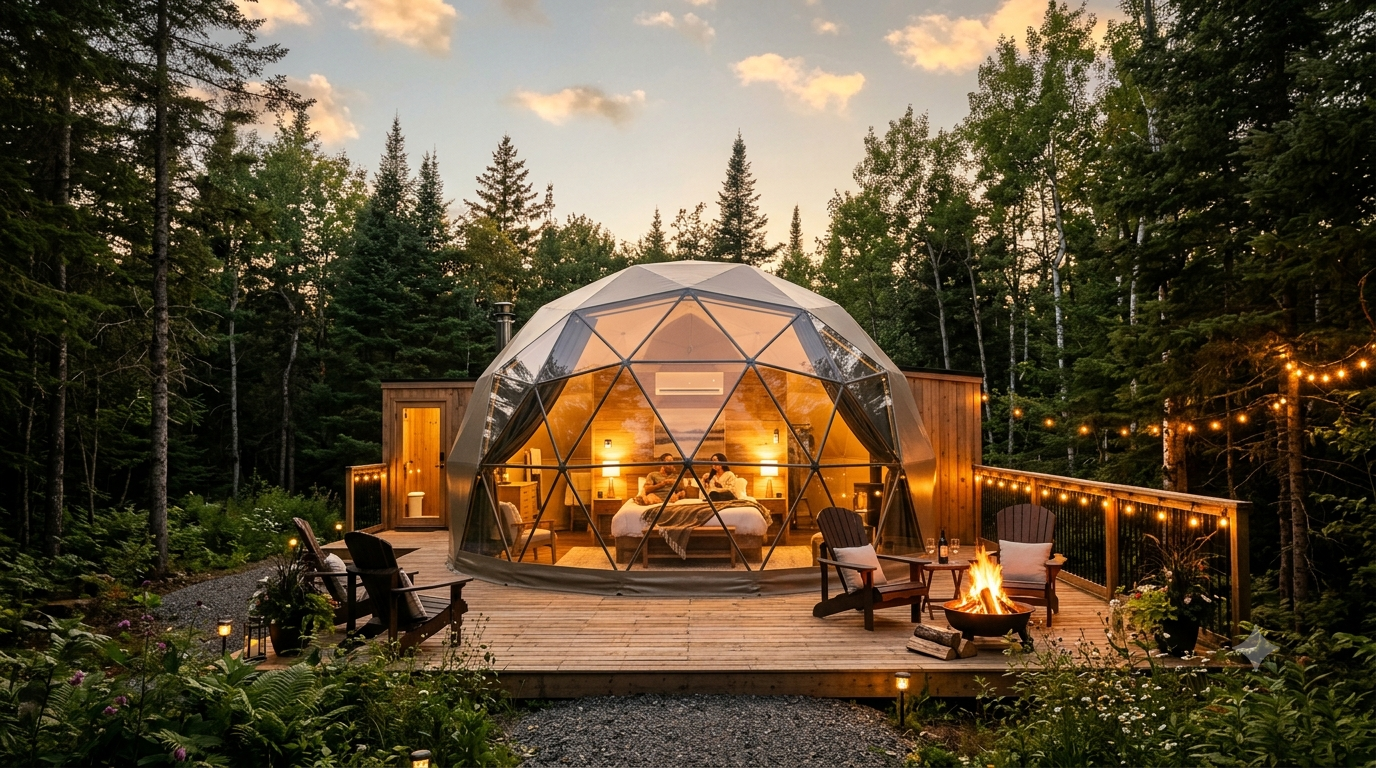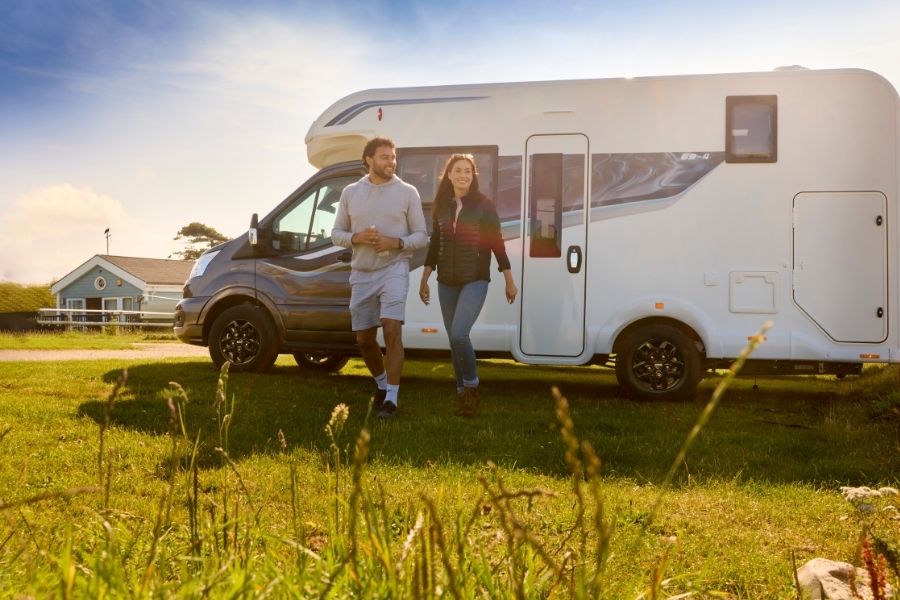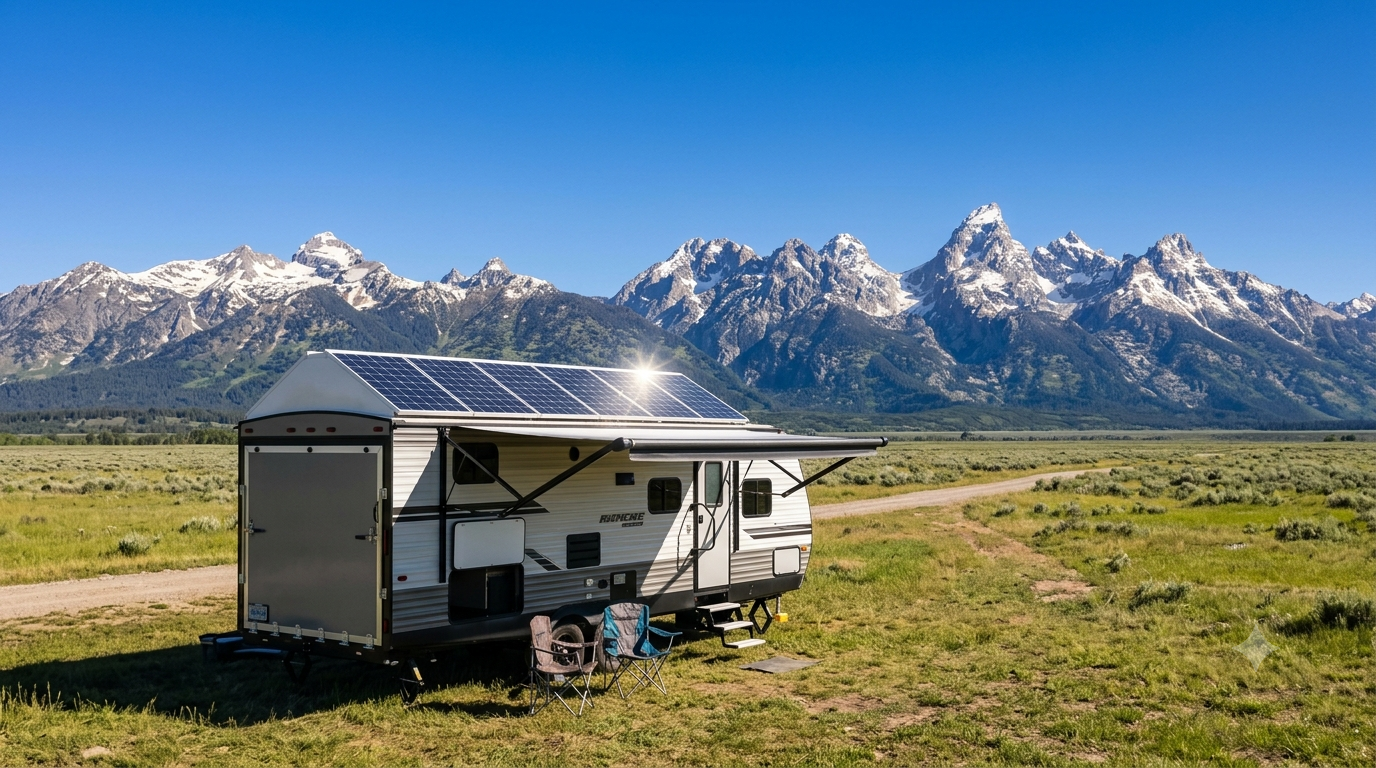

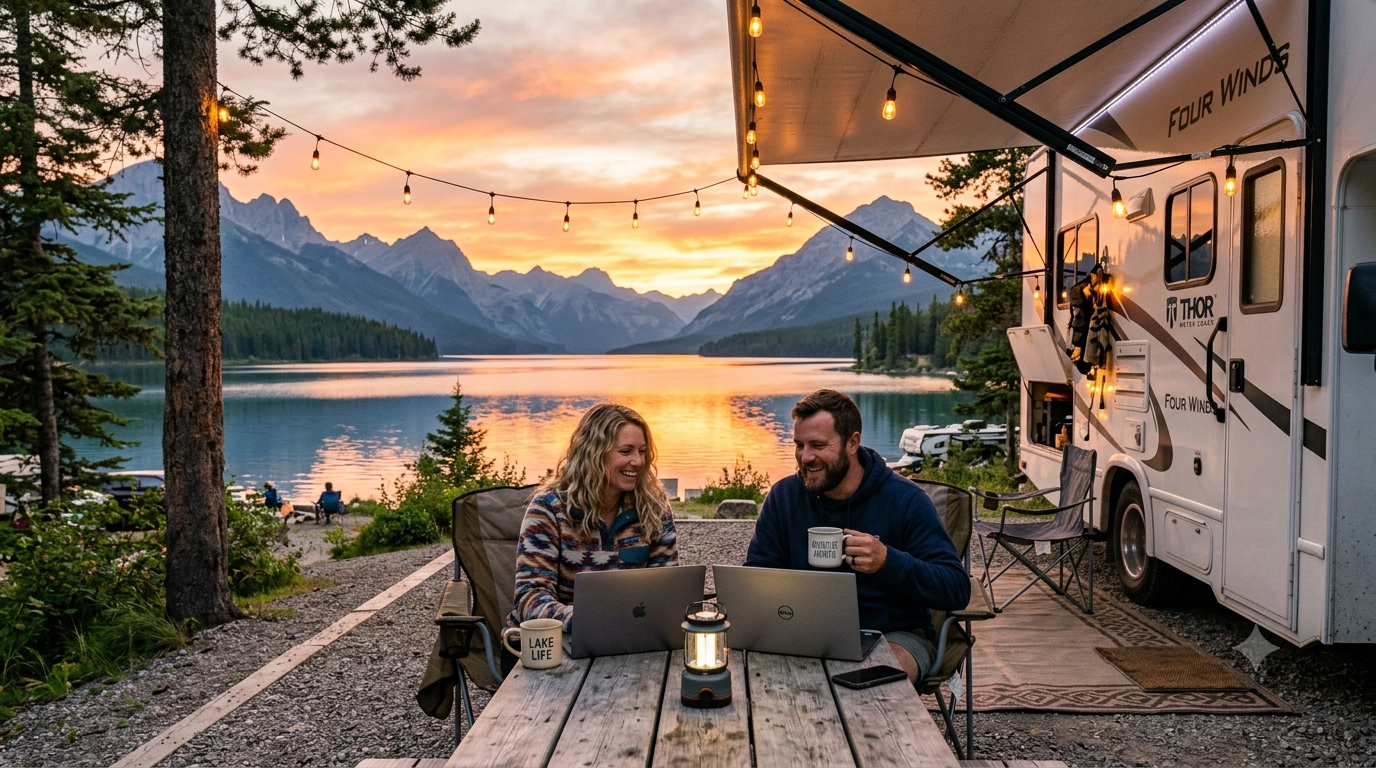

There’s a version of full-time RV living that exists on Instagram. It’s golden hour campfires, mountain backdrops, and a cup of coffee held just so against a panoramic window. The life looks effortless. The rig always looks clean. The couple always looks rested.
And then there’s the actual version.
The biggest adventure you can take is to live the life of your dreams.
Oprah Winfrey
The actual version involves a clogged black water tank at 11pm in a campground where the dump station is on the other side of the property. It involves discovering that your slide-out seal is leaking after three days of rain. It involves running out of propane on the coldest night of the month, and realizing that the “unlimited data” plan you signed up for throttles to 1Mbps after 50GB — which you burned through in nine days.
None of that makes it not worth doing. Thousands of families and couples are living full-time in RVs right now and loving it with a depth that surprises even themselves. But they’ll all tell you the same thing: they wish someone had been honest with them before they sold the house, donated the furniture, and pointed the rig toward the horizon.
Consider this that honest conversation.
Why People Go Full-Time — and Why the Reasons Matter
Understanding why you want to go full-time shapes almost every decision that follows — what rig you buy, how you budget, where you go, and whether the lifestyle actually delivers what you were looking for.
The most common reasons people make the leap in 2026 fall into a few honest categories.
Financial motivation. For many buyers, the math is genuinely compelling. In expensive housing markets, selling a home and moving into a well-equipped RV can cut monthly living expenses by 40-60%. No mortgage, no property tax, no HOA, lower utilities. For remote workers whose income doesn’t depend on location, the financial case can be overwhelming.
Freedom and flexibility. The ability to wake up in a different place, follow the seasons, and live without the anchor of a fixed address is genuinely transformative for many people. It’s not just a travel preference — it’s a philosophical stance on how to spend finite time.
Simplifying life. Downsizing to a few hundred square feet forces a clarity about what actually matters. People who go full-time consistently report that the process of deciding what to keep and what to release is one of the most liberating experiences of their lives.
Remote work made it possible. The pandemic-era normalization of remote work didn’t just allow full-time RVing for knowledge workers — it made the math work in a way that hadn’t existed before. A couple earning $120,000 remotely and spending $3,500/month on the road is living extraordinarily well by most measures.
Whatever your reason — own it clearly. The full-time RV lifestyle is remarkably good at delivering the freedom and simplicity people chase. It is not particularly good at curing loneliness, repairing relationships, or making career uncertainty feel manageable. It amplifies whatever you bring to it. Go in with honest expectations.
What Full-Timers Wish They’d Known Before Starting
The Black Tank Will Humble You
Nobody talks about this enough in the inspirational content. Managing waste in an RV is a real, regular part of full-time life — and it requires a complete attitude adjustment from residential living. The black tank holds your toilet waste. It fills up. You empty it. Regularly, carefully, and without drama if you do it right.
Dump stations are at most campgrounds and at dedicated facilities. The process itself is manageable and takes about ten minutes once you know what you’re doing. But the learning curve — figuring out valve sequencing, managing tank sensors, dealing with the occasional clog — is more involved than any RV YouTube video will fully prepare you for.
The single most important black tank rule: never leave the black tank valve open when connected to full hookups. This is how a “pyramid” forms — a solid mass that is genuinely difficult to clear. Use a dedicated black tank treatment, dump regularly, and flush thoroughly.
Internet Is Your Most Important Utility
If you work remotely, internet is more critical than electricity, water, or propane. It is the utility that determines where you can go, how long you can stay, and whether the financial model of full-time RV living actually works.
The honest 2026 answer: there is no single perfect solution. The best full-timers use a combination of approaches — a cellular data plan (T-Mobile, Verizon, or AT&T on a high-data or unlimited plan), a cellular booster like WeBoost or Cel-Fi, Starlink for campgrounds and rural areas with good sky view, and campground WiFi as a supplementary backup.
Budget $150–$300/month for connectivity if remote work is your livelihood. Treat it as a non-negotiable line item, not an afterthought.
Mail, Banking, and Your Legal Address Are Real Problems
This catches almost every first-timer off guard. When you don’t have a fixed address, everyday life gets complicated in ways you don’t anticipate until it affects you.
You need a domicile state — the state where you maintain legal residency, register your vehicle, and pay state income tax (or don’t, if you choose wisely). South Dakota, Texas, and Florida are the most popular choices for full-timers because they have no state income tax, straightforward residency requirements, and mail forwarding services designed specifically for the full-time RV community.
A mail forwarding service handles your physical mail — scanning it digitally, forwarding packages, and providing a real street address for when a P.O. box won’t work. Escapees RV Club, Traveling Mailbox, and America’s Mailbox are the most trusted services in the community.
Set this up before you leave — not after.
Your Relationship Will Be Tested
Full-time RVing with a partner means living in 200–400 square feet together, 24 hours a day, for weeks at a time. There is nowhere to go when you need space. Every disagreement about driving routes, campsite choices, temperature settings, and how aggressively to dump the tanks will happen in close proximity.
Couples who are already strong and communicative tend to find that full-time RV living deepens their relationship in ways they didn’t expect. The shared adventure, the problem-solving, the genuine team dynamic — it’s relationship-building in the most intensive way possible.
Couples with existing tension or unresolved issues tend to find those issues magnified rather than resolved. The road doesn’t fix what was already broken. It just removes all the buffers that were keeping it manageable.
Be honest with yourself and your partner before you go.
Kids on the Road Is Harder and Better Than You Think
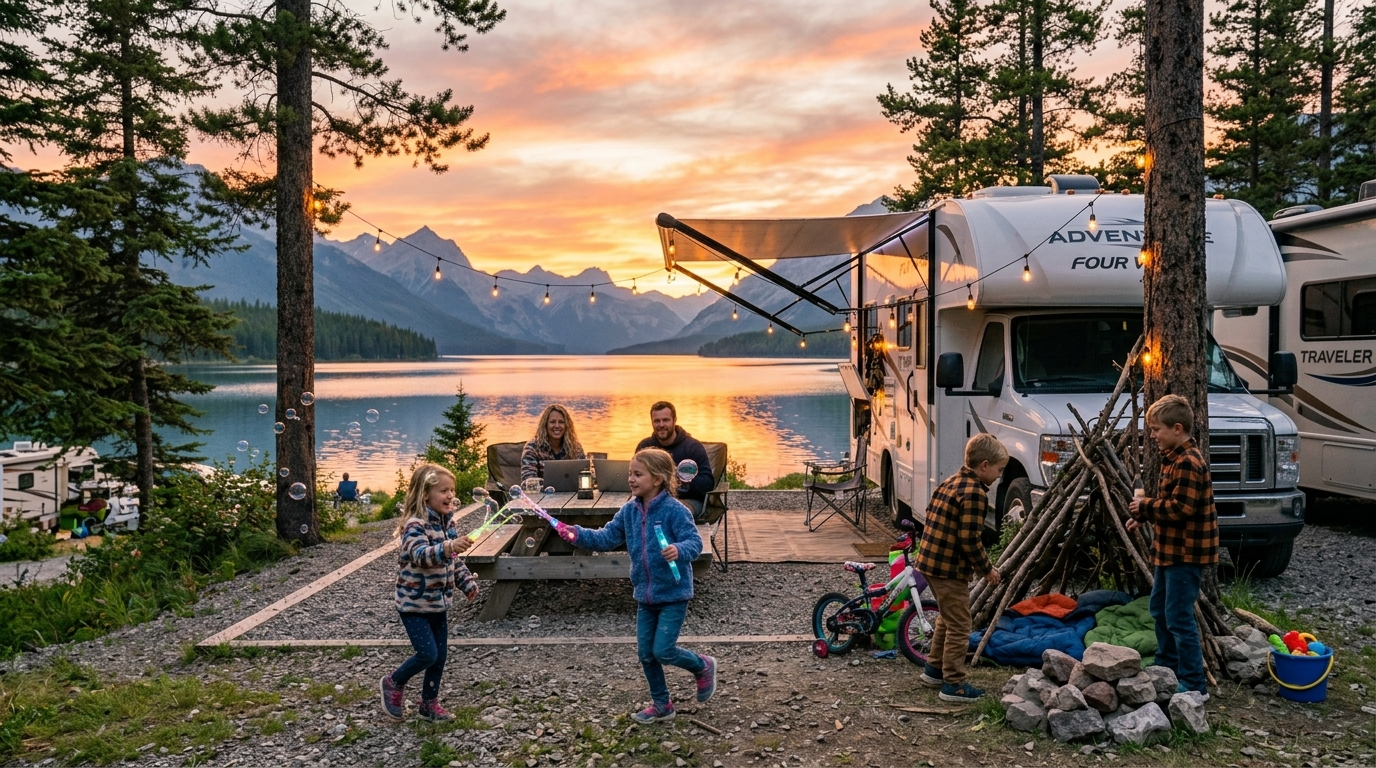
Families with children living full-time in RVs exist — there’s an entire community of them — and their kids consistently describe the experience as one of the best things their parents did for them. Learning happens everywhere. Geography, history, and science become lived experiences rather than textbook exercises.
The practical challenges are real though. Schooling requires discipline — whether you homeschool, use an accredited online curriculum, or combine both. Social connections for kids require intentional effort; the campground community helps, but it requires parents who actively build those connections rather than assuming proximity will do the work.
Healthcare access is another consideration families often underplan. Finding pediatric care on the road, managing prescriptions across state lines, and maintaining relationships with specialists requires a different kind of planning than residential life.
None of it is insurmountable. All of it is easier if you’ve thought about it before you’re living it.
The Financial Reality of Full-Time RV Life
The financial picture of full-time RVing is more nuanced than most beginner guides admit. Here’s an honest accounting of what it actually costs.
The average full-time RV couple spends $2,500–$4,500 per month on the road — including campsite fees, fuel, food, insurance, maintenance, and connectivity. At the lower end, that’s boondocking frequently, driving less, and cooking almost all meals. At the higher end, that’s private RV parks with full hookups, regular driving days, and dining out occasionally.
These numbers exclude the RV payment itself if you’re financing. A $60,000 RV financed over 15 years at 8% adds roughly $573/month to the above figures.
Campsite fees are the biggest variable. Private RV parks with full hookups run $40–$100+ per night. That’s $1,200–$3,000/month just for campsites if you’re staying at hookup campgrounds. The financial model changes dramatically if you blend in:
- Free camping on BLM (Bureau of Land Management) land — millions of acres of legal free camping across the American West
- State and National Forest campgrounds at $10–$25/night
- Membership programs (Thousand Trails, Harvest Hosts, Boondockers Welcome) that reduce nightly costs significantly
- Work camping exchanges where you work a few hours/week at a campground in exchange for a free site
Fuel is the second biggest variable. Full-timers who drive frequently spend $400–$800+/month on fuel. The most financially comfortable full-timers “slow travel” — staying in one area for weeks or months at a time, minimizing driving days, and treating the RV as a home base rather than a constant transit vehicle.
Maintenance is real and unpredictable. Set aside 1–2% of your RV’s value annually for maintenance — more in the first year. RVs are complex systems, and the road accelerates wear in ways that stationary RVs don’t experience. A realistic emergency fund of $3,000–$5,000 for unexpected repairs provides meaningful peace of mind.
Choosing the Right Rig for Full-Time Living
Not every RV is suited for full-time living — and the features that matter on a weekend trip are different from those that matter when the RV is your primary residence.
Space matters more for full-timers than weekend campers. A 24-foot travel trailer is a great weekend rig that feels tight after three months of full-time living. Full-timers typically gravitate toward fifth wheels (for the bi-level layout and residential feel) or Class A motorhomes (for the space and amenities) rather than smaller travel trailers.
Storage is the feature most underestimated by beginners. You are moving your entire life into this machine. Basement storage on a fifth wheel or Class A is not a luxury — it’s a functional necessity. Look for maximum exterior storage, deep interior cabinets, and under-bed storage.
A residential refrigerator vs. an RV refrigerator matters enormously. A full-size residential refrigerator makes daily life dramatically easier. Most 2026 premium fifth wheels and Class A motorhomes include them standard — but confirm before buying.
Quality of the bed is a full-time priority. You will sleep in this bed every night. A poor mattress or a bed that’s hard to make (cramped against a wall with no access from both sides) wears on quality of life quickly. A walk-around queen or king bed is worth specifying for full-time living.
Reliable climate control. Full-time RVers use their HVAC systems far more than weekend campers. Confirm the capacity of both the air conditioning and heating system for the climate range you’ll be traveling through. Propane furnaces are standard — but add an electric space heater for when you’re on hookups and want to conserve propane.
The Best Full-Time RV Communities and Resources
One of the most surprising discoveries for most new full-timers is the richness of the community they’re joining. There is an entire parallel culture of full-time RVers — organized, generous, and genuinely welcoming to newcomers.
Escapees RV Club is the oldest and largest full-time RV community — mail forwarding, rallies, support parks, and a peer network that is invaluable for new full-timers. Worth joining before you leave.
Harvest Hosts gives members access to overnight stays at wineries, breweries, farms, and attractions — free with membership, no hookups, but extraordinary locations.
Boondockers Welcome connects RVers with landowners who offer free overnight parking on private property.
iOverlander, Campendium, and The Dyrt are the go-to apps for finding and reviewing campgrounds, free camping spots, and dispersed camping on public lands.
Full-Time Families is the largest community specifically for families with children living full-time in RVs — events, curriculum resources, and a peer network that helps kids build connections on the road.
Before You Go — The Honest Checklist
“To travel is to live.” — Hans Christian Andersen
Before you sell the house and point toward the horizon, work through these:
- Have you done at least one 2–3 week trial run in the rig you plan to go full-time in?
- Have you established domicile in your chosen state and set up mail forwarding?
- Have you stress-tested your internet setup in a rural area?
- Do you have a clear financial model — income, expenses, and an emergency fund?
- Have you had the honest conversation with your partner (and children, if applicable) about what full-time life actually involves?
- Have you budgeted for maintenance and unexpected repairs?
- Do you have healthcare coverage that works across state lines?
- Have you connected with the full-time community — online forums, local chapters, rallies?
The Bottom Line
Full-time RV living is one of the most genuinely liberating lifestyle choices available to Americans in 2026. The financial freedom, the geographical freedom, the simplicity — it delivers on its promises for people who go in with realistic expectations and genuine preparation.
It is not, however, a lifestyle that rewards impulsive decisions or magical thinking. The people who love it most are the ones who prepared deliberately, chose their rig thoughtfully, built their financial model carefully, and went in knowing that black water tanks, leaky seals, and spotty cellular coverage are just part of the adventure.
Know what you’re getting into. Then get into it with everything you have.
The road is genuinely as good as they say. You just have to be ready for all of it.