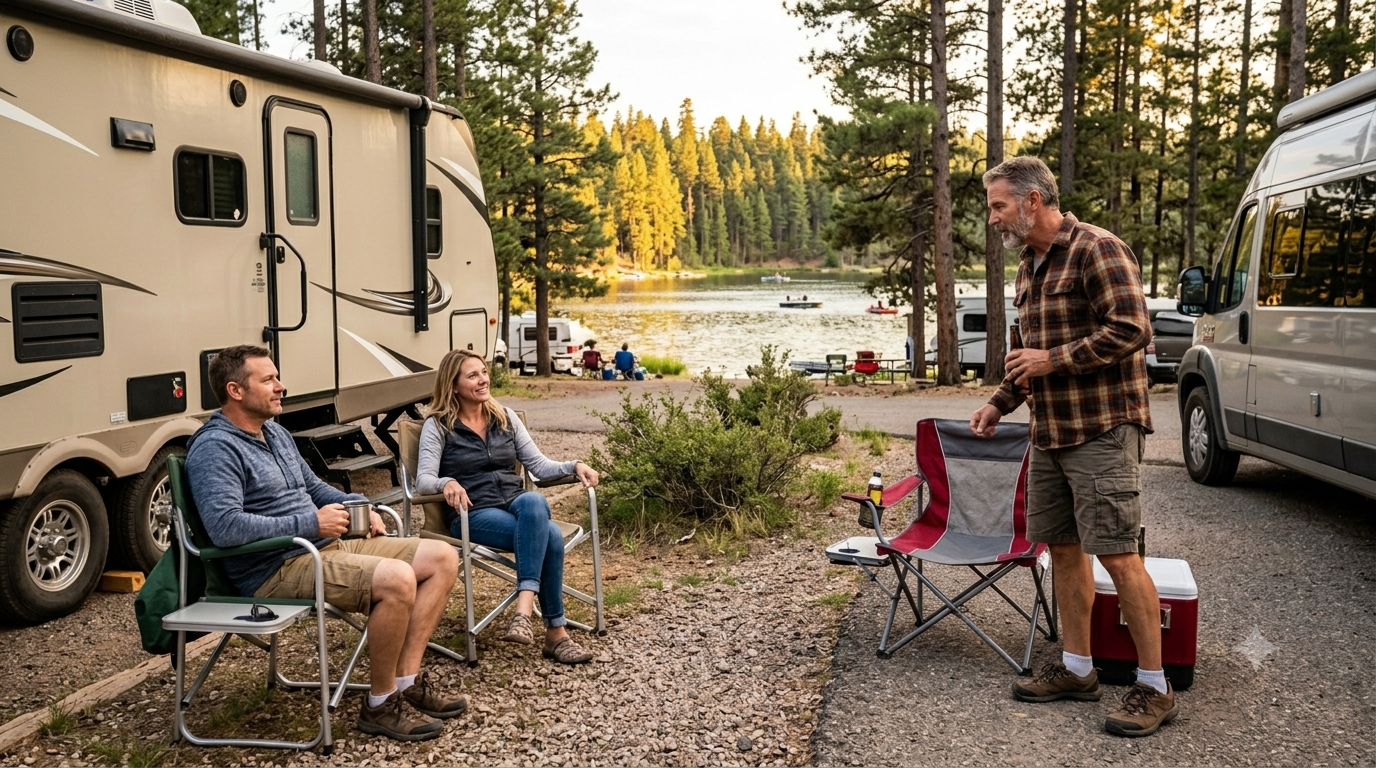

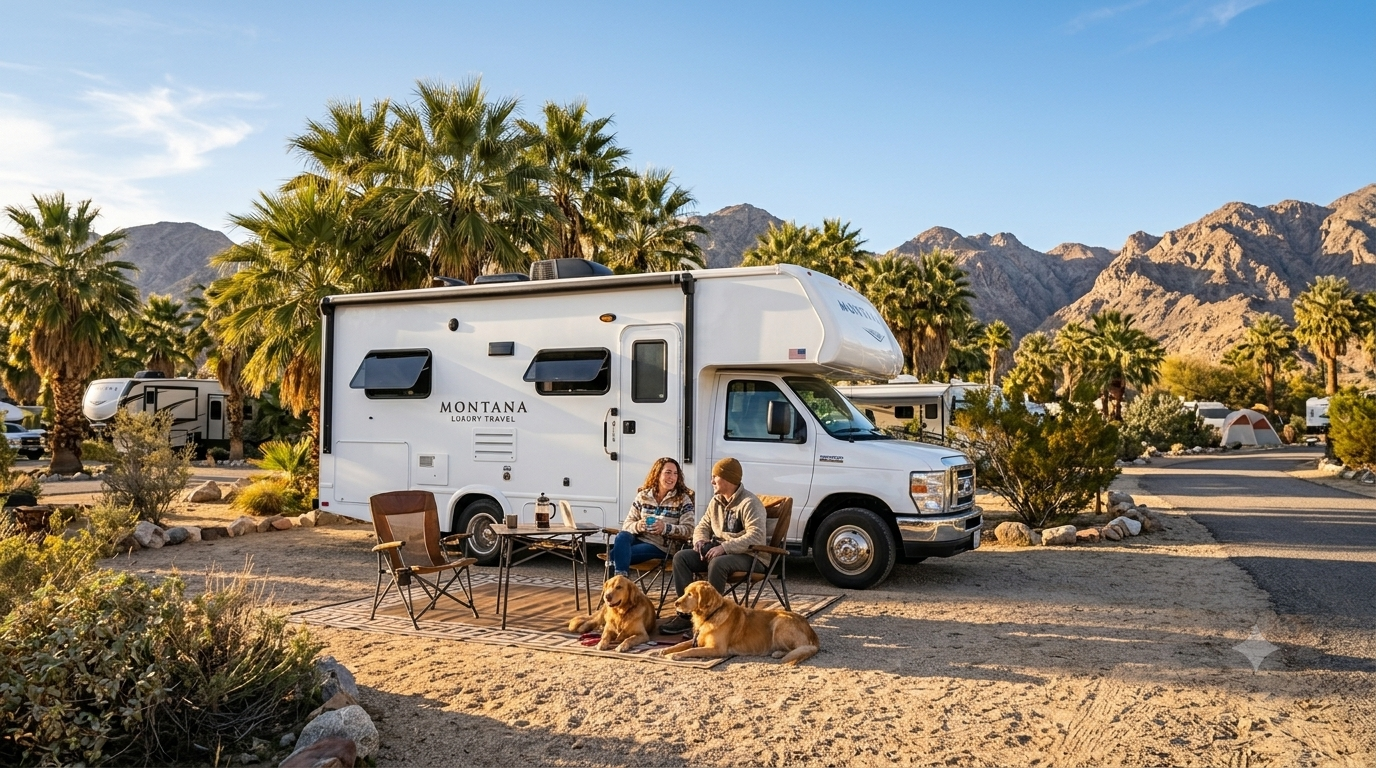

There’s a moment every February that snowbird RVers think about when they’re explaining their lifestyle to friends still shoveling driveways in Michigan or Minnesota. It’s the moment they unfolded their camp chairs outside their rig in Tucson, or Quartzsite, or the Florida Keys, coffee in hand, 72 degrees at 8am — while their phone buzzed with a weather alert from back home. Another ice storm. Another foot of snow.
That moment is why snowbirding exists.
The snowbird lifestyle — following warm weather through the seasons, spending winters in the Sun Belt and summers in the north or at elevation — is the most popular RV lifestyle in America. It’s practiced by hundreds of thousands of retirees, semi-retirees, and increasingly, remote workers who realized there’s no good reason to be cold if you don’t have to be.
If you’re thinking about joining them, this guide covers everything you need to know — the routes, the planning, the logistics, and the genuine pleasures and challenges of a life built around the weather.
What Is a Snowbird, Exactly?
In the RV world, a snowbird is someone who migrates seasonally — typically spending October through April in warm southern states and returning north (or heading to higher elevations) for the summer months. The core idea is simple: follow the best weather wherever it happens to be.
The classic snowbird pattern runs south to the Sun Belt for winter and north for summer. Arizona, Florida, Texas, and Southern California are the dominant winter destinations. Michigan, Wisconsin, Minnesota, the Carolinas, Colorado, and the Pacific Northwest absorb the summer migration.
Some snowbirds are full-time RVers who never have a fixed base. Others maintain a northern home and spend five to seven months on the road each year — effectively getting the best of both worlds. And a growing category are remote workers and early retirees who discovered that the snowbird pattern fits their lifestyle without requiring retirement at all.
The Classic Snowbird Destinations
Arizona – The Snowbird Capital
Arizona is the undisputed center of the American snowbird universe — and has been for decades. The combination of dry desert air, reliable sunshine, a massive RV infrastructure, and a community of snowbirds so large that entire cities effectively double in population from November through March makes Arizona an unparalleled winter destination.
Quartzsite is the most iconic snowbird gathering point in America — a tiny desert town that swells from a few thousand residents to over a million visitors every January and February. The surrounding BLM land offers free camping for up to 14 days, and the La Posa Long Term Visitor Area (LTVA) permit allows camping from September 15 through April 15 for a flat fee. The annual RV Show brings buyers and sellers from across the country.
The Greater Phoenix Area — Mesa, Apache Junction, and surrounding communities — offers an enormous network of established RV parks with full amenities, proximity to excellent hiking and golf, and a warm winter climate that rarely dips below 40 degrees at night.
Yuma sits at the southern end of Arizona and consistently records some of the highest numbers of sunshine hours of any American city — a legitimate claim that appeals to snowbirds who want maximum solar exposure.
Florida – The Other Half of the Snowbird Universe
Florida draws a different kind of snowbird than Arizona — one who wants water, humidity, fishing, and the particular atmosphere of the Gulf and Atlantic coasts alongside the warmth.
The Florida Keys are the ultimate snowbird fantasy — limited spaces, extraordinary scenery, and a laid-back culture that makes January feel genuinely luxurious. Reserve early; the best spots fill 6–12 months in advance.
Southwest Florida — Fort Myers, Naples, and the surrounding area — combines warm Gulf water temperatures with a mature RV infrastructure and a quality of winter lifestyle that justifies the higher campsite costs.
The Panhandle is the underrated alternative — lower costs than South Florida, excellent fishing, and access to some of the most beautiful white-sand beaches in the country.
Texas – The Hidden Snowbird Giant
Texas doesn’t get the snowbird press that Arizona and Florida do — but it should. The Rio Grande Valley in South Texas (known as “the Valley”) has been a snowbird destination for decades, with Harlingen, McAllen, and Brownsville offering warm winters, extremely affordable campsite rates, and a unique border culture that many long-term visitors find captivating.
Big Bend country offers extraordinary desert scenery, uncrowded national park access, and a rugged beauty that appeals to snowbirds who want something less developed than Arizona’s metro areas.
Southern California
Southern California offers the most temperate climate on the continent — but at a price. Campsite costs in Orange County, San Diego, and the coast are among the highest in the country. For buyers whose priority is consistent 65–75 degree weather year-round with access to Pacific beaches, the cost can be justified. For cost-conscious snowbirds, it’s a tough financial case compared to Arizona or the Valley.
The Summer Side: Where Snowbirds Go When It Gets Hot
The return migration is as important as the winter migration — and 2026 has made summer snowbirding more compelling than ever as southern temperatures push into genuinely uncomfortable territory.
The Great Lakes region — Northern Michigan, Wisconsin, and Minnesota — offers some of the most beautiful summer camping in America. Cool temperatures, crystal-clear freshwater lakes, and far fewer crowds than national parks in the West make this region a summer snowbird favorite that doesn’t always get the attention it deserves.
The Mountain West — Colorado, Wyoming, Montana, and Idaho at elevation — delivers cool summer temperatures, extraordinary scenery, and some of the best outdoor recreation available anywhere. The challenge is altitude for newer RVers and a more limited camping season compared to the Southwest.
The Pacific Northwest — Oregon and Washington — has become increasingly popular for summer snowbirds who want mild temperatures, dramatic scenery, and access to the Oregon Coast. The caveat is summer wildfire smoke in some years, which has become an increasingly relevant planning factor.
New England — Vermont, Maine, and New Hampshire in peak summer — offers a completely different experience: historic small towns, brilliant foliage, and a cooler atmosphere that provides a meaningful contrast to a winter in the desert.
Planning the Route: Practical Logistics
The snowbird lifestyle sounds spontaneous — but the reality is that good snowbirding requires deliberate planning, particularly for the winter destination.
Reserve your winter campsite early — very early. The best Arizona snowbird parks fill up months in advance. Serious snowbirds often book their next season’s campsite before leaving at the end of the current one. For Florida’s most desirable locations, 6–12 months advance is not unusual for peak-season sites.
The LTVA Permit is the Arizona snowbird’s best financial tool. The Bureau of Land Management’s Long Term Visitor Area program allows camping at designated sites in the Arizona/California desert from September 15 through April 15 for a fee currently around $180 for the full season. That works out to less than $1/day — extraordinary value for snowbirds who can live without full hookups.
Membership programs change the financial equation. Thousand Trails, Passport America, and Good Sam club memberships provide discounted or included nights at large networks of private campgrounds. Serious snowbirds evaluate these programs carefully because the math can favor membership significantly over nightly rates across a five-to-seven month season.
Plan your driving days to avoid the worst traffic and weather corridors. The I-10 corridor between Phoenix and Florida is the snowbird superhighway — and it shows. Driving this route on a weekend in October or March is a study in patience. Build buffer days into your route plan and leave early in the day when possible.
The Snowbird Community: What You’re Actually Joining
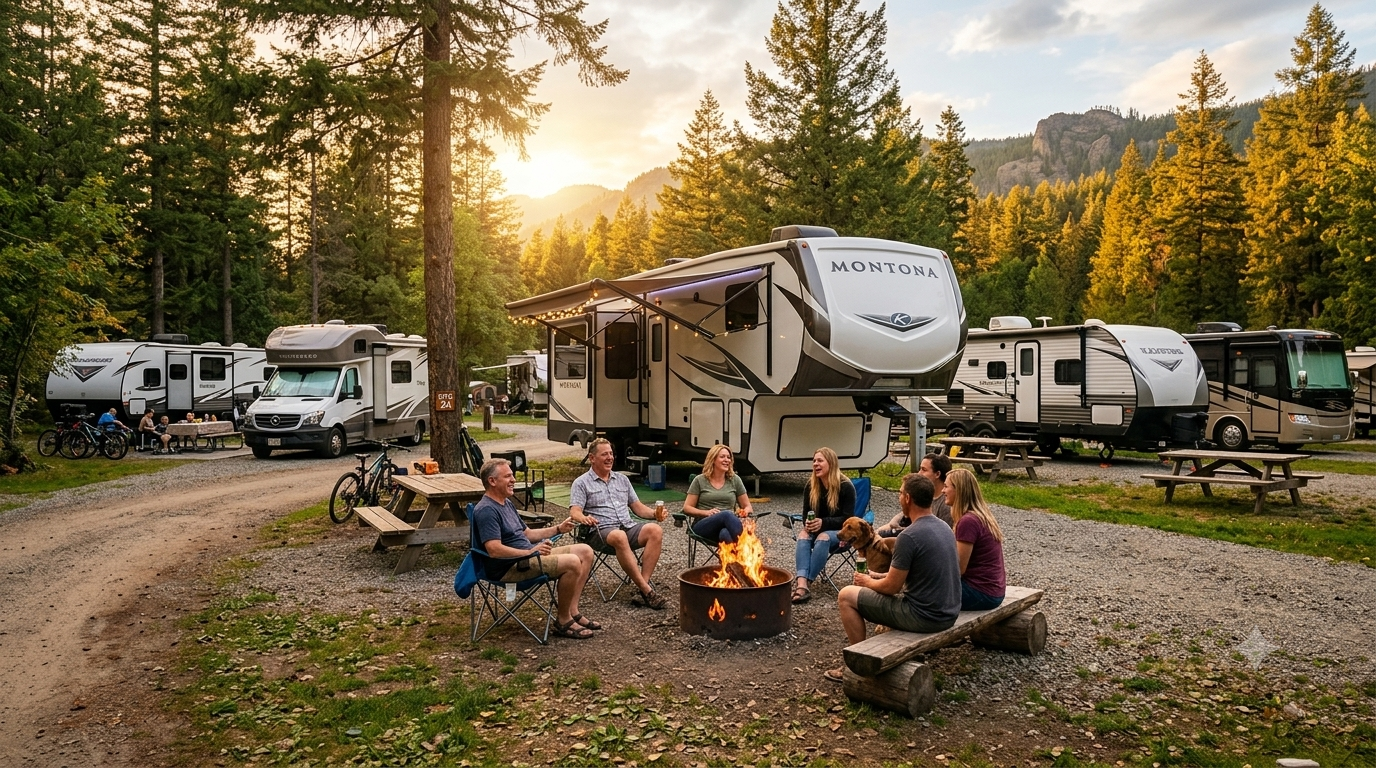
One of the most surprising and most valued aspects of the snowbird lifestyle is the community. Winter snowbird parks in Arizona and Florida develop tight social ecosystems — pickleball courts, potluck dinners, organized rides, group excursions, and the kind of daily human connection that many retirees find genuinely harder to maintain in a fixed residential setting.
The Quartzsite gathering in January is the largest expression of this community — a sprawling, informal city of RVers who come together for the swap meets, the camaraderie, and the shared experience of being in the desert together. First-time visitors consistently describe it as unlike anything they’ve ever experienced.
Long-term residents of popular snowbird parks often return to the same site, or the same park, year after year — building relationships with their seasonal neighbors that span decades. The social richness of this lifestyle is genuinely underreported in the practical guides, and it’s one of the reasons snowbirds who try it rarely stop.
The Costs: What Snowbirding Actually Runs
A realistic snowbird budget for a couple spending five months in Arizona and seven months north looks something like this:
Winter (5 months in Arizona/Sun Belt):
- LTVA permit (5 months free camping): $180/season
- Private park nights (occasional, 15 nights/month): ~$750/month
- Fuel (minimal driving, established base): $150–$250/month
- Food, utilities, connectivity: $800–$1,200/month
- Monthly average: $1,500–$2,500
Summer (7 months north):
- Campsite fees (state parks, private mix): $600–$1,200/month
- Fuel (more driving, exploring): $300–$500/month
- Food, utilities, connectivity: $800–$1,200/month
- Monthly average: $1,700–$2,900
Annual total (excluding RV payment): $20,000–$32,000 for a couple — meaningfully lower than most residential alternatives in comparable quality-of-life settings.
Before You Start Your First Snowbird Season
Work through these before your first migration:
- Book your winter destination at least 6 months in advance — the best spots go early.
- Research your domicile state — South Dakota, Texas, and Florida offer the most favorable terms for full-time and part-time RVers.
- Get your rig inspected before departure — a pre-season mechanical and systems check prevents mid-migration surprises.
- Confirm your healthcare coverage works in your destination states — Medicare and most major insurance plans work nationwide, but confirm your specific plan’s out-of-network terms.
- Join a snowbird community before you go — Escapees, the FMCA, and Good Sam all have active regional chapters in major snowbird destinations. Having a network in place before you arrive makes the first season dramatically better.
The Honest Bottom Line
The snowbird RV lifestyle is, for the right person, one of the genuinely great lifestyle inventions of modern American life. The combination of warm winters, cool summers, low costs, rich community, and the perpetual freedom of knowing that wherever you are is a choice — not a default — is something that fixed residential life simply cannot replicate.
The planning is real. The logistics are manageable. And every February, when the friends back home are dealing with another ice storm and you’re watching the sun set over the Sonoran Desert, you’ll wonder why it took you so long to start.