

Here’s the thing about campground etiquette: nobody explicitly teaches it. You don’t get a handout at check-in. There’s no orientation. You pull into your site, unhitch or park, and you’re expected to somehow know the dozen unwritten rules that determine whether your neighbors have a great weekend or spend it quietly seething in their camp chairs.
Most of the problems that happen in campgrounds — the awkward confrontations, the passive-aggressive generator wars, the dog incidents, the late-night noise complaints — stem from people who genuinely didn’t know better. Not bad people. Just people who hadn’t learned the code yet.
After years of RVing across America, talking to campground hosts, and observing what actually happens in the sites around me, here’s the honest guide to campground etiquette — the things that matter, why they matter, and how to be the neighbor everyone’s glad showed up.
Quiet Hours Are Not Suggestions
This is the one that generates more genuine bad blood in campgrounds than anything else.
Most campgrounds post quiet hours — typically 10pm to 7am or 8am. These aren’t suggestions, and they’re not flexible based on how festive the party is going. When those hours hit, the generator goes off, the music drops, and the volume comes down to the level of normal conversation.
But honest campground etiquette goes beyond the posted hours. Even before 10pm, reading the energy of your neighbors matters. If the family with young children two sites over went quiet at 8:30, cranking your Bluetooth speaker at 9:15 isn’t just technically within quiet hours — it’s inconsiderate.
The guiding principle: you chose to come outdoors, not to a party. Other people around you chose the same thing for their own reasons. Some of them have 5am wake-ups for fishing. Some of them have kids who need a schedule. Some of them just want to listen to the creek. None of those reasons are less legitimate than yours.
The Generator Question
Generators are perhaps the single most contentious issue in modern campground culture — and for good reason. A generator is loud, it smells like exhaust, and it imposes itself on everyone within hearing range whether they chose to participate or not.
The etiquette rules around generators have evolved to be fairly specific in most campground communities:
Respect generator hours. Many campgrounds post designated generator hours — typically 8am to 8pm or similar. Follow them exactly. Not “approximately.”
Run generators at the edge of those hours thoughtfully. Starting your generator at precisely 8:00am in a campground full of people sleeping in is technically within the rules and practically obnoxious. Give it 30 minutes.
Consider your exhaust direction. If you have any flexibility in how you’re parked, position the exhaust away from neighboring sites. This is a small consideration that makes a real difference.
Solar and lithium change the equation. One of the most significant social benefits of investing in an RV solar system is the freedom to not run a generator. The silence is appreciated by everyone around you and genuinely changes the camping experience.
Respect Site Boundaries
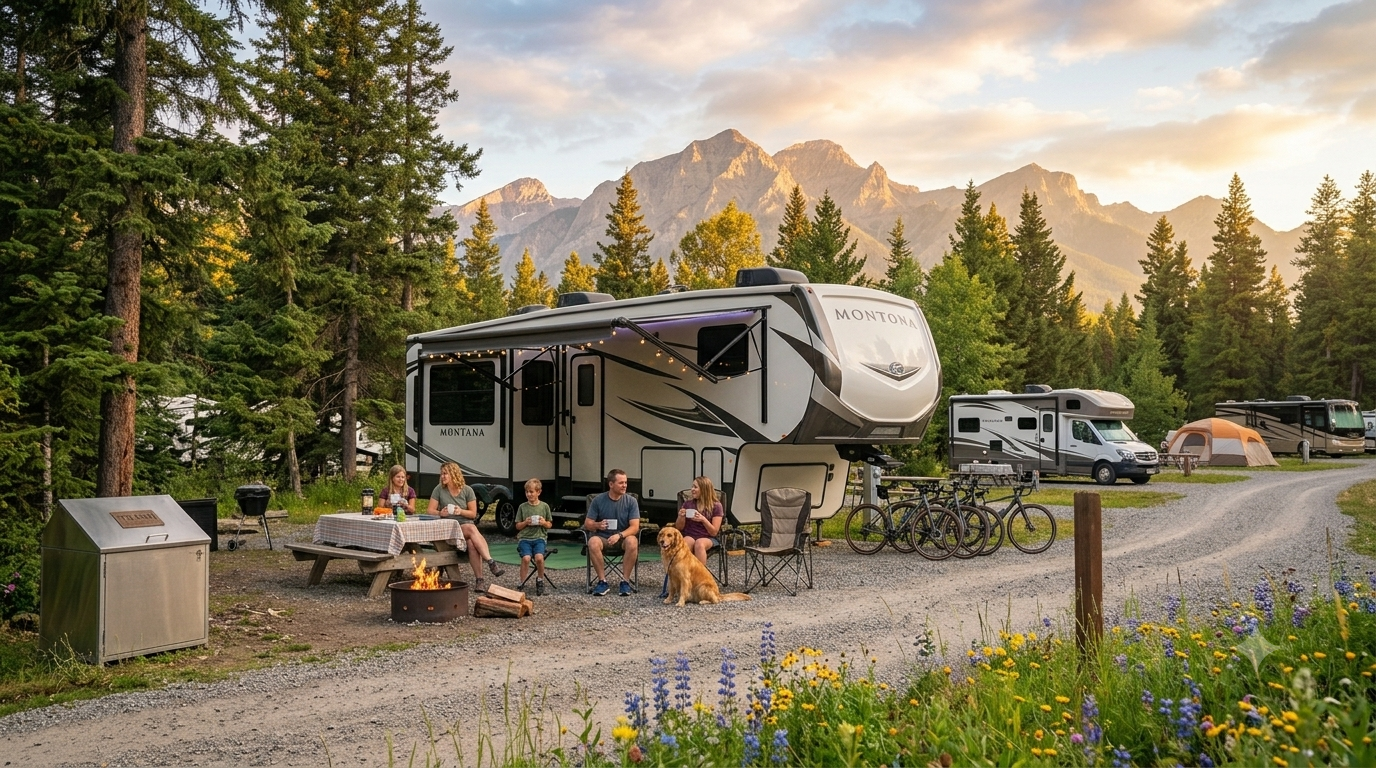
Every campsite has boundaries — typically marked by posts, fire rings, landscaping, or simply understood spacing between sites. Your site is your space. The areas between sites and the neighboring sites themselves are not extensions of your space.
This sounds obvious until you’re watching someone let their awning extend six feet past their site boundary into the walking path, or watching the kids from one family migrate their game onto the grass between three neighboring sites.
The specific things that tend to create friction:
Parking overflow. If you have multiple vehicles and they don’t fit within your site, the parking area — not the neighboring site — is where the extra vehicle goes.
Clotheslines and chairs. Keep them within your site. A clothesline strung between your rig and the tree on the property line is an encroachment.
Cutting through sites. Walking through another camper’s site to get to the bathroom or the playground is not acceptable, even if it’s the shorter route. Go around.
Smoke direction. You can’t always control where campfire smoke goes, but you can be thoughtful about when you build a fire relative to wind direction and neighboring sites.
Dogs: Love Them, but Know the Rules
Dogs are wonderful camping companions. They are also, in campground settings, a source of significant friction when their owners don’t manage them thoughtfully.
Always leash. Every reputable campground requires dogs to be on leash at all times outside the RV. This isn’t optional. It doesn’t matter how friendly your dog is or how good their recall is. Leash.
Don’t leave dogs unattended and barking. A dog tied outside while the family is at the beach barking for three hours is a problem for every neighboring campsite. Either take the dog with you, confine them inside the RV, or don’t leave for extended periods.
Clean up immediately. Every single time. Carry bags. Use them. The campground isn’t your backyard.
Assess neighbor readiness before approaching. Not everyone is a dog person. Before walking your enthusiastic Lab toward a neighboring site, make eye contact and get a signal that an approach is welcome. A quick “can he say hi?” from a distance covers this.
The Campfire: Culture and Responsibility
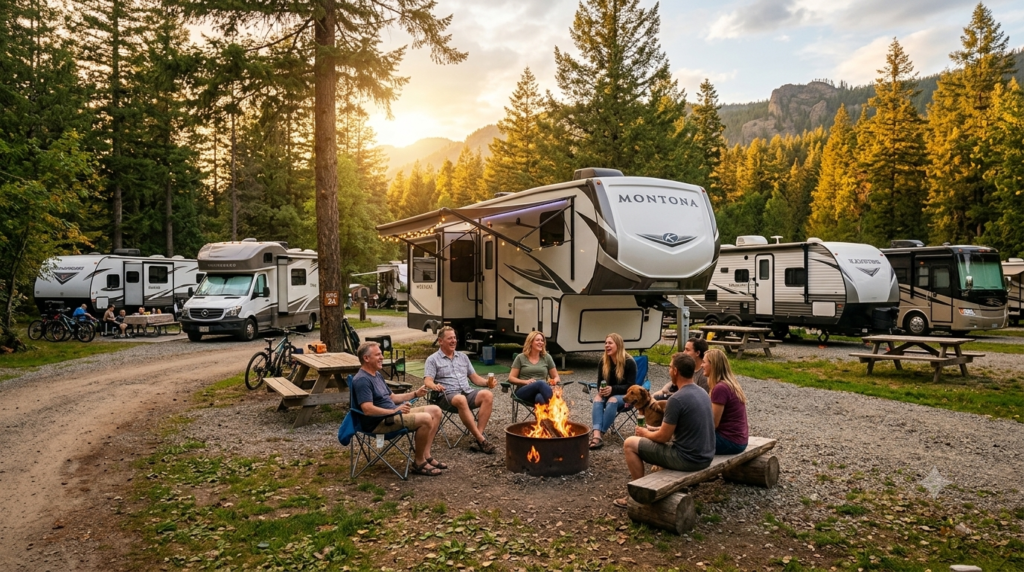
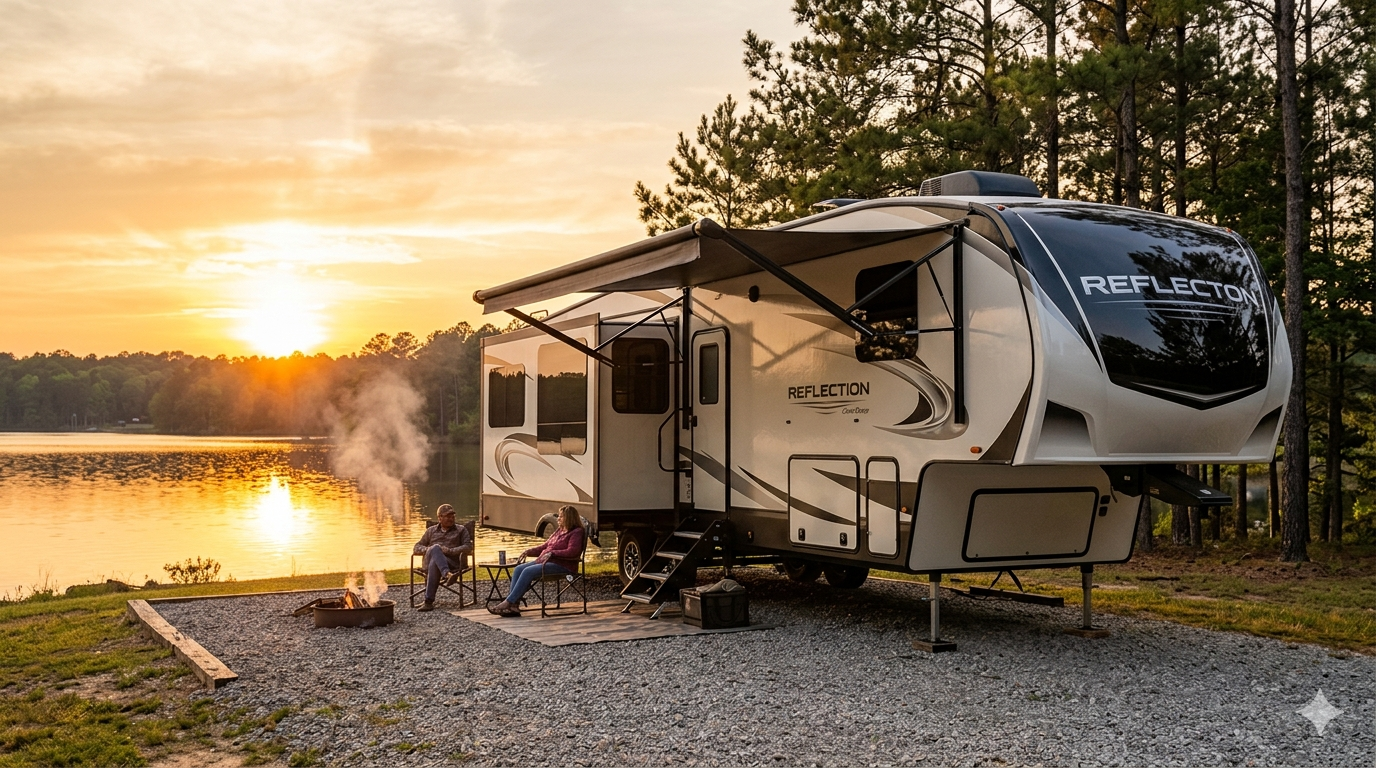
The campfire is central to the camping experience — and it comes with responsibilities that go beyond etiquette into genuine safety territory.
Follow fire restrictions. Check fire restrictions before you arrive and respect them completely. Fire restrictions during dry conditions exist because the consequences of ignoring them are catastrophic. They’re not bureaucratic overreach.
Keep fires manageable. A campfire should be in the fire ring, at a size that you can manage and extinguish completely. Bonfires that throw sparks 20 feet into the air on a dry summer evening are not campground fires.
Extinguish completely before sleeping or leaving. “Drown it, stir it, drown it again” is the standard. If you put your hand over the ashes and feel heat, it’s not out. Cold to the touch means out.
Use only dead and downed wood from the area, or purchase firewood locally. Moving firewood from other regions spreads invasive pests — emerald ash borer, spongy moth, and others — that have caused catastrophic damage to American forests. Most states have laws against transporting firewood across county or state lines. Buy local firewood near your destination.
Dump Station Etiquette
The dump station is a shared facility, and busy campground dump stations can have wait times. A few rules make it work for everyone:
Have everything ready before pulling in. Gloves on, hoses out, supplies ready. Don’t park at the dump station and then start getting organized. Pull up, dump efficiently, rinse thoroughly, and move on.
Don’t leave a mess. Rinse the station after yourself. The next person should encounter a clean station.
Don’t linger. Dump, rinse, move your rig immediately, and do any final cleaning or storage after you’ve cleared the station.
If there’s a line, be efficient. This isn’t the time for a leisurely tank flush or an extended tank-treatment session. Get in, get done, get out.
Water Connections: Common Courtesy
Use a water pressure regulator. Always. Campground water pressure varies wildly and can exceed what RV plumbing is designed to handle. A $15 pressure regulator protects your system and ensures you’re not causing pressure fluctuations that affect neighboring connections.
Don’t leave the water running. Keep your connection closed when you’re not actively using water. Running water from the campground connection constantly wastes a shared resource.
Clean up drips. If your connection drips when you disconnect, catch it. Leave the water area clean.
Be a Good Neighbor — The Simple Version
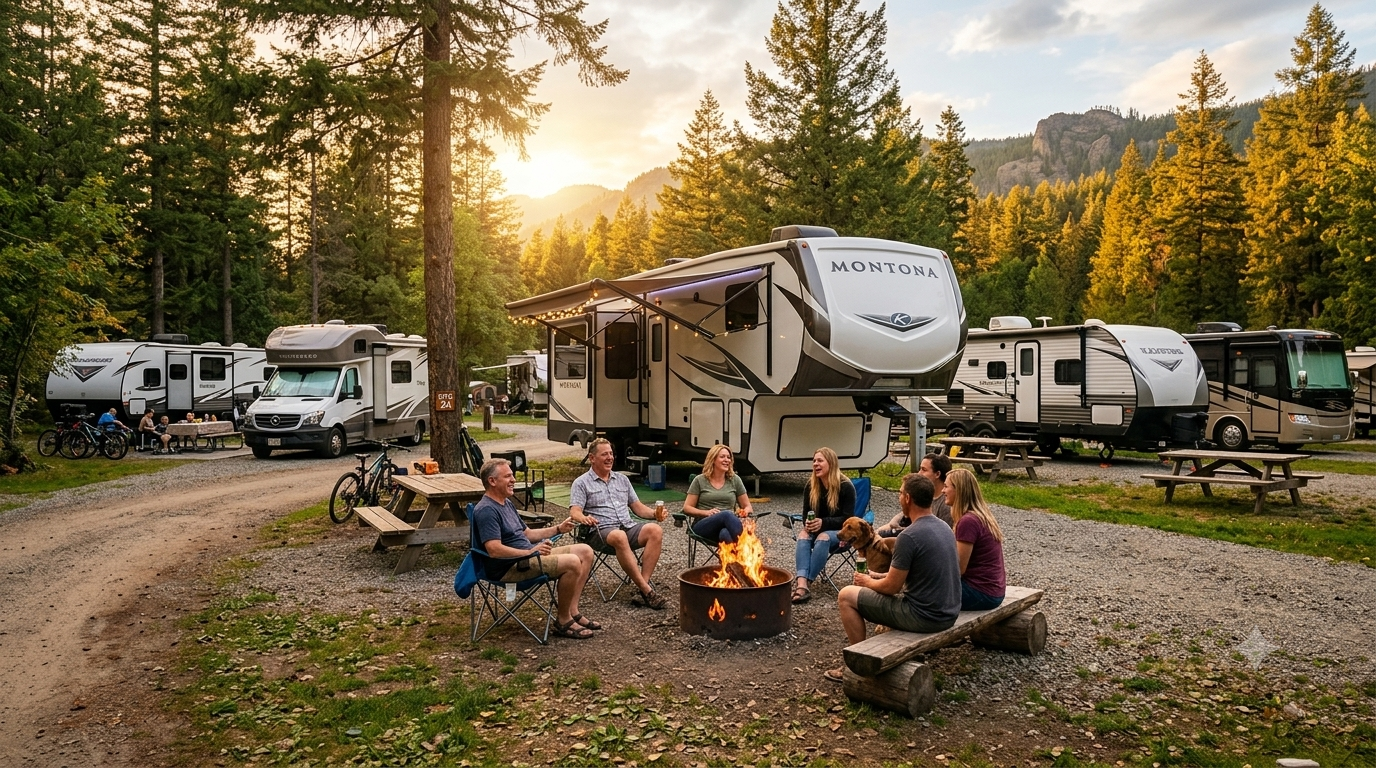
Beyond the specific rules, campground etiquette comes down to a basic orientation toward the people around you: they chose to come to the same place you did, for their own version of the same reasons. They want to relax, enjoy nature, spend time with family or friends, and have an experience worth remembering.
The simplest framework: before you do something that affects the space around you — fire up the generator, play music, let the kids loose, build the fire — take a 10-second look around and ask yourself whether what you’re about to do works for everyone within range of it. Nine times out of ten, the answer is yes and you proceed without another thought. The tenth time, you adjust.
That’s it. That’s the whole etiquette framework in one step.
The Honest Bottom Line
The campgrounds of America are genuinely wonderful places — communities of strangers brought together by a shared love of the outdoors, temporarily living closer to each other than they would in almost any other context. When everyone understands and follows the unwritten code, those communities become something genuinely special.
The rules aren’t complicated. They’re basically just: be considerate, clean up after yourself and your pets, follow the posted rules, and treat the space around your site as belonging to other people — because it does.
Follow that and you’ll be the neighbor everyone’s glad showed up.