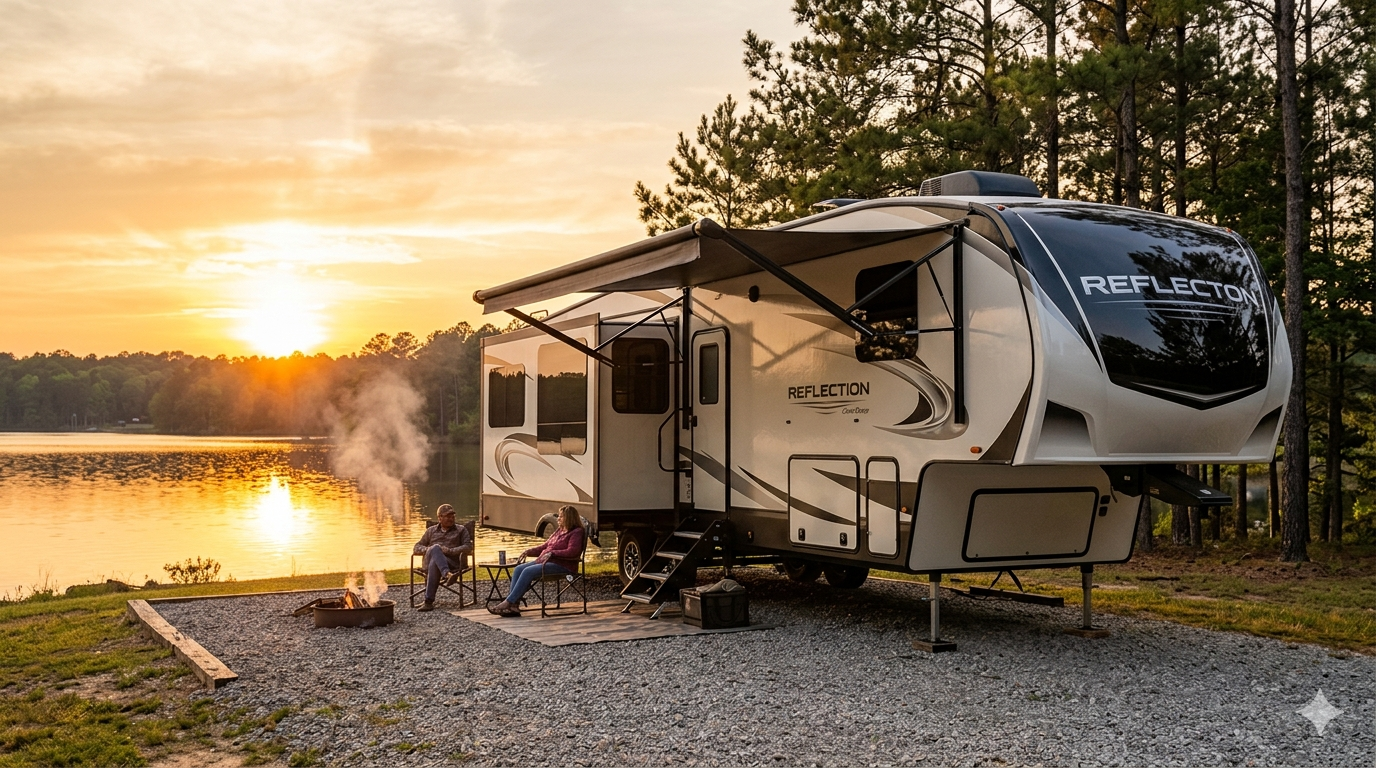


So you’ve decided a motorhome is in your future — but now comes the real question: Class A or Class C? It’s one of the most common crossroads in the RV buying journey, and for good reason. Both are fully self-contained, both get you down the open road in comfort, and both come with kitchens, bathrooms, and sleeping space. But beyond those shared features, the two diverge in some pretty significant ways.
- What’s the Difference? A Quick Look Under the Hood
- Head-to-Head: The Key Differences
- What They Have in Common
- Gas vs. Diesel: Does It Change the Decision?
- Top Brands to Know in Each Class
- Newmar vs. Tiffin vs. Entegra: The Luxury Class A Showdown
- Before You Buy — Questions to Ask Yourself
- So, Which One Is Right for You?
Here’s a breakdown of everything you need to know to make the right call.
What’s the Difference? A Quick Look Under the Hood
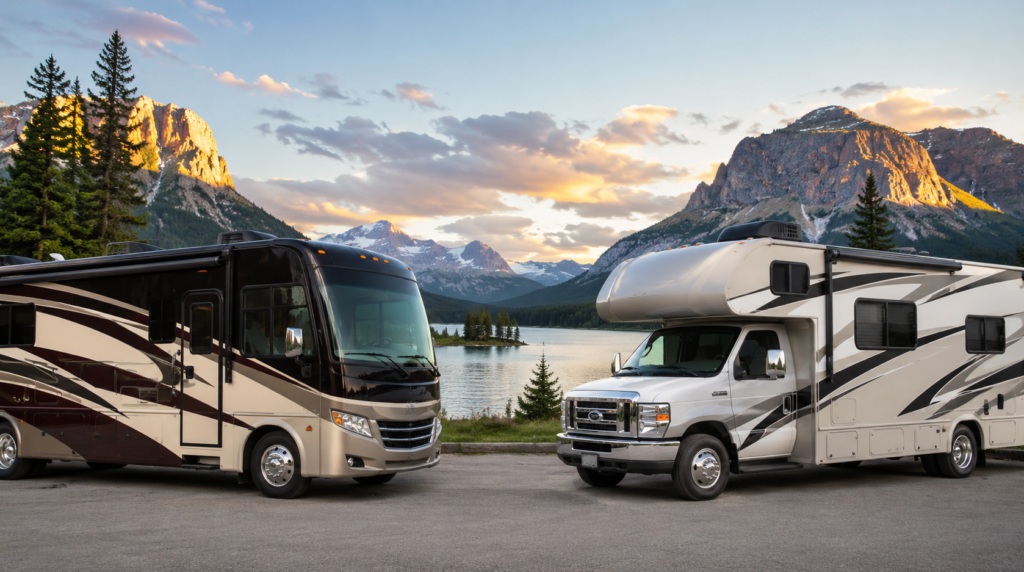
Before diving into comparisons, let’s clarify what each class actually is.
Class A motorhomes are built on a bus or large commercial truck chassis. They’re the big ones — wide, tall, and immediately recognizable by their flat front ends and panoramic windshields. Gas models have the engine up front; diesel models (sometimes called “pushers”) have it in the rear for a quieter, smoother ride. They typically range from 29 to 45 feet in length.
Class C motorhomes are built on a van or cutaway truck chassis — think of them as a box truck cab with a living unit bolted on. Their most distinctive feature is the over-cab bunk area that extends above the driver’s seat. They’re more compact, generally ranging from 21 to 35 feet, and feel much closer to driving a large van or moving truck.
Head-to-Head: The Key Differences
Living Space & Comfort
Class A wins this round — and it’s not particularly close. Averaging 26 to 40 feet of interior space, Class A motorhomes are practically apartments on wheels. Expect residential-size refrigerators, generous kitchen counter space, full-size sofas and dining areas, walk-around queen or king beds, and entertainment setups that rival a living room at home. Exterior storage is also unmatched — many Class As feature full basement storage compartments with slide-out trays.
Class C motorhomes offer solid comfort too, but with more trade-offs. You’ll often find multipurpose or convertible furniture to maximize the smaller footprint. The iconic over-cab bunk is a bonus sleeping area that families love, but the overall living space is more modest. That said, Class Cs with slide-outs can feel surprisingly roomy — nearly rivaling a smaller Class A when fully extended.
Winner: Class A — for pure space and residential-style living.
Drivability & Maneuverability
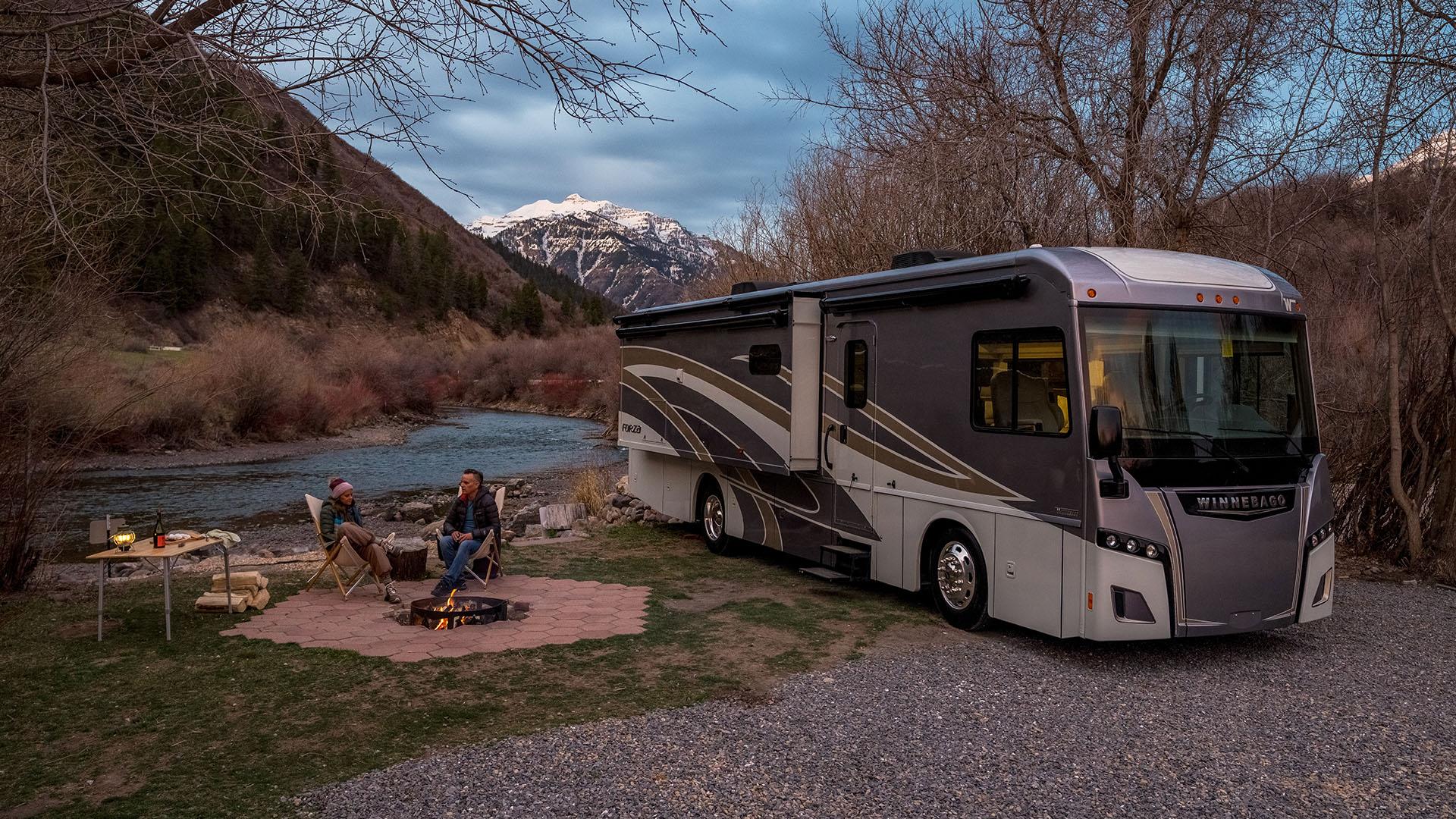
This is where Class C shines. Driving a Class C feels much like handling a large van or box truck — familiar, manageable, and confidence-inspiring. Parking at a restaurant, navigating city streets, or finding a spot at a busy campground? Much easier in a Class C.
A Class A, on the other hand, drives like a bus — because it essentially is one. It demands more attention, more pre-planning, and a steeper learning curve, especially for first-timers. Tight National Park campgrounds and narrow roads can become genuine challenges. If you’re switching drivers mid-trip, both need to be comfortable behind the wheel.
Winner: Class C — especially for newer RVers or those who want flexibility on the road.
Campsite Flexibility
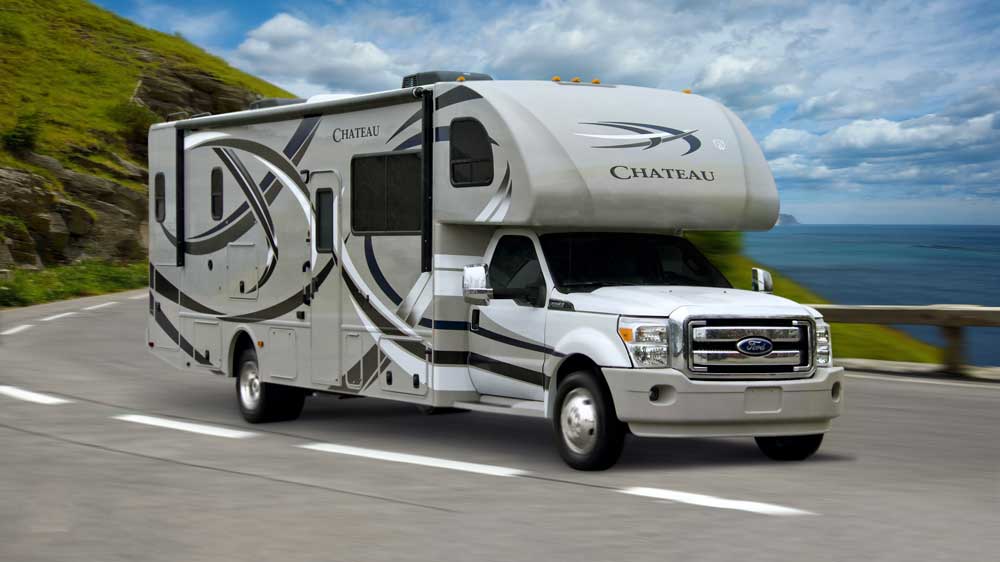
Class C wins here too. Its shorter length opens up more campground options — including National Parks and Forest Service sites that often enforce strict length restrictions. Boondocking (free camping on public lands) down a winding dirt road? Far more manageable in a Class C.
Class A owners typically need more planning. Many stick to private RV parks with full hookups, and most find a tow vehicle (“toad”) essential since parking the Class A and then exploring requires unhitching something smaller. That said, if your style leans toward settled, comfortable stays at well-equipped campgrounds, a Class A’s limitations become far less relevant.
Winner: Class C — for adventurers and those who want more campsite variety.
Fuel Economy
Neither class is going to win any efficiency awards, but Class C has the advantage. Its lighter weight and smaller engine translate to better mileage — and over a long season, that difference adds up. Class A diesels can be more efficient than Class A gas engines, but they still burn more than a comparable Class C.
Winner: Class C — better mpg across the board.
Price & Budget
Class C motorhomes are the more budget-friendly entry point into motorhome ownership — both upfront and over time (lower fuel costs, lower insurance, and generally lower maintenance). You can find quality Class C options starting well under $100K.
Class A motorhomes range widely — from entry-level gas models in the $100K–$150K range up to $500K+ for premium diesel coaches. There are Class As for every budget, but their prices almost always trend higher than comparable Class Cs.
Winner: Class C — better value for budget-conscious buyers.
Who It’s Best For
| Class A | Class C | |
| Best for | Full-time RVers, luxury-seekers, slow travelers | Families, weekend warriors, first-time buyers |
| Driving style | Experienced, route-planned | Flexible, spontaneous |
| Camping preference | Private parks, hookups | National Parks, boondocking, variety |
| Travel pace | Slow and settled | Fast-paced, destination-hopping |
| Budget | Higher | More accessible |
Life is short and the world is wide. The sooner you start exploring it, the better.
Simon Raven
What They Have in Common
It’s worth noting: Class A and Class C motorhomes share more than people think. Both are fully self-contained with kitchens, bathrooms, and sleeping for three or more. Both come in gas and diesel versions. Both support slide-outs, solar panels, smart technology, backup cameras, and towing capability. And both offer the same core freedom — climb in, drive away, and bring home with you.
Gas vs. Diesel: Does It Change the Decision?
Whether you go Class A or Class C, you’ll still face a second choice: gas or diesel. It’s worth understanding before you sign anything.
Gas engines cost less upfront, are easier and cheaper to service at most shops, and work well for buyers who take occasional trips without racking up huge mileage. The trade-off is lower torque, higher fuel consumption at highway speeds, and more wear on the drivetrain when towing.
Diesel engines deliver significantly better torque — crucial for Class A coaches hauling a toad — along with improved fuel efficiency at highway speeds and longer engine life overall. The downside is a higher purchase price and diesel repair costs that can sting if something goes wrong outside a major metro area.
For Class C buyers, gas is a perfectly capable choice for most use cases. For Class A buyers planning full-time travel or long cross-country hauls, diesel is worth the investment for the long-term savings and performance.
Top Brands to Know in Each Class
Not all motorhomes are created equal. Here are the brands that consistently earn high marks for build quality, reliability, and resale value:
Class A — Top Brands:
Class C — Top Brands
Newmar vs. Tiffin vs. Entegra: The Luxury Class A Showdown
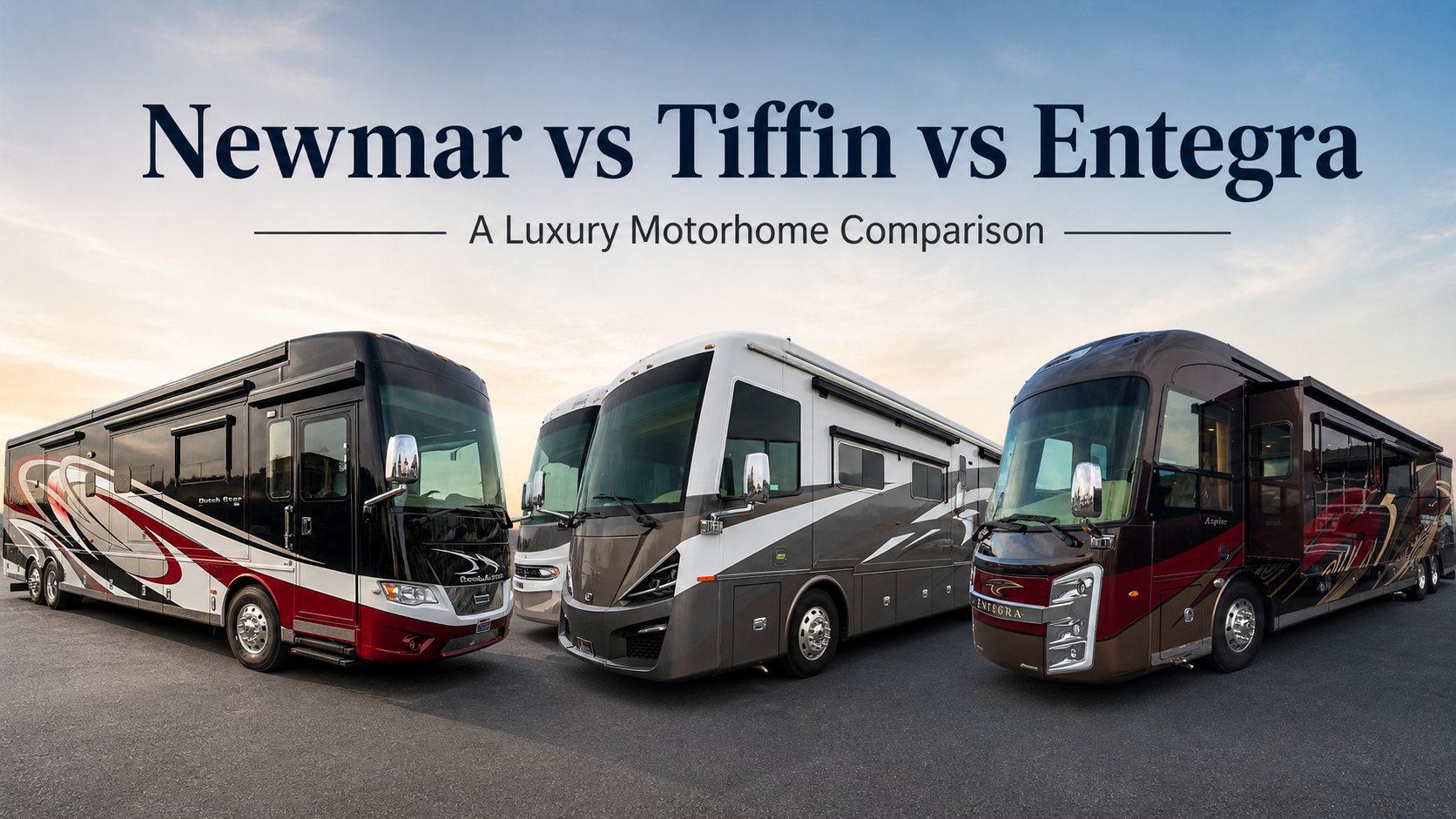
If you’ve decided a Class A is the right move and your budget reaches into the premium tier, you’ll quickly find yourself comparing three names that dominate luxury motorhome conversations: Newmar, Tiffin, and Entegra. All three are well-built, well-supported, and genuinely excellent — but each has a distinct personality worth understanding before you write a check.
Newmar is widely regarded as the benchmark for luxury production coaches. In business since 1968, Newmar was the first manufacturer to install slide-outs in Class A motorhomes and is known for its Comfort Drive steering system — a standard feature on all new diesel and luxury models that makes these large coaches significantly easier to handle. The Dutch Star is their best-selling model and the #1 selling diesel pusher in the world. Newmar’s fit and finish — cabinetry, slide tolerances, materials — consistently comes out a step above peers in the same price range. The trade-off is price: Newmar sits firmly at the top of the production luxury segment.
Tiffin brings a different kind of appeal. Founded by Bob Tiffin in Red Bay, Alabama in 1972 and acquired by Thor Industries in 2020, the Tiffin brand still feels like a boutique operation — Bob and his sons still run the brand day to day, which is unusual after a parent-company acquisition and a big reason Tiffin’s culture stayed intact. That culture translates into exceptional customer service — Tiffin owners rave about factory support and the brand’s owner community. Tiffin leads for consistent resale value among the three and is favored for long-term ownership. If service experience and community matter as much as the coach itself, Tiffin is hard to beat.
Entegra Coach is the dark horse of the trio — and increasingly, the smart buy. Entegra builds almost exclusively on the Spartan Chassis, which many owners prefer for its robust feel and ease of service on the road. In head-to-head comparisons, Entegra is frequently praised as the quietest-riding, best-handling coach in the production luxury segment. Entegra typically offers the most affordable entry point into a well-built diesel pusher among the three, making it the go-to choice for first-time diesel buyers who want luxury without the Newmar price tag.
The bottom line: Choose Newmar if you want the finest fit and finish money can buy in a production coach. Choose Tiffin if after-sale service, community, and long-term ownership satisfaction are your priorities. Choose Entegra if you want the best ride quality and the strongest value in the luxury Class A segment.
Before You Buy — Questions to Ask Yourself
Still on the fence? Run through these before you set foot on a lot:
So, Which One Is Right for You?
Here’s the honest answer: it comes down to how you plan to use it.
If you’re a full-timer or a slow traveler who wants a true home on the road — maximum space, residential amenities, and long-term comfort — the Class A is your rig.
If you want flexibility, ease of driving, more campsite options, and a friendlier price tag — especially as a first-time buyer or active family — the Class C is almost certainly the smarter move.
Still unsure? The best way to decide is to walk through both at a dealership and sit in the driver’s seat of each. The one that feels right usually is.
Ready to explore your options? Visit us to browse our latest Class A and Class C inventory — our team is here to help you find the perfect fit.