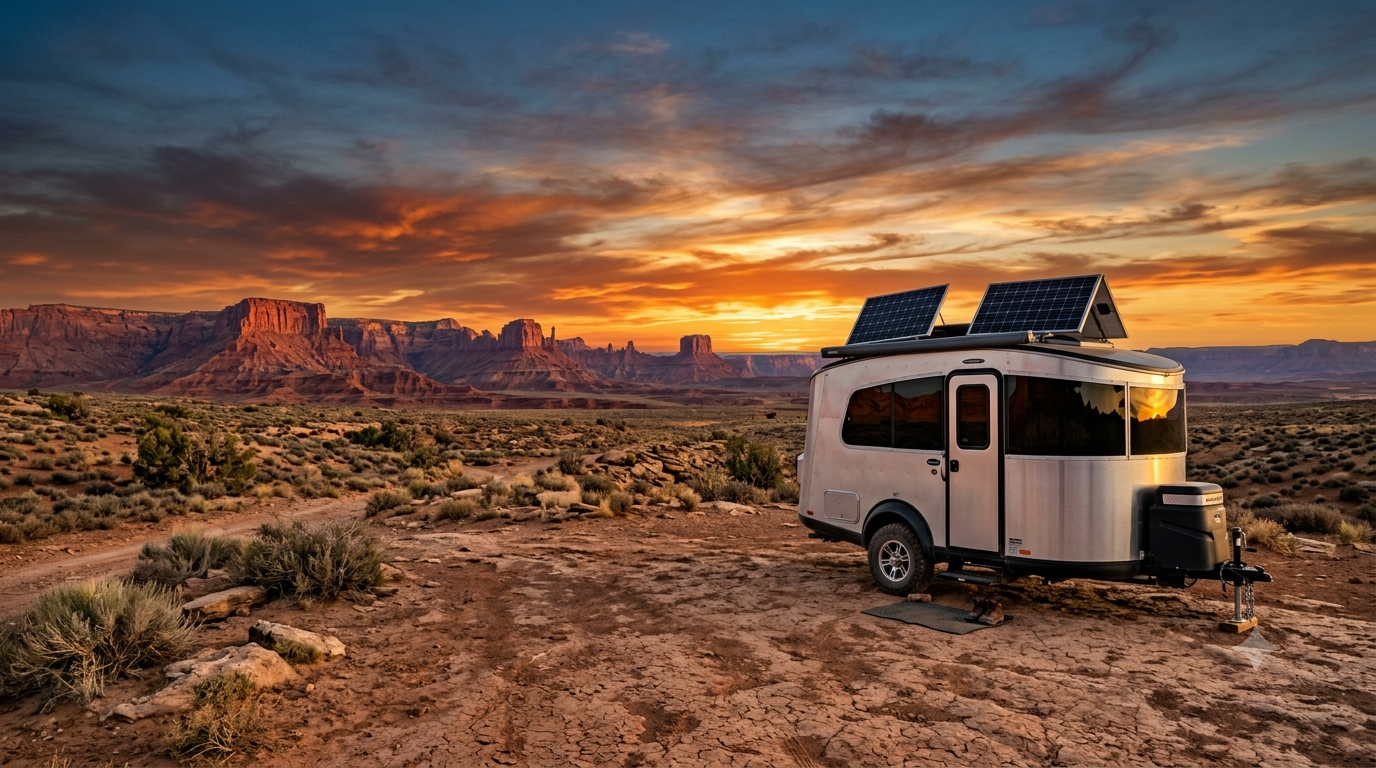

Five years ago, boondocking was a niche pursuit — something serious off-grid enthusiasts and full-time nomads did, while the rest of the RV world stuck to campgrounds with full hookups and a pool. That’s changed dramatically. Free dispersed camping on public land has become one of the defining trends of modern RVing, driven by rising campground costs, better solar technology, and a growing desire among RVers to actually disappear into the landscape rather than park next to fifty other rigs.
The numbers tell the story clearly. Campground fees in popular areas can easily top $60–$100 per night, and a full-time RVer who boondocks consistently can save over $1,500 a month compared to staying in paid campgrounds full-time. That’s not a small incentive — it’s the difference between RVing being a stretch and RVing being genuinely sustainable.
In wildness is the preservation of the world.
Henry David Thoreau
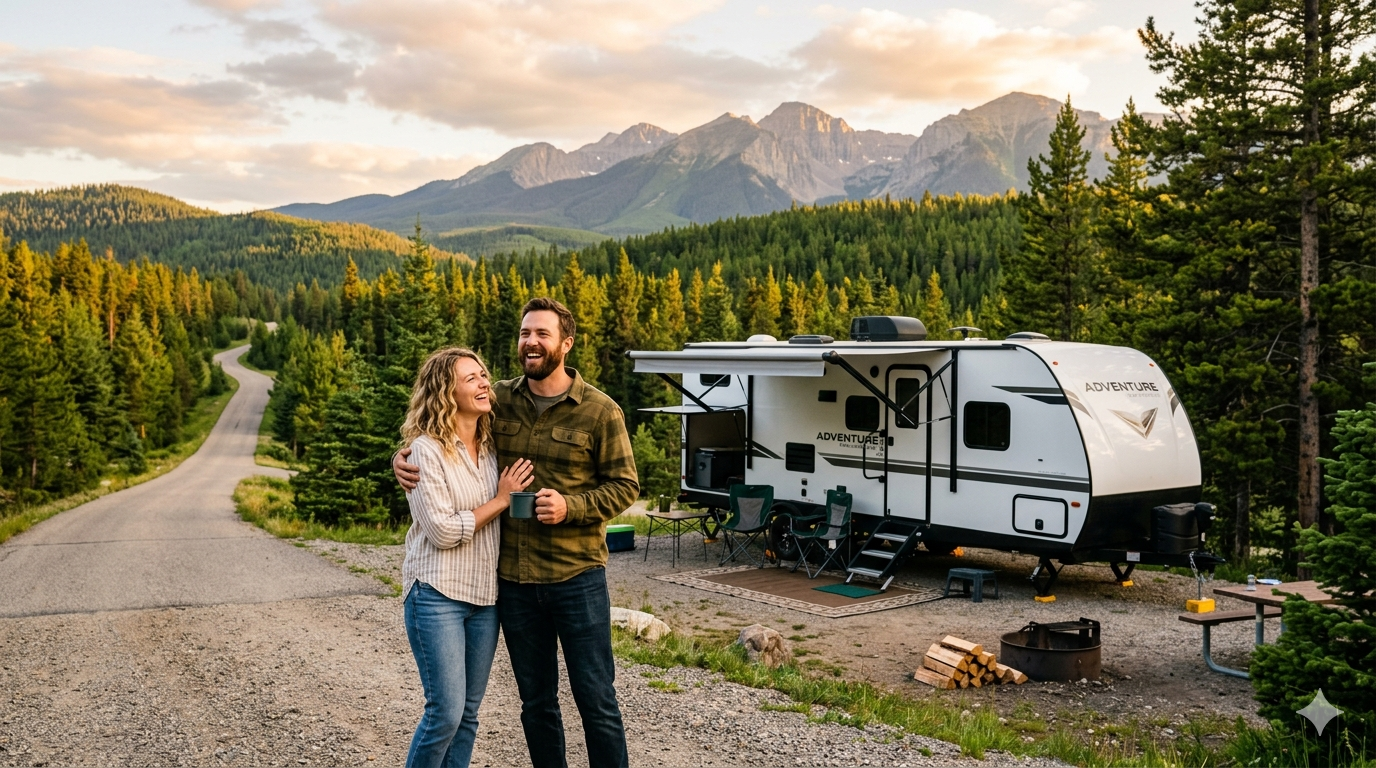
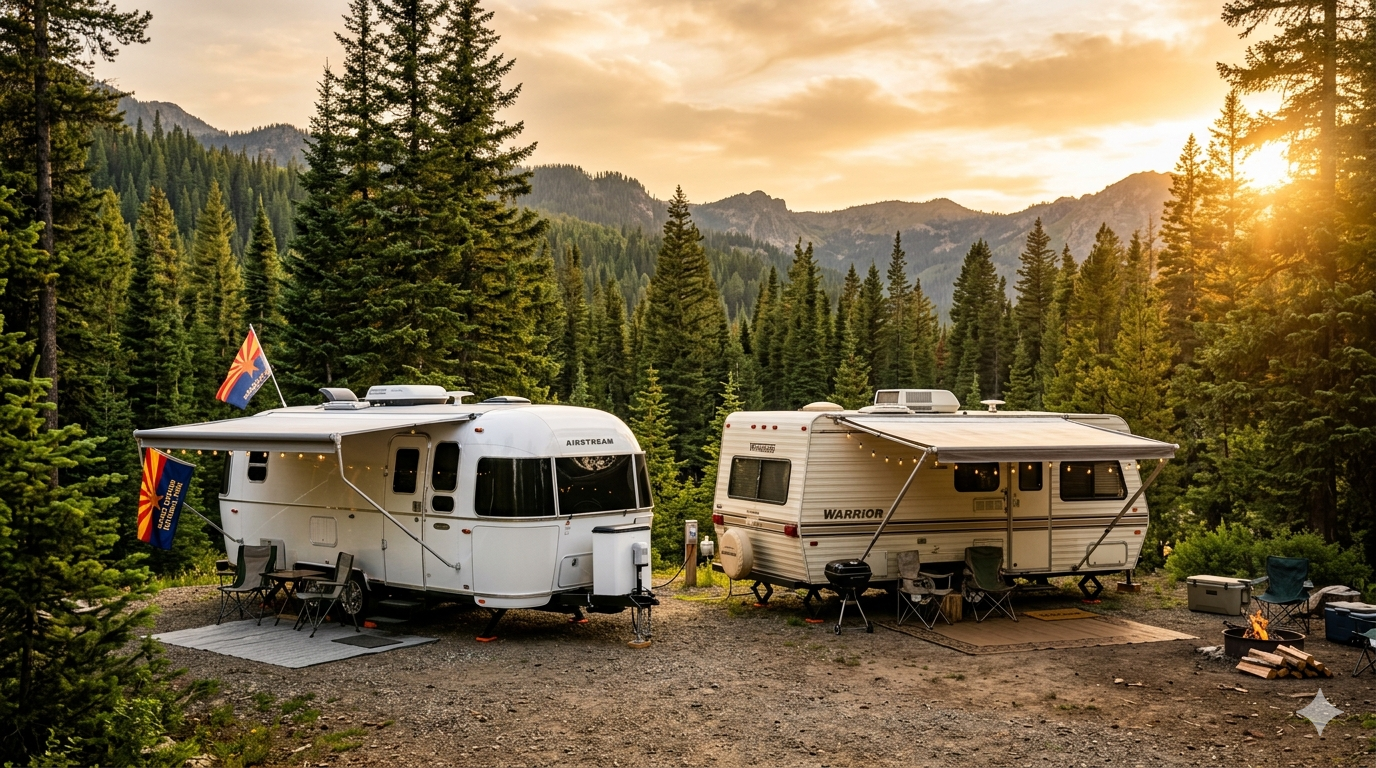
But the boom isn’t just about money. It’s about something campgrounds, by their nature, can’t fully offer: the specific kind of solitude that comes from pulling into a desert flat, a forest clearing, or a canyon rim with no neighbors twenty feet away and no scheduled quiet hours because there’s no one around to disturb.
Here’s why the trend has exploded, and the honest picture of what it actually takes to do it well.
What Boondocking Actually Means
Boondocking — sometimes called dry camping or dispersed camping — means camping in an RV without hookups to water, electric, or sewer services. The term originated with RVers camping “out in the boonies” on land managed by the Bureau of Land Management, which oversees roughly 245 million acres open to dispersed camping across the western United States, plus another 193 million acres of National Forest land managed by the U.S. Forest Service under similar dispersed-use policies.
In practice, it means finding a legal spot on public land, parking, and living entirely off what your rig carries and generates — water in the tank, power from solar and batteries, and waste managed in your own holding tanks.
Why the Boom Is Real
The economics have become undeniable. As campground rates have climbed steadily across the country — particularly at private RV resorts adding amenities and raising prices to match — the gap between paid camping and free dispersed camping has widened into something RVers can’t ignore. For a couple camping 200+ nights a year, the savings genuinely run into the thousands of dollars annually.
Solar and lithium technology solved the hardest part. Five years ago, off-grid power meant either running a noisy generator constantly or carefully rationing a small battery bank. Today’s lithium battery systems paired with efficient solar arrays let RVers run refrigerators, lights, fans, and even modest air conditioning loads for days without needing to plug in anywhere. As solar and lithium systems have improved, loud generators have become less and less necessary — and significantly less desirable to the broader RV community, who increasingly view generator noise as an outdated camping habit.
Starlink changed who can boondock. Remote work used to mean choosing between connectivity and true off-grid camping. Starlink — and especially the compact Starlink Mini — has made it possible to work a full remote job from a desert BLM site with a power budget any properly sized solar system can handle. This opened boondocking to an entirely new population: remote workers who previously assumed off-grid camping and earning a living were mutually exclusive.
A genuine community and tooling ecosystem has formed around it. What used to require word-of-mouth knowledge and a lot of trial and error now has dedicated apps — Campendium, iOverlander, FreeCampsites.net, the Dyrt, and Gaia GPS — that show real-time community reviews, road conditions, cell signal data, and rig-size accessibility for thousands of dispersed sites. The barrier to entry has dropped considerably.
The Honest Trade-Offs Nobody Skips Past
Boondocking sounds idyllic in the marketing — and for many people, it genuinely delivers. But it comes with real trade-offs that are worth understanding clearly before you commit a season to it.
You are your own utility company. Water, power, and waste are entirely on you. There’s no spigot to refill from, no dump station next door, no electrical pedestal to plug into. Running out of any of the three ends your stay early — full stop.
Access is limited by rig size. The best dispersed sites are often down rough forest roads or undeveloped BLM tracks. A large fifth wheel or Class A motorhome may not make it down some of the most scenic access roads, or may risk damage trying. Smaller, more maneuverable rigs have meaningfully better boondocking access across the board.
The “free” framing oversimplifies the real cost. Even BLM land often requires permits in some areas, ranging from $5–$40 per stay depending on the location. National forests may charge day-use fees even for dispersed camping. Add fuel costs to reach remote locations, and many “free” camping nights actually cost $30–$80 when honestly calculated — still well below private campground rates, but not literally zero.
The learning curve is real. Most boondockers need three to five trips before they’ve optimized their water and power consumption habits, identified equipment gaps, and built realistic expectations about their personal comfort thresholds. The first trip almost always reveals something you didn’t plan for.
The Rules That Actually Matter in 2026
The regulatory landscape around dispersed camping has tightened meaningfully in recent years, and any serious boondocker needs to understand the current framework rather than relying on outdated assumptions.
The 14-day rule is standard but not universal. Most BLM land allows camping up to 14 days within a 28-day period, after which you must move at least 25 miles before returning to the same area. Critically, this is not uniform — some National Forest districts have moved to stricter frameworks, including 14-day limits per calendar year per district rather than per visit, which catches many longtime boondockers off guard.
Popular zones are seeing real restriction. Areas near Zion, Sedona, Lake Tahoe, and Angeles National Forest have seen specific dispersed camping restrictions introduced in response to overuse — trash accumulation, improper waste disposal, and resource damage from the surge in boondocking popularity. This isn’t a hypothetical future risk; it’s already happening, and it’s a direct consequence of the boom itself.
Verify before you go, every time. Rules are issued at the local field office or ranger district level, which means a restriction in one office’s jurisdiction may not apply twenty miles away under a different office. Check the specific BLM field office or Forest Service ranger district website for your destination, and cross-reference current conditions on Campendium or iOverlander before committing to a route.
What You Actually Need to Boondock Well
A realistic starter setup for comfortable boondocking, beyond the RV itself:
Solar and battery system. A 400W solar array paired with a 200Ah lithium battery bank covers most basic off-grid needs — refrigerator, lighting, fans, device charging, and water pump — for extended stretches without sun-dependent anxiety.
Connectivity solution. A cellular booster, a Starlink unit, or both, depending on how dependent your lifestyle is on staying online.
Water management plan. A realistic accounting of consumption — roughly 3 to 5 gallons per person per day for careful boondockers — and a plan for how many days your fresh water tank actually supports before requiring a refill.
Navigation tools that work offline. Gaia GPS or onX Offroad for confirming public land boundaries and Motor Vehicle Use Map compliance, since many of the best dispersed camping areas have zero cell signal once you’re actually there.
Before You Go Off-Grid
“The world is a book, and those who do not travel read only one page.” — Saint Augustine
If the boondocking trend has you considering a season of it yourself:
- Start small. A weekend trip before a multi-week commitment reveals your real water and power consumption far better than any spreadsheet estimate.
- Confirm your rig can actually make the access road. Don’t assume — check recent community reports for your specific rig size before committing to a remote route.
- Practice Leave No Trace without exception. The increasing restrictions on popular boondocking areas exist specifically because some campers didn’t. Protecting future access depends entirely on the behavior of everyone using the land now.
- Build in a buffer for the unexpected. Extra water, extra battery capacity, and a flexible itinerary absorb the surprises that inevitably show up on a first or second boondocking trip.
The Honest Bottom Line
The boondocking boom is real, and it’s driven by genuine, defensible reasons — meaningful cost savings, dramatically improved off-grid technology, and a kind of solitude that paid campgrounds simply can’t replicate by design.
It’s not a replacement for campground camping in every situation, and it’s not effortless — it demands more planning, more self-sufficiency, and more respect for the land than pulling into a full-hookup site ever did. But for RVers willing to learn the systems and follow the rules, it delivers something increasingly rare: a campsite that’s entirely yours, under a sky with no light pollution, exactly where you decided to stop.