


Compact SUVs are the most competitive segment in the American automotive market — and within the Stellantis family, the Dodge Hornet and Jeep Compass represent two distinct approaches to the same fundamental question: what should a compact SUV actually be in 2026?
They share Stellantis underpinnings, they compete in the same price range, and they’re often cross-shopped by buyers who haven’t fully committed to either brand’s identity. But spend time with each one and the differences become immediately apparent — in character, in purpose, and in who they’re built for.
This comparison gives you the honest, experience-based breakdown so you can stop going back and forth on the spec sheets and make the call.
Life is a journey that must be traveled no matter how bad the roads and accommodations.
Oliver Goldsmith
The Dodge Hornet: Performance-First Attitude
Starting Price: ~$30,515 (GT) | Engine: 2.0L turbocharged 4-cylinder | Power: 268 HP (GT Plus)
The Dodge Hornet arrived in 2022 as a genuinely surprising package — a compact SUV with sports car ambitions, a turbocharged engine that makes more power than anything in its class at the price, and a design that makes no effort to look like a sensible choice.
The Hornet’s 2.0L turbocharged engine produces 268 HP in GT Plus configuration — more than the base Compass or competing compact SUVs from Honda, Toyota, or Mazda. Dodge tuned the throttle and transmission specifically for performance response rather than economy-focused smoothness, and the result is an SUV that genuinely feels sporty in a way most of its class doesn’t attempt.
The PHEV version (Hornet R/T PHEV) adds an electric motor for a combined 288 HP system, up to 30 miles of EV-only range, and the performance of all-wheel drive with the efficiency of a plug-in hybrid. It’s the version that makes the most compelling combined case — performance, practicality, and efficiency in the same package.
The interior reflects the performance positioning — sport seats, a driver-focused cockpit, and the kind of visual drama that Dodge buyers expect. It’s not the most practical interior in the class — cargo space is slightly behind the Compass — but it’s distinctively styled and comfortable for daily use.
The Hornet’s honest limitations: The performance positioning comes at a price in ride quality on rough surfaces — the sport-tuned suspension is noticeably firmer than the Compass on broken pavement and city potholes. Off-road capability is limited — the Hornet is a performance SUV, not a trail vehicle. And the Dodge brand identity won’t appeal to buyers specifically shopping Jeep.
The Hornet is right for you if:
- Jeep’s off-road branding doesn’t appeal to you but Dodge’s performance identity does
- Performance and driver engagement matter in your daily driving
- You want an SUV that stands out visually rather than blending in
- The PHEV powertrain’s EV range is useful for your commuting pattern
The Jeep Compass: The Versatile Everyday Adventure
Starting Price: ~$28,895 (Sport) | Engine: 2.0L turbocharged 4-cylinder | Power: 200 HP
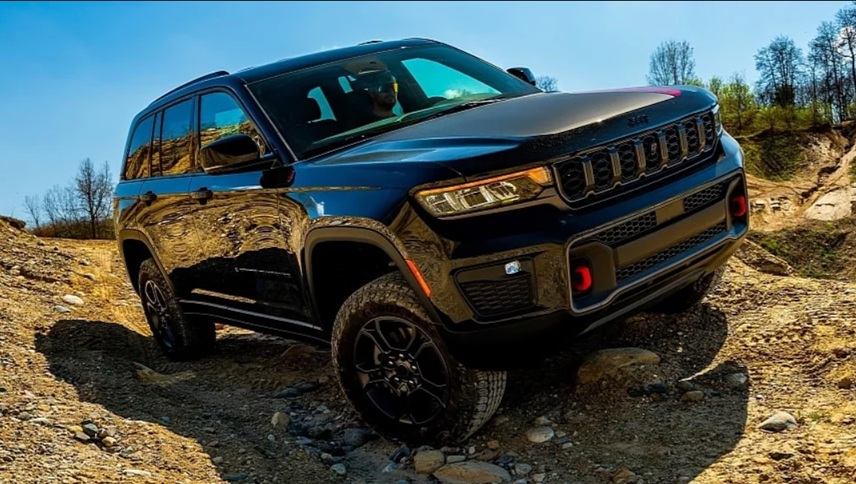
The Jeep Compass occupies a different position — it’s the practical, versatile, accessible compact SUV that earns the Jeep name through genuine off-road capability rather than off-road styling.
The Compass’s 4xe plug-in hybrid configuration continues to be one of the most capable PHEV options in the compact SUV segment — 37 miles of EV range, all-wheel drive from the electric rear axle, and Jeep’s off-road tuning in a package that covers daily commuting with zero fuel consumption. The 4xe has earned genuine enthusiasm from owners who charge regularly and find their fuel bills reduced dramatically.
The standard Compass 4×4 with Selec-Terrain — Auto, Snow, Sand, and Mud modes — delivers genuine off-road competence that the Hornet doesn’t attempt to offer. It’s Trail Rated in the Trailhawk configuration, which adds a lifted suspension, off-road-tuned Selec-Terrain with Rock mode, and underbody protection. For buyers who want to access forest roads, take gravel routes to campgrounds, or occasionally go somewhere a regular car couldn’t follow — the Compass earns that capability honestly.
The Compass interior is practically focused — good cargo space, a comfortable second row, a sensible layout that prioritizes usability over drama. The 10.1-inch Uconnect 5 infotainment system is one of the better interfaces in the class.
The Compass’s honest limitations: 200 HP in a 3,800-lb SUV is adequate rather than spirited — it won’t excite drivers who want engagement. The ride is comfortable but not particularly dynamic. And the Trailhawk configuration, while genuinely capable, adds cost that only makes sense if off-road use is actually in the plan.
The Compass is right for you if:
- You occasionally access gravel roads, light trails, or off-pavement destinations
- Practical daily transportation is the primary use case
- You want the Jeep brand’s off-road reputation accessible in a compact package
- The 4xe PHEV’s real EV range is useful for your driving pattern
- Cargo space and passenger comfort matter more than performance
Head-to-Head: The Key Numbers
| Dodge Hornet GT Plus | Jeep Compass Limited | |
| Engine | 2.0L Turbo | 2.0L Turbo |
| Power | 268 HP | 200 HP |
| Starting price | $30,515 | $28,895 |
| Cargo (behind 2nd row) | 27.2 cu ft | 27.2 cu ft |
| Cargo (max) | 56.1 cu ft | 59.8 cu ft |
| Off-road capability | Limited | Good–Excellent (Trailhawk) |
| PHEV option | Yes (288 HP, 30mi EV) | Yes (4xe, 37mi EV) |
| Ride quality | Sport-tuned, firmer | Comfortable, balanced |
| Best for | Performance, daily driving | Versatility, off-road access |
The PHEV Decision
Both the Hornet R/T PHEV and the Compass 4xe are worth serious consideration for buyers who can charge regularly. The economics of PHEV ownership improve significantly when you’re covering daily commuting on electricity and reserving the gas engine for highway use.
The Compass 4xe has the longer EV range (37 miles vs. 30 miles for the Hornet PHEV) and adds genuine all-wheel drive capability from the rear electric motor. For buyers in cold climates where AWD matters, or for those with light off-road use in their driving life, the 4xe’s architecture is more compelling.
The Hornet PHEV offers more total system power (288 HP vs. 240 HP for the Compass 4xe) for buyers who want the efficiency of a PHEV and the performance character of the Dodge platform.
Who Each Buyer Actually Is
The Hornet buyer wants something that feels different from the Honda CR-Vs and Toyota RAV4s that dominate the compact SUV landscape. They value driver engagement. They appreciate Dodge’s design confidence. They probably don’t spend much time off pavement, and that’s fine — the Hornet was never positioned for that.
The Compass buyer wants practical all-around capability with the Jeep brand’s credibility and a genuine ability to follow wherever the weekend takes them. They might not go off-road every weekend — but they want the option. They value versatility over drama.
Before You Decide
“The road is there, it will always be there. You just have to decide when to take it.” — Jackson Browne
- How important is driving engagement to your daily commute? If you enjoy spirited driving, the Hornet’s edge in performance feels meaningful. If you want a relaxed, comfortable drive, the Compass delivers better.
- Do you ever go off pavement? If yes — even occasionally — the Compass’s 4×4 options provide capability the Hornet doesn’t.
- Does the PHEV range work for your commute? If your daily commute is under 30–37 miles and you can charge overnight, either PHEV cuts fuel costs dramatically.
- Have you test driven both? The character difference between the Hornet and Compass is immediately felt — the Hornet’s sporting tension vs. the Compass’s relaxed competence.
The Honest Bottom Line
Both vehicles are well-made, well-equipped, and represent genuine value in the competitive compact SUV segment.
The Dodge Hornet is the right choice for buyers who want to actually feel their compact SUV — who want the turbocharged urgency, the visual statement, and the performance character that Dodge delivers.
The Jeep Compass is the right choice for buyers who want an honest all-rounder — practical, capable across varied conditions, well-supported by Jeep’s reputation and dealer network, and genuinely useful in more situations than the Hornet’s performance-first positioning allows.
Neither is the wrong answer. Choose the one that matches the driver you actually are.