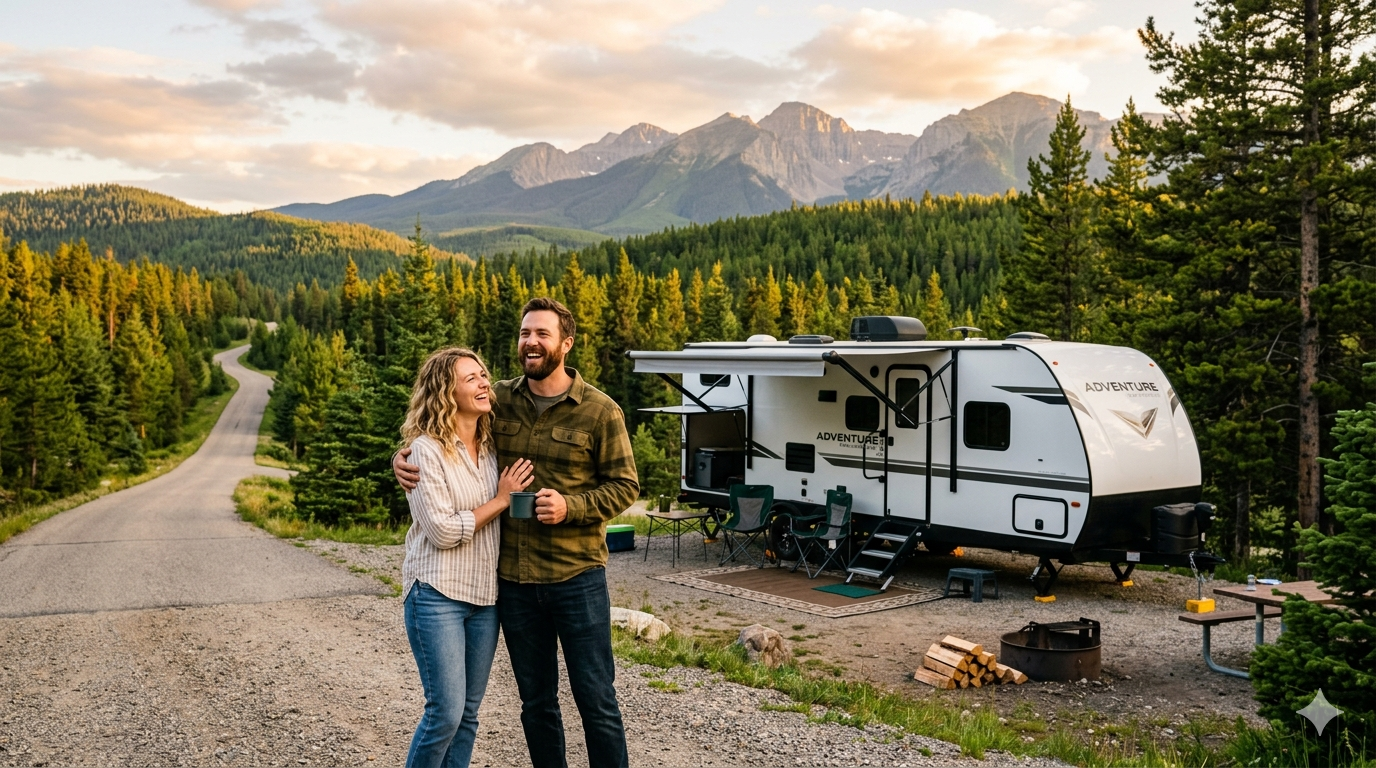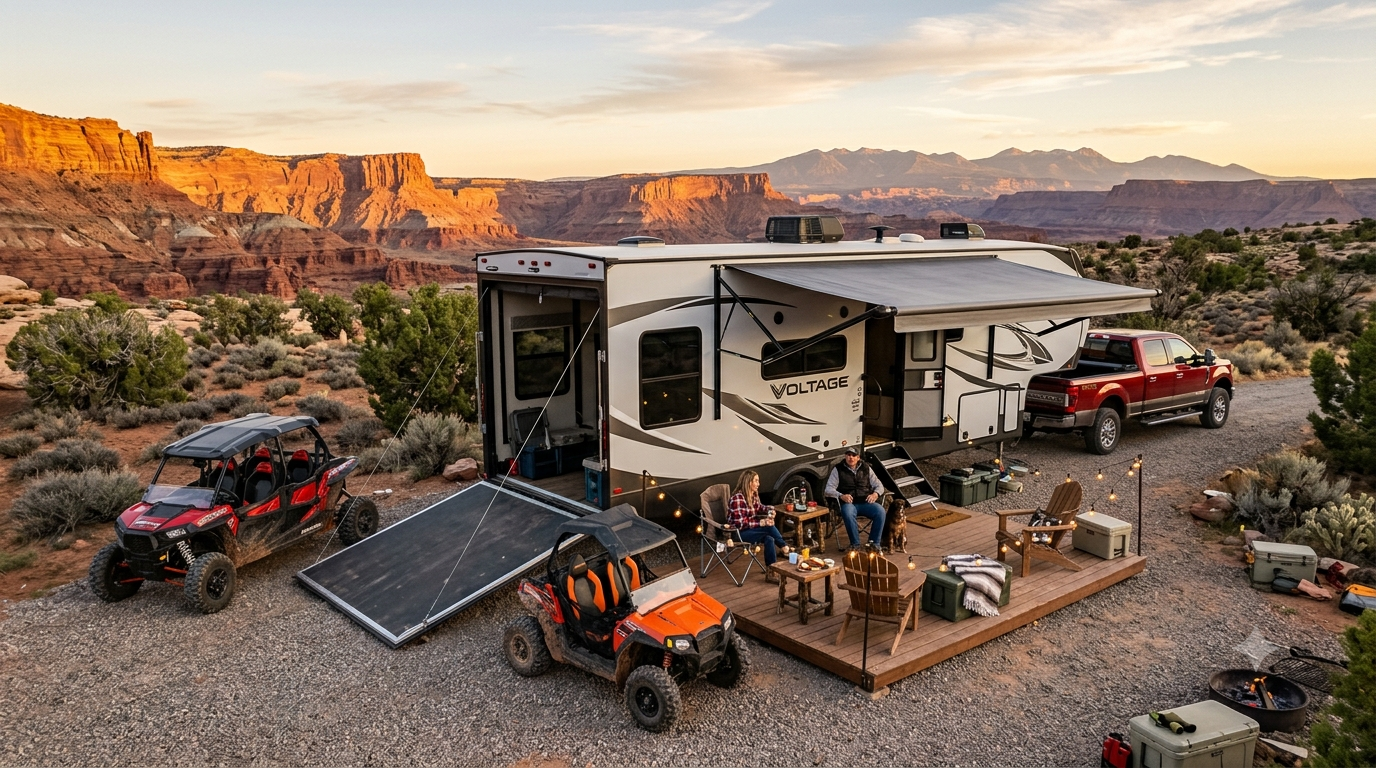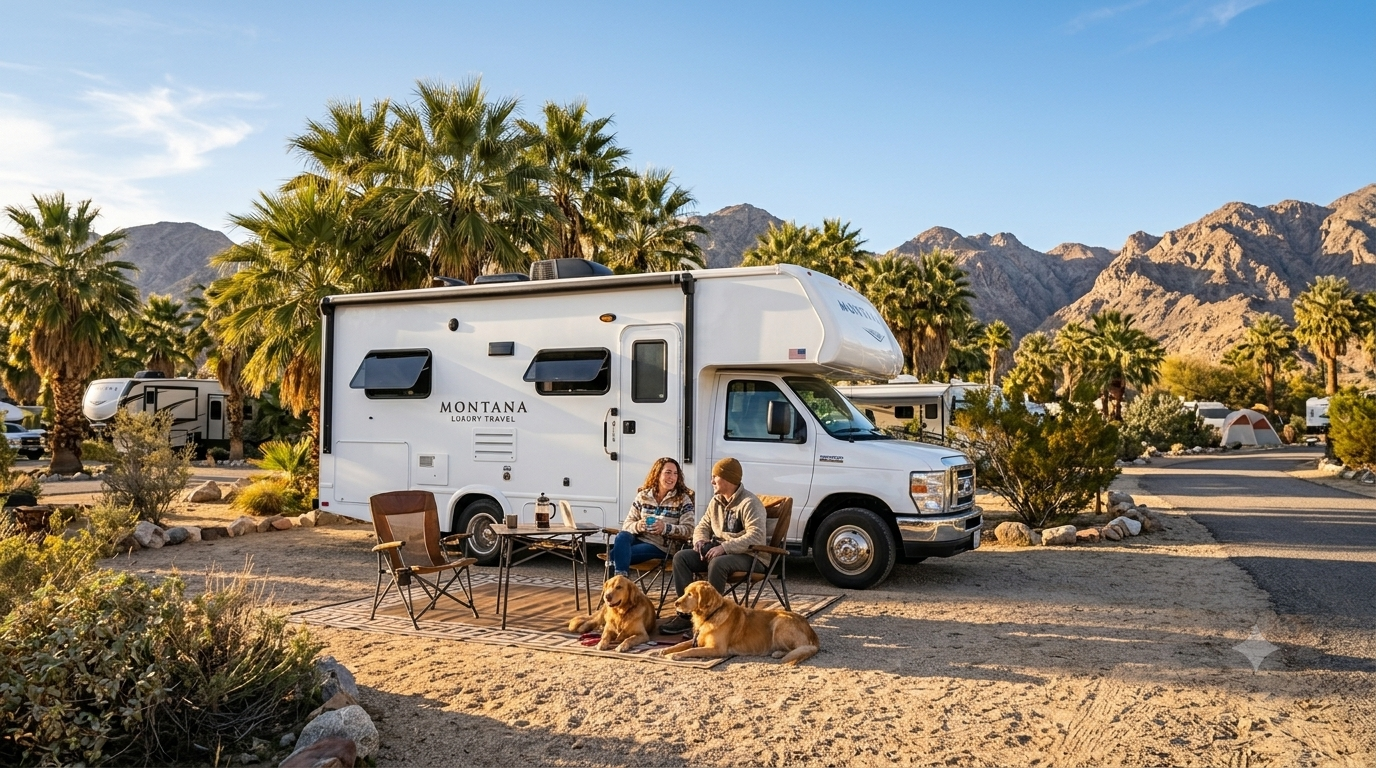

There’s a quiet revolution happening across America’s campgrounds, and it has nothing to do with tent stakes or sleeping bags. The traditional campsite — gravel pad, picnic table, fire ring, maybe a shared bathhouse down the path — is increasingly sharing space with something else entirely: architecturally designed glamping domes, boutique motorcoach resorts with concierge service, and a hospitality philosophy that looks a lot more like a four-star hotel than a state park.
- Glamping Has Gone Fully Mainstream
- Boutique Motorcoach Resorts: Camping’s Luxury Tier
- The Quiet, Unplugged Counter-Trend
- Tiny Cabins Are Eating Into Traditional RV Site Growth
- EV Charging Has Become Table-Stakes Infrastructure
- The Market Reality Behind the Glamour
- What This Means for Your Next Trip
- The Honest Bottom Line
This isn’t a small shift. Approximately 88 million U.S. households now identify as campers, with over 54 million taking at least one camping trip in the most recent reporting year — and the RV park industry alone generated over $10 billion in revenue. That scale of demand has attracted real investment, real design talent, and real hospitality brands who’ve decided that “outdoor experience” is one of the most compelling growth categories in American travel.
Here’s what’s actually trending in 2026 — and why it’s reshaping what people expect when they pull up to a campsite.
Glamping Has Gone Fully Mainstream
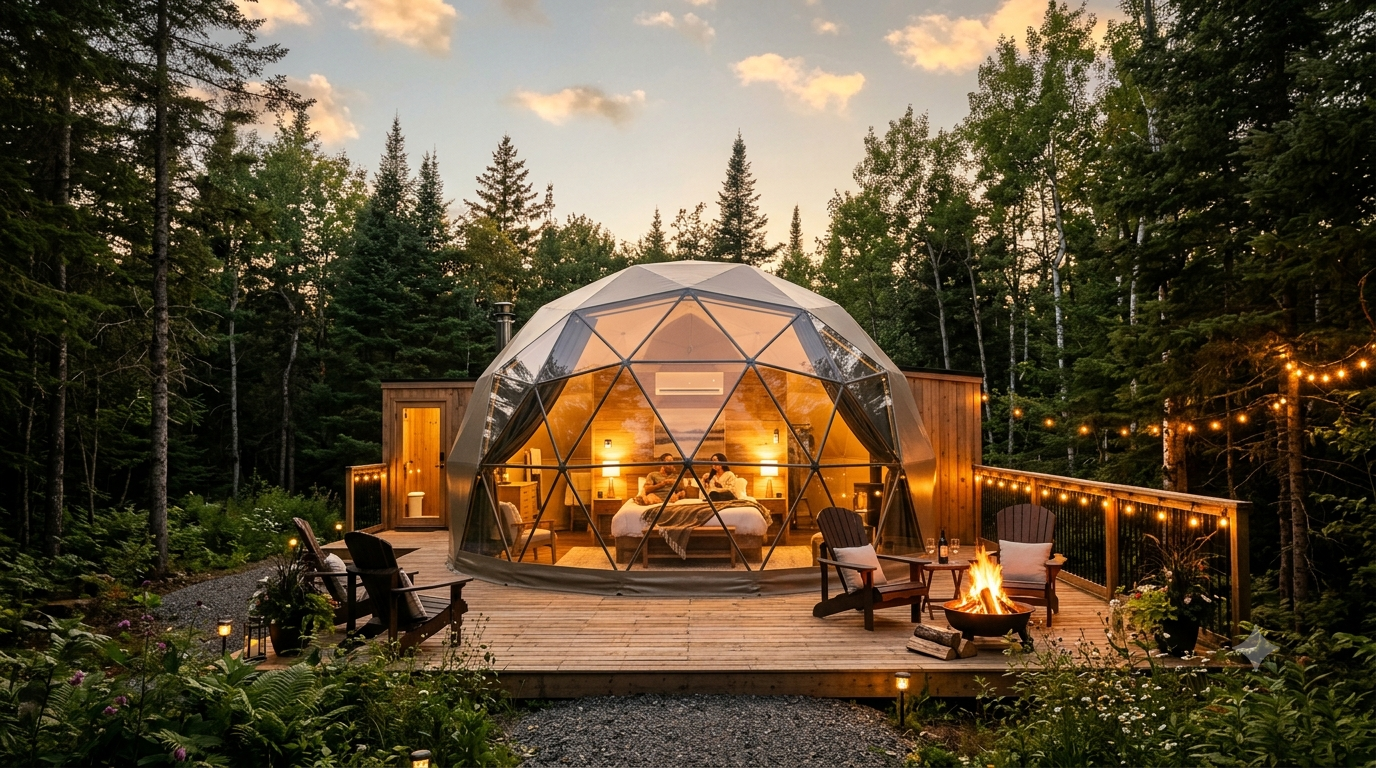
Glamping used to mean a slightly nicer tent. In 2026, it means architectural statements — yurts with floor-to-ceiling windows, A-frame cabins with designer interiors, and vintage Airstreams gutted and rebuilt with marble countertops and high-thread-count linens.
The defining shift is who’s now building these properties. Major hospitality brands have moved decisively into the space — Marriott launched its Outdoor Collection, Hilton partnered with AutoCamp, and Hyatt brought Under Canvas into its loyalty program. That corporate influx has raised the baseline expectation for what “outdoor hospitality” actually means. It’s no longer a tent in a field — it’s a managed resort experience with concierge service and farm-to-table dining, just with canvas walls instead of drywall.
The price tag reflects that positioning. A glamping site near a major national park can run $300–$500 a night in 2026 — well above a standard hotel room in most mid-sized cities — and guests are paying it specifically for the combination of dramatic natural scenery and zero-hassle comfort. The appeal is straightforward: the visceral experience of a sunrise over a canyon, without the backache from a thin sleeping pad. Industry observers describe it as “soft adventure” — wanting the wild without giving up the Nespresso machine.
What this means for campers: Even traditional campgrounds are adding glamping sections to capture this demand. KOA has become a clear leader in this hybrid model — alongside standard RV and tent sites, KOA properties are increasingly adding furnished canvas tents with electricity and WiFi, exemplified by destination properties like their Terramor Outdoor Resort in Bar Harbor, Maine. If your local KOA didn’t have glamping options two years ago, there’s a good chance it does now.
Boutique Motorcoach Resorts: Camping’s Luxury Tier
A second, related trend is targeted specifically at owners of large Class A motorhomes and luxury fifth wheels — the rise of high-end “motorcoach resorts” that bill themselves as luxury RV retreats with amenities rivaling four-star hotels.
These aren’t your typical campground. Properties like Las Vegas Motorhome Resort feature over 400 large, beautifully landscaped sites, a 10,000-square-foot clubhouse, a resort swimming pool, and an on-site restaurant — set on a 41-acre property planted with over 1,000 palm trees. Naples Motorcoach Resort & Boat Club in Florida combines RV sites with golf course access, boat club membership, and upscale dining. Solstice Motorcoach Resort in Nevada offers private waterfront lots with sweeping mountain views between Las Vegas and Utah’s red rock country.
The common thread across this category: spacious, beautifully landscaped individual sites (often allowing site ownership rather than just nightly rental), resort-style pools and spas, fitness centers, organized social activities, and in some cases, literal concierge service to help arriving guests get settled.
Why this trend has staying power: As Class A and luxury fifth wheel ownership has grown, owners of $300,000+ motorcoaches increasingly want a destination experience that matches the caliber of their rig. A basic gravel pad campground doesn’t deliver that — a motorcoach resort with a clubhouse and a golf course does.
The Quiet, Unplugged Counter-Trend
Interestingly, alongside the rise of high-tech, amenity-loaded resorts, a counter-movement has emerged: premium campgrounds specifically designing for digital detox and what’s being called “analog camping” — unplugged, device-free stays positioned as the new five-star luxury.
This reflects a genuine tension in the modern camping market. Some travelers want maximum connectivity and resort-level amenities. Others are paying a premium specifically for guaranteed disconnection — properties that intentionally limit WiFi access, encourage device-free common spaces, and market the absence of screens as the actual luxury on offer.
What this means for campers: The market is segmenting more clearly than ever. Properties are increasingly explicit about which experience they’re selling — “fully connected resort” or “intentional digital detox” — rather than assuming every camper wants the same thing.
Tiny Cabins Are Eating Into Traditional RV Site Growth
One of the more structural shifts in the campground business has been the move toward tiny cabins and cottage-style accommodations as a way to capture guests who want the camping experience without owning or renting an RV at all.
Industry data shows that RV park operators are increasingly building out hybrid properties — combining traditional RV sites with glamping accommodations and cottage-style lodging to create multiple revenue streams from a single piece of land. At least seven new upscale glamping or cottage resort developments were underway in the most recent reporting period specifically to meet rising demand for luxury outdoor stays that don’t require RV ownership.
Why this matters beyond just the cabins themselves: This trend signals something important about who’s actually driving campground demand growth — not just existing RV owners, but younger travelers, particularly millennials, who want the outdoor experience and the social media-worthy setting without the upfront investment in an RV. Campgrounds are explicitly building for this audience now.
EV Charging Has Become Table-Stakes Infrastructure
A less glamorous but genuinely significant trend: campgrounds are racing to install EV charging infrastructure, driven by data showing that 24% of camping travelers now own an electric vehicle — a rate far higher than the general population.
Industry experts increasingly describe EV charging as transitioning from a luxury add-on to an essential amenity, on the same tier as WiFi or a swimming pool. In practice, this means more campgrounds adding Level 2 chargers at select sites or shared parking areas to accommodate both electric tow vehicles and the emerging category of electric RVs and travel trailers entering the market.
What this means for campers: If you’re shopping for an electric tow vehicle or considering an electric RV, campground EV infrastructure is improving rapidly — but it’s still inconsistent enough that confirming charging availability before booking remains a smart habit.
The Market Reality Behind the Glamour
It’s worth being honest about the broader context driving some of these trends. The RV manufacturing market has seen a genuine slowdown — total wholesale RV shipments dropped sharply year-over-year in the most recent reporting period, signaling a broader retail slowdown that directly affects transient campground occupancy.
In response, many campground operators are pivoting strategy — funneling capital into shared recreational spaces and guest experience upgrades rather than expensive individual site infrastructure, and in some cases converting traditional RV parks into longer-term use communities to capture more stable, predictable occupancy. The luxury and glamping trends covered above are, in part, a direct business response to a market where operators need to differentiate and capture a more selective guest who prioritizes specific amenities and experience quality over basic site availability.
What This Means for Your Next Trip
“Not all those who wander are lost.” — J.R.R. Tolkien
If you’re planning camping or RV travel for the rest of the year, here’s how these trends translate practically:
Glamping has genuinely gotten better — and pricier. If a unique, design-forward stay near a major destination appeals to you, book early; the best properties in this category are filling up the way premium hotels do.
KOA and similar chains are worth checking even if you’ve written them off. Many properties have meaningfully upgraded their amenity offerings and added glamping sections that didn’t exist a few years ago.
Motorcoach resort culture is real and growing. If you own or are considering a high-end Class A or fifth wheel, this category of destination is worth researching specifically — it’s a different experience from a standard RV park.
EV infrastructure is improving but check first. Don’t assume a campground has charging — confirm before you arrive, particularly outside major metro corridors.
The Honest Bottom Line
Camping in America is going through a genuine transformation — not replacing the traditional campsite experience, but expanding dramatically beyond it. Whether you’re after a $40-a-night state park site with a fire ring and a view, or a $400-a-night architect-designed dome with a private hot tub and farm-to-table dinner service, the market has more options catering to more specific preferences than at any point in recent memory.
The trend that matters most isn’t any single amenity — it’s the segmentation itself. Camping is no longer one thing. It’s whatever specific experience you’re actually looking for, and increasingly, the industry has built exactly that for you.